
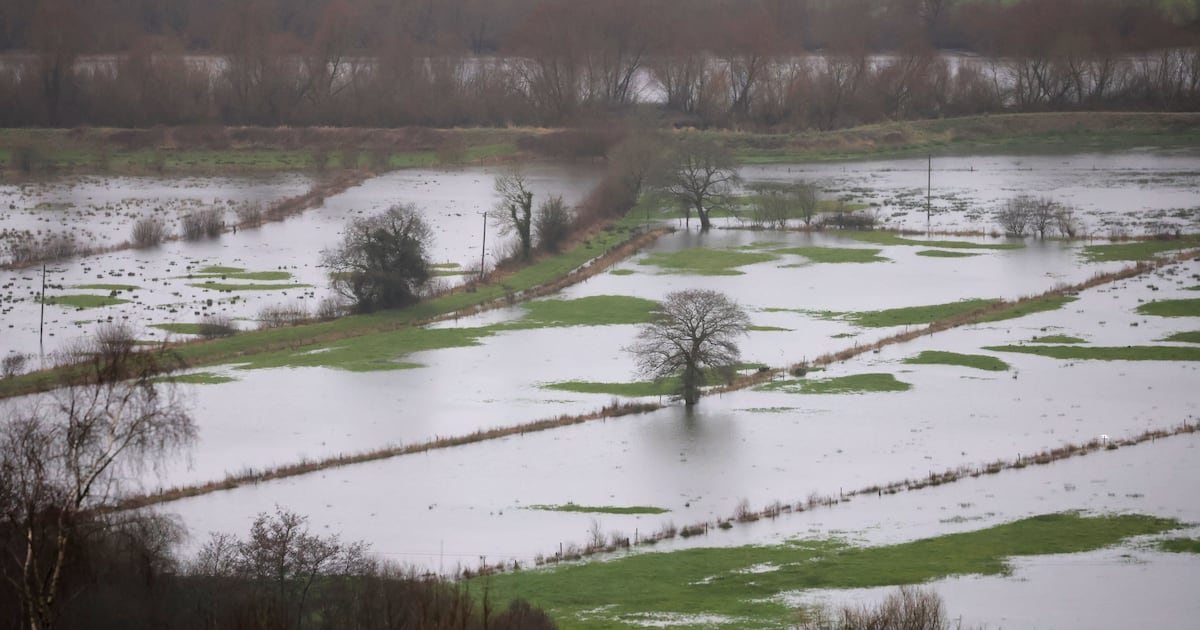
Councillors tried to zone almost 300 flood-prone land sites around the country for development over the past six years, new figures from the planning regulator show.
The regulator’s office had to intervene on 93 occasions to block their plans, warning homes and properties were under threat of inundation if they proceeded.
In most cases, the intervention of the regulator’s office was accepted but on 30 occasions, it had to ask the minister in charge to issue a formal direction that the zoning not proceed.
A further nine cases are currently the subject of requests to the Minister.
The regulator’s office said flood risk management was now a “frequent theme” in its recommendations to local authorities when county and local development plans were assessed.
The figures emerged as communities continue to pick up the pieces after weeks of heavy rain and flooding, with forecasts of more prolonged wet spells to come.
Kevin “Boxer” Moran, the Minister of State with responsibility for flood defences, said last week any homes built on flood plains in future would receive no publicly funded flood defences.
“I’m making this clear. I’m appealing to every local authority, particularly when the pressure comes on now, in terms of homes to be built; if a house is built on a floodplain, it will not be defended,” he said.
The figures from planning regulator Niall Cussen show elected members in some local authorities continue to underestimate the risks of zoning for development in flood-prone areas.
Since the office was established in 2019, it has made 93 recommendations relating to the zoning of land in areas at risk of flooding.
Some recommendations related to multiple sites, with a total of 288 sites identified.
In most cases the recommendations were accepted and the development plans were amended.
In some cases, the local authority introduced safeguards that addressed the concerns raised.
In the case of 30 sites, however, the regulator had to ask the minister responsible for local government and planning to issue a formal legal direction.
These were issued to the county councils in Clare, Galway, Mayo, Donegal, Meath, Monaghan and Wicklow, as well as Galway City Council and Limerick City and County Council.
A further nine sites are currently the subject of direction proceedings to Donegal and Sligo county councils.
[ Flood defence funding may have to be cut to pay for children’s science centreOpens in new window ]
A spokesperson for the regulator stressed the importance of observing flood risk planning guidelines as extreme weather increased.
“Development on land at risk of flooding affects people and communities who live there and can increase flood risk in other areas, by reducing the capacity for floodwater storage on floodplains,” the spokesperson said.
“This issue is becoming more urgent due to increased rainfall driven by climate change.
“It is a core part of our work within the Office of the Planning Regulator (OPR) to ensure flood risk management informs the zoning of land, avoiding inappropriate development in areas at risk of flooding.”
Limerick City and Council Council received the highest number of formal directions, relating to eight sites that councillors zoned for development against the advice of the OPR, the Office of Public Works, the council’s chief executive and the council’s own flood risk consultants.
[ New form of sea defence set to save dozens of family homes on Dublin coastOpens in new window ]
One of the rezoned sites was within the former Greenpark Racecourse land, owned by Voyage Property Ltd, which the OPR said lay predominantly within Flood Zone A, the highest risk category.
Voyage challenged the Minister’s order in the High Court, seeking to restore residential zoning on the land, but the court upheld the order in a ruling last December.
The Government is struggling to keep up with flood defence programmes, with dozens of projects given priority status eight years ago still to get off the drawing board and into the planning process.