
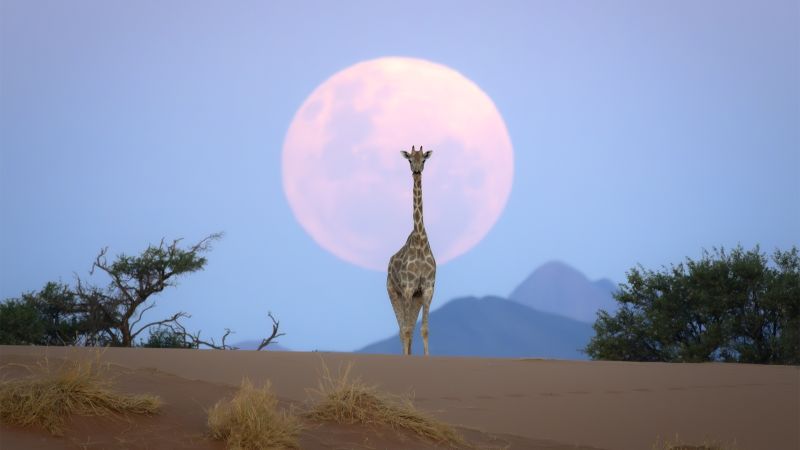
Sand sprays in all directions as Kyle Goetsch sprints at full pelt across the Namib desert, his stride broken only momentarily as he screams at the stunned group behind him to start running. All the while, the animal stalks ever closer, pale moonlight silhouetting its colossal form.
Yet all is not what it seems. This is not the climax of a blockbuster natural horror film, even if cameras are everywhere. Rather, a nature photographer is hurtling toward the shot of a lifetime.
Goetsch’s breathtaking image of a giraffe cresting a sand dune, staring down the barrel of the lens from the center of a hazy pink moon, is among the best in a jaw-dropping bunch of photos that have helped the South African build an impressive social media following.
For some viewers, it’s almost too brilliant.
“This is one of the photos that gets most called out for being AI,” Goetsch told CNN.
“I think that’s a compliment because it just shows how unique the image is … It’s just so rare and unique to get all these elements to align.”
While artificial intelligence was totally absent, luck was very much in attendance.
Cape Town-based Goetsch, who runs workshops across southern Africa for budding photographers, had led clients into the world’s oldest desert in order to shoot the full moon rising over an old tree atop a dune.
Though aware giraffes were nearby, all plans went out the window during setup when Goetsch turned to see a long-necked giant — likely intrigued by the nearby noise — ambling toward the group.
Realizing it would pass directly in front of the low-hanging moon, Goetsch scooped up his camera and tripod to race into position before it was too late.
“You have a very short window to try and capture what, in my mind, was going to be an incredible image and it ended up being that,” he recalled.
“Once we lined it up and I took those first photos, I knew I had them in the bank … You’ve to seize the day.”
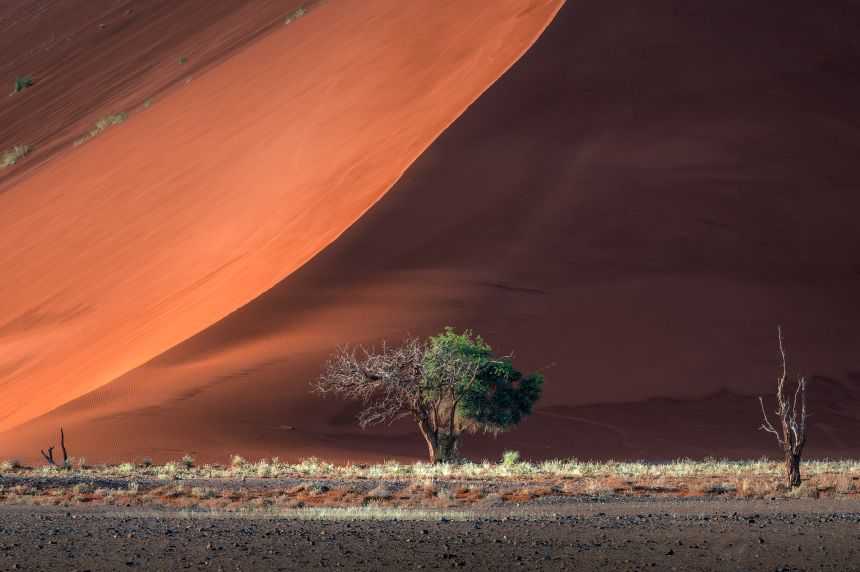
The fact that image qualifies as one of Goetsch’s personal favorites, followed closely by those taken when another giraffe arrived to nuzzle the first, is high praise, given the sheer breadth of his eight-year camera roll.
Photography was a stark career change for someone with a PhD in biochemistry, but after so much time spent squinting through microscopes, the University of Cape Town graduate never looked back after seeing the beauty of his hometown through the lens on a trip with a friend in 2018.
Somewhat ironically, Goetsch quickly morphed from an expert on the tiniest molecules to a guru of the skies and stars above, as astrophotography quickly became a passion.
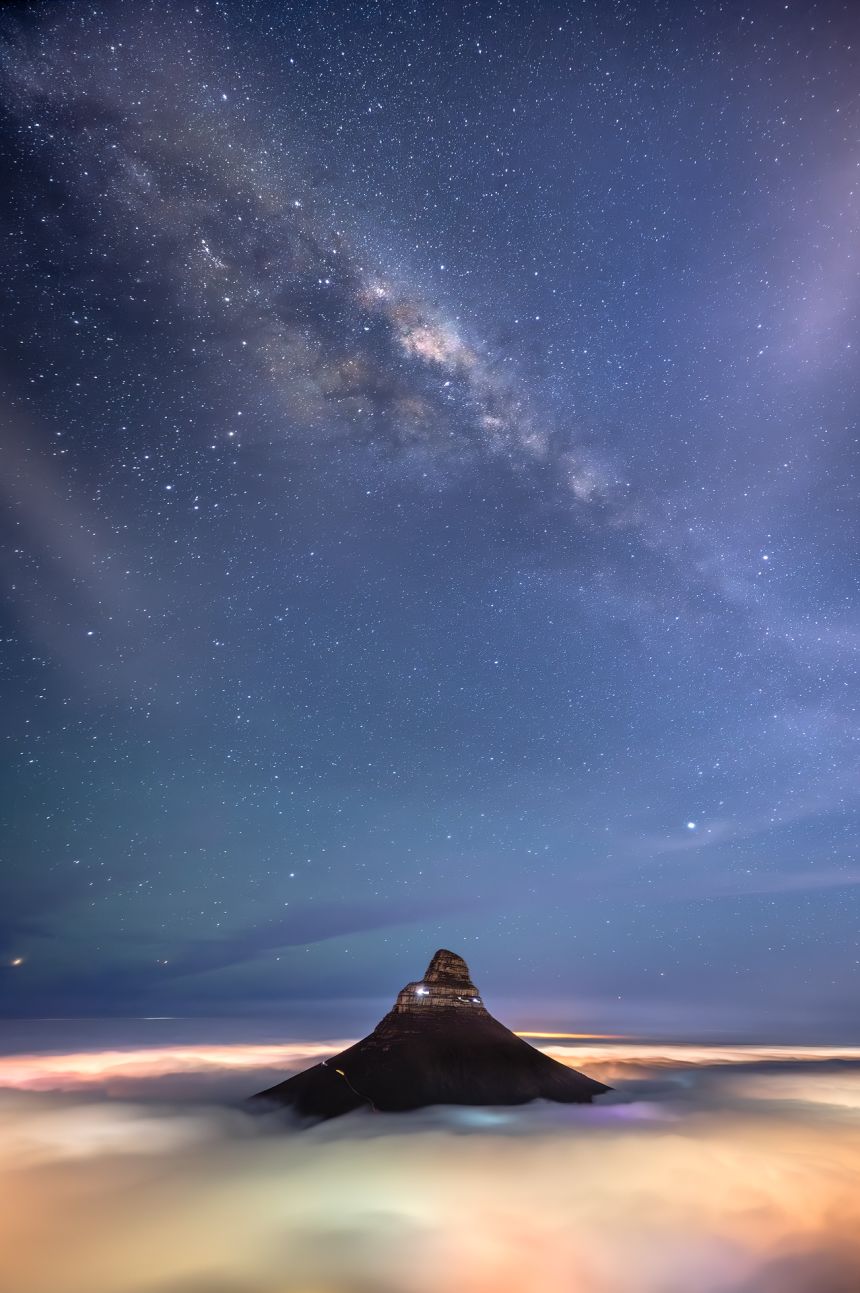
That transition was aided by the career-launching impact of his viral photo that captured the Milky Way looming above the prominent Lion’s Head mountain peak in Cape Town, a scene that necessitated five years of fruitless, arduous hikes waiting for various metaphorical stars to align, from the height of the fog to the visibility of the overhanging galaxy.
For all the beauty of South Africa’s legislative capital, from the rolling fynbos (hills and plains) of Kirstenbosch National Botanical Garden to the bioluminescent marine organisms that occasionally light up the nearby Kogel Bay beach, for Goetsch, few experiences beat the feeling of observing a budding photographer capture their first shot of the stars.
“It’s always exciting when you see it’s someone’s first time — the Milky Way comes up on the back of their screen and you see their faces,” he says.
“I’ve got people that have been coming with me for seven or eight years now, and I’ve seen them grow. That’s extremely rewarding for me as a photographer.”
Goetsch’s tutoring role is eased by the clarity with which the stars can often be seen from Cape Town and wider South Africa.
In 2023, the country’s tourism board published a 10-year national strategy outlining plans to become a world leader in astro-tourism, spurred by its relative scarcity of light pollution, favorable position in relation to various constellations (such as the Southern Cross and Mensa) and abundance of meteorite impact craters.
It’s already reaping rewards. In September 2025, Lapalala Wilderness Nature Reserve in Limpopo Province was designated as South Africa’s first International Dark Sky Park by DarkSky, a nonprofit fighting against light pollution to preserve the quality of the night sky.
Goetsch has worked on several occasions with the team at the Southern Africa Large Telescope (SALT) near Sutherland, in the Northern Cape, often being granted special access to shoot the observatories — and other gawking photographers — at night.
“It’s absolutely incredible to see these dark skies with the people sitting inside there taking pictures of the sky and, at the same time, you taking pictures of them,” Goetsch said. “It’s quite surreal.”
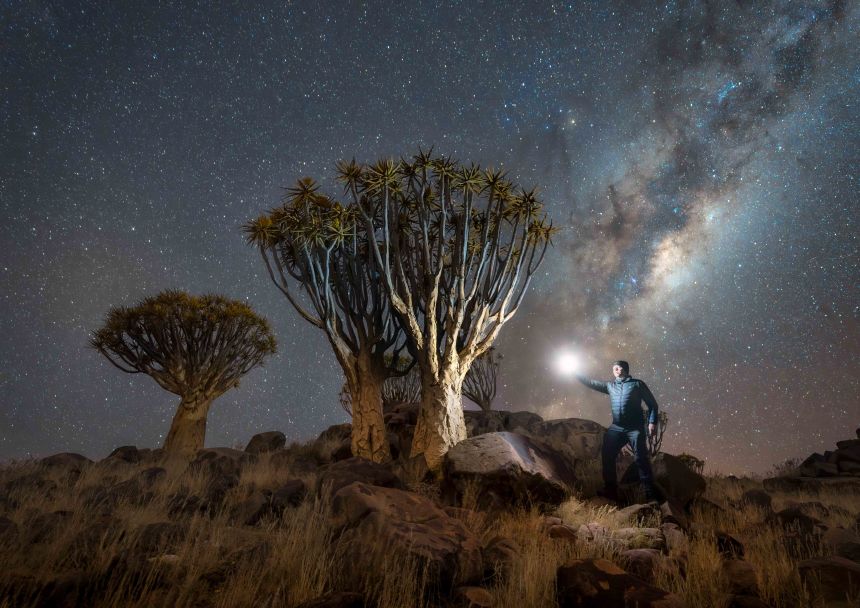
If there’s a new moon in the sky, you can almost guarantee Goetsch will be somewhere pointing his lens toward it. Every star-spattered image he captures is another step toward his goal of showcasing southern Africa as a night photography paradise.
“We see a lot of the Northern hemisphere photos of the Milky Way,” he explained, “So I really try and incorporate well-known locations or something that’s very unique to southern Africa.”
“I think we have one of the best places in the world to do night photography or astrophotography. Compared to the Northern hemisphere with a lot of light pollution, we’re really lucky here … I’m so incredibly blessed to live in such a beautiful place.”