
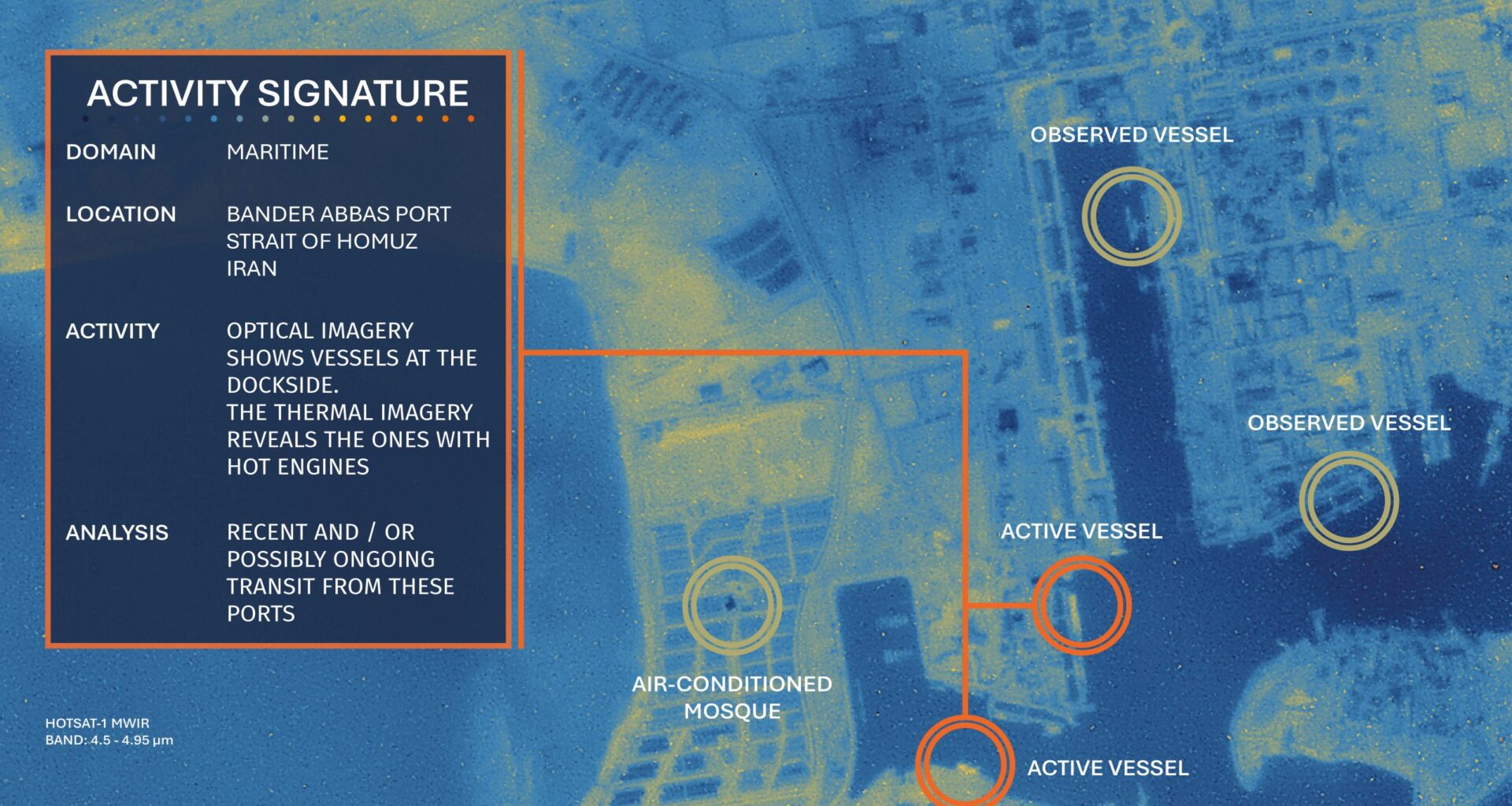
TAMPA, Fla. — Earth observation startup SatVu said Feb. 17 it has raised 30 million British pounds ($41 million) in a funding round that included the NATO Innovation Fund, as commercial space-based thermal imagery gains traction with defense and intelligence agencies.
The funding will support the British venture’s push back to orbit after its initial demonstrator failed in 2023, with two follow-on satellites slated for launch this year as it works toward a constellation of nine spacecraft to deliver 10-20 daily revisits.
“This funding secures SatVu’s path to execute at scale,” SatVu chief financial officer Camilla Taylor said in a statement.
“We have a clear and credible path to a multi-satellite constellation, accompanied by investors that match the ambition and pace of the business.”
SpaceX was previously lined up to launch SatVu’s HotSat-2 and HotSat-3 satellites, both built by U.K.-based Surrey Satellite Technology Ltd. (SSTL), in 2025. SatVu did not disclose a reason for the delay.
The startup said it has also initiated contracts for an additional three satellites without elaborating.
SSTL built HotSat-1, launched in June 2023 to demonstrate its capability to capture thermal imagery at 3.5-meter resolution before suffering an anomaly that ended services after six months in low Earth orbit.
SatVu aims to provide imagery that can reveal activity otherwise invisible day and night, including heat signatures associated with operations around buildings and critical infrastructure.
Anthony Baker, SatVu’s cofounder and CEO, said: “This allows governments to assess activity, readiness, and operational change — a critical new data layer that matters for defence, security, and sovereign decision-making.”
The NATO Innovation Fund, or NIF, is a venture capital fund backed by NATO member nations to invest in emerging technologies with defense and security applications.
Trisha Saxena, a senior associate at NIF, said: “SatVu’s thermal intelligence technology can provide governments and businesses across NATO nations with a level of detailed data that was simply not available before.
“We are pleased to support SatVu as it revolutionises the earth observation market, delivering critical insights to the security, finance and commodities sectors to help safeguard defence and economic activity across the Alliance.”
Thermal imagery interest heats up
The funding announcement comes a week after the U.S. National Reconnaissance Office added SatVu and two other commercial imaging firms to its roster of vendors it is testing for future intelligence missions.
Investor interest in commercial thermal satellite imagery has also been rising. Last week, German startup constellr announced a 37 million euro ($44 million) funding round to expand its own thermal imaging constellation, led by Alpine Space Ventures and Lakestar.
“Sovereign resilience requires understanding real activity on the ground, not just seeing objects,” constellr cofounder and CEO Max Gulde said in a statement.
“Thermal intelligence provides the earliest and most reliable signal of operational change, from detecting rocket and airbase activity to identifying active reactors and hidden industrial operations. Europe must own this capability.”
The German firm said the investment brings its total funding to 75 million euros, supporting the expansion of its two-satellite SkyBee constellation.
SatVu said its latest round was led by existing investor Molten Ventures and brings its total equity funding to 60 million British pounds.
Other existing investors Adara Ventures, Ridgeline Ventures, NOA, Lockheed Martin, Seraphim Space Fund and Stellar Ventures also joined the round, alongside new investors British Business Bank, Space Frontiers Fund II and Presto Tech Horizons.
Related