

 Inflation is above target, but an interest rate cut is still predictedpublished at 08:46 GMT
08:46 GMT
 Mitchell Labiak
Business reporter
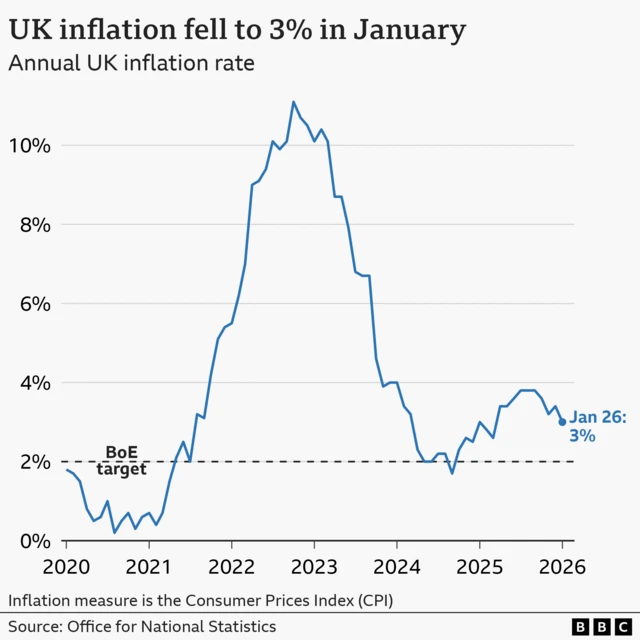
Central to the Bank of England’s mission is to keep inflation at 2%. Broadly, it does this by changing its interest rate to affect how people spend and save.
For example, when it thinks inflation is too high, the bank will raise rates to discourage people and businesses spending too much and to encourage them to save. The hope is that this will slow down price rises.
However, at the moment, inflation is at 3%, which is above target, yet economists are still predicting an interest rate cut next month. Why? Because many economists think that inflation will continue to fall this year.
Part of that is because global food prices are forecast to fall and this is expected to have a knock-on impact on the UK. In addition, yesterday’s figures showed wage growth is slowing in the UK. That’s not necessarily good news for workers, but it is one of the many things which can slow price rises.