
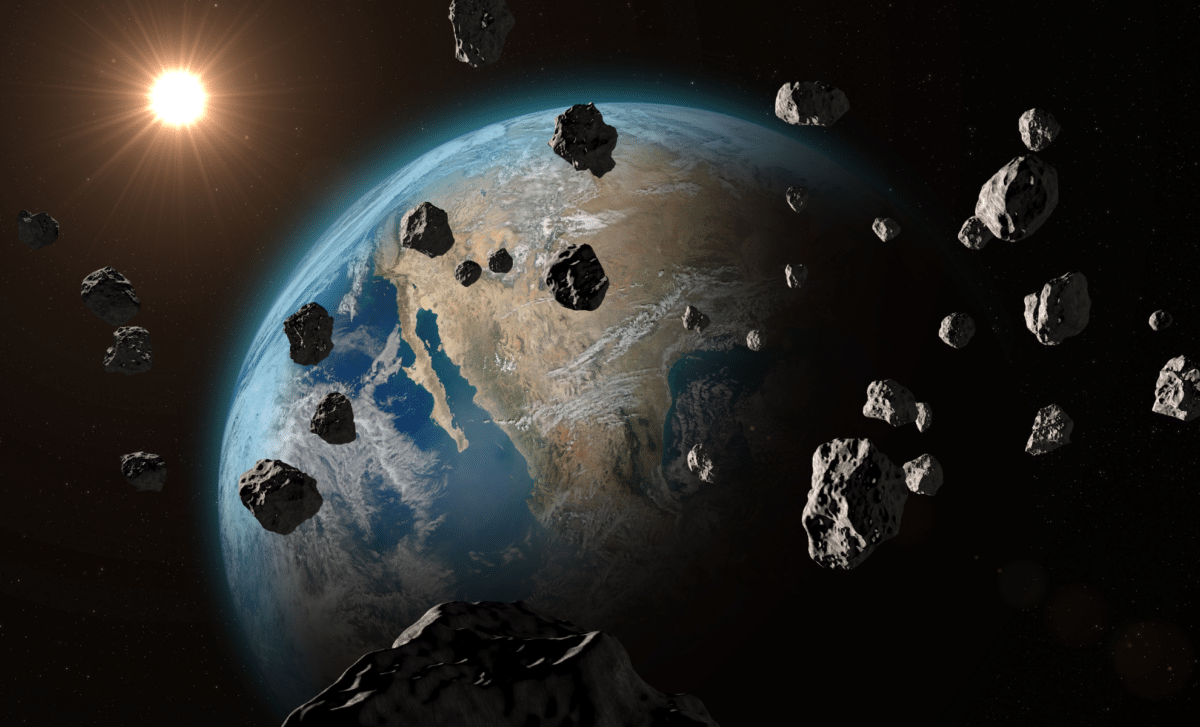
NASA experts are raising alarms about the growing threat posed by near-Earth asteroids, with some of these objects having the potential to cause devastating damage to cities. While some large asteroids are monitored and their movements tracked, there’s a significant concern over the undetected mid-sized asteroids that could strike without warning. These “city killers,” as NASA scientists call them, could be lurking in space, undetected by even the most powerful telescopes.
NASA’s Growing Concern About Mid-Sized Asteroids
In a recent discussion at the American Association for the Advancement of Science (AAAS) in Arizona, Dr. Kelly Fast, a Planetary Defense Officer at NASA, voiced her deep concerns about a specific group of asteroids that could pose a severe threat to Earth’s safety. These asteroids, which range in size from 140 meters to larger, are considered particularly dangerous because they are large enough to cause regional destruction, yet small enough to evade detection by current monitoring systems. As Dr. Fast pointed out, while scientists are able to track large asteroids and are aware of the smaller, frequent impacts, it is these mid-sized asteroids that remain largely hidden, creating an alarming gap in planetary defense. According to The Daily Star, Dr. Fast warned that there are thousands of such asteroids, and as of now, NASA has only located around 40% of them. This poses a significant risk, as the asteroid population of this size could potentially devastate entire cities if one were to strike unexpectedly.
“What keeps me up at night is the asteroids we don’t know about. Small stuff is hitting us all the time so we’re not so much worried about that,” she said. “And we’re not so worried about the large ones from the movies because we know where they are. It’s the ones in between, about 140 meters and larger, that could really do regional rather than global damage and we don’t know where they are.”
Dr. Fast further warned that there may be up to 25,000 such asteroids orbiting in the vicinity of Earth, yet scientists have only managed to identify around 40% of them. The slow pace of detecting these objects is alarming, especially given their potential to wreak havoc on a regional scale. Despite this, the lack of advanced detection tools for these specific types of asteroids remains a significant concern.
The Limitations of Current Technology in Detecting Asteroids
Currently, even the most sophisticated telescopes are struggling to track these elusive space rocks. Asteroids in this size range, particularly those that accompany Earth in orbit around the Sun, are difficult to spot due to their lack of reflected sunlight. Dr. Fast’s frustration with the limited technological capacity is evident when she explains that the problem is not just about detecting asteroids but also about identifying them before they get too close.
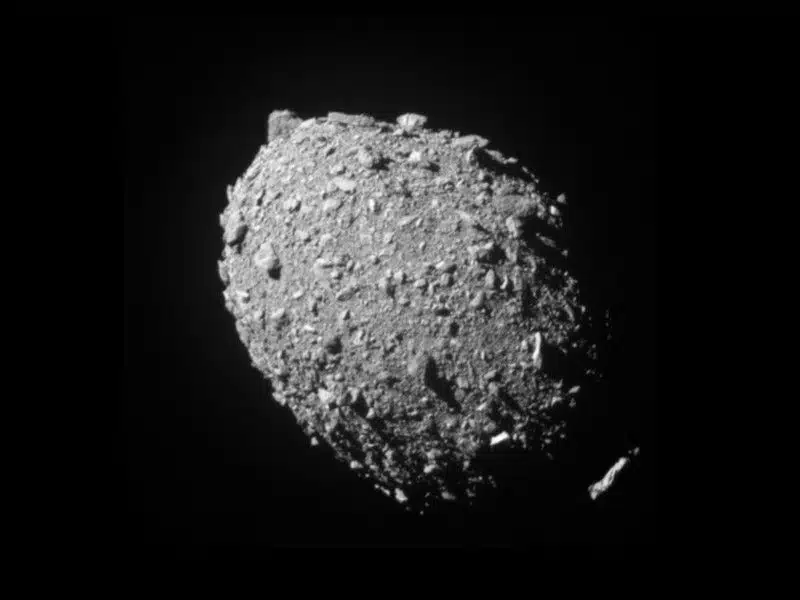 On Sept. 26, 2022, DART impacted the asteroid moonlet Dimorphos, a small body just 530 feet (160 meters) in diameter. It orbits a larger, 2,560-foot (780-meter) asteroid called Didymos.
Credit: NASA
To address this, scientists are pushing forward with the Near-Earth Object Surveyor space telescope, set to launch next year. This mission aims to use thermal signatures to detect darker asteroids that are otherwise hidden from traditional telescopes. While this technology offers hope for improved asteroid detection, it’s unclear how effective it will be in locating all the asteroids still lurking undetected.
Despite these advancements, Dr. Fast pointed out the undeniable risk: “It’s estimated there are about 25,000 of those and we’re only about 40% of the way through. It takes time to find them, even with the best telescopes.”
Challenges in Deflecting Potentially Dangerous Asteroids
Even if we were to identify one of these mid-sized asteroids, the real challenge would lie in deflecting them to prevent an impact. The issue is that, unlike the large asteroids, there’s currently no active defense system in place that could quickly intervene. Dr. Nancy Chabot, a planetary scientist who led the Double Asteroid Redirection Test (DART) mission, highlighted the difficulty of replicating the success of DART with a “city killer.” DART was a breakthrough experiment in 2022 when NASA crashed a spacecraft into the asteroid Dimorphos to test the possibility of changing its trajectory.
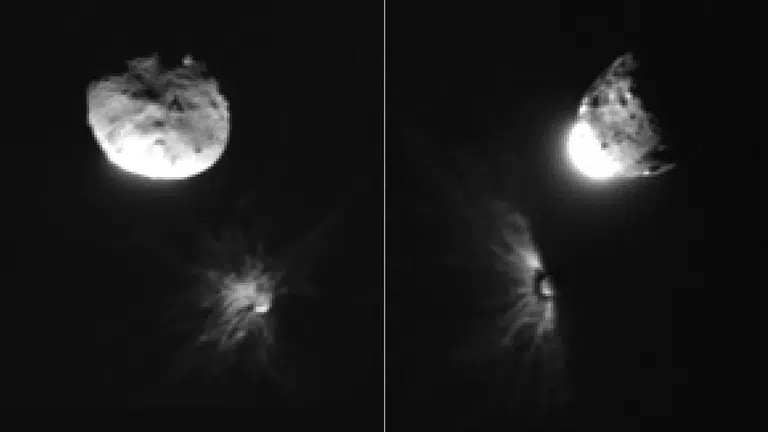 Photos taken by the Italian LICIACube, short for the LICIA CubeSat for Imaging of Asteroids. These offer the closest, most detailed observations of NASA’s DART (Double Asteroid Redirection Test) impact aftermath to date. The photo on the left was taken roughly 2 minutes and 40 seconds after impact, as the satellite flew past the Didymos system. The photo on the right was taken 20 seconds later, as LICIACube was leaving the scene. The larger body, near the top of each image is Didymos. The smaller body in the lower half of each image is Dimorphos, enveloped by the cloud of rocky debris created by DART’s impact.
NASA/ASI/University of Maryland
While the DART mission proved that it’s technically possible to change an asteroid’s path, Dr. Chabot pointed out a critical issue: “Dart was a great demonstration. But we don’t have [another] sitting around ready to go if there was a threat that we needed to use it for,” she said. In other words, while the DART mission was a success, the technology and infrastructure needed to act on a threat are currently inadequate.
“If something like YR4 had been headed towards the Earth, we would not have any way to go and deflect it actively right now,” Dr. Chabot said.
This points to a crucial problem in planetary defense, the lack of funding and preparation for such catastrophic events. While there have been proposals to implement preventive measures, the reality is that space agencies lack the necessary resources to keep planetary defenses on standby, despite growing concerns about the threat.
The YR4 Asteroid Threat and the Need for Action
One asteroid that has raised particular concern is YR4, which has been on scientists’ radar since 2024. With a 4% chance of striking the moon in 2032, YR4 represents the type of asteroid that could be devastating if it were to change course and head towards Earth. To prevent such a disaster, some scientists have even proposed drastic measures such as using nuclear devices to destroy or divert the asteroid, much like the plot of the famous sci-fi film “Armageddon.” While this idea sounds dramatic, it highlights the extreme risks we face if an asteroid of this size were to strike Earth. The real question, however, is whether space agencies are prepared to take action before it’s too late.
“We could be prepared for this threat. And I don’t see that investment being made,” Dr. Chabot said, adding a note of urgency to the debate. The fact that funding for planetary defense is still limited underscores how seriously this threat is being taken, or, rather, not being taken. With mid-sized asteroids being so numerous and potentially dangerous, it’s clear that this is an issue we cannot afford to ignore.