
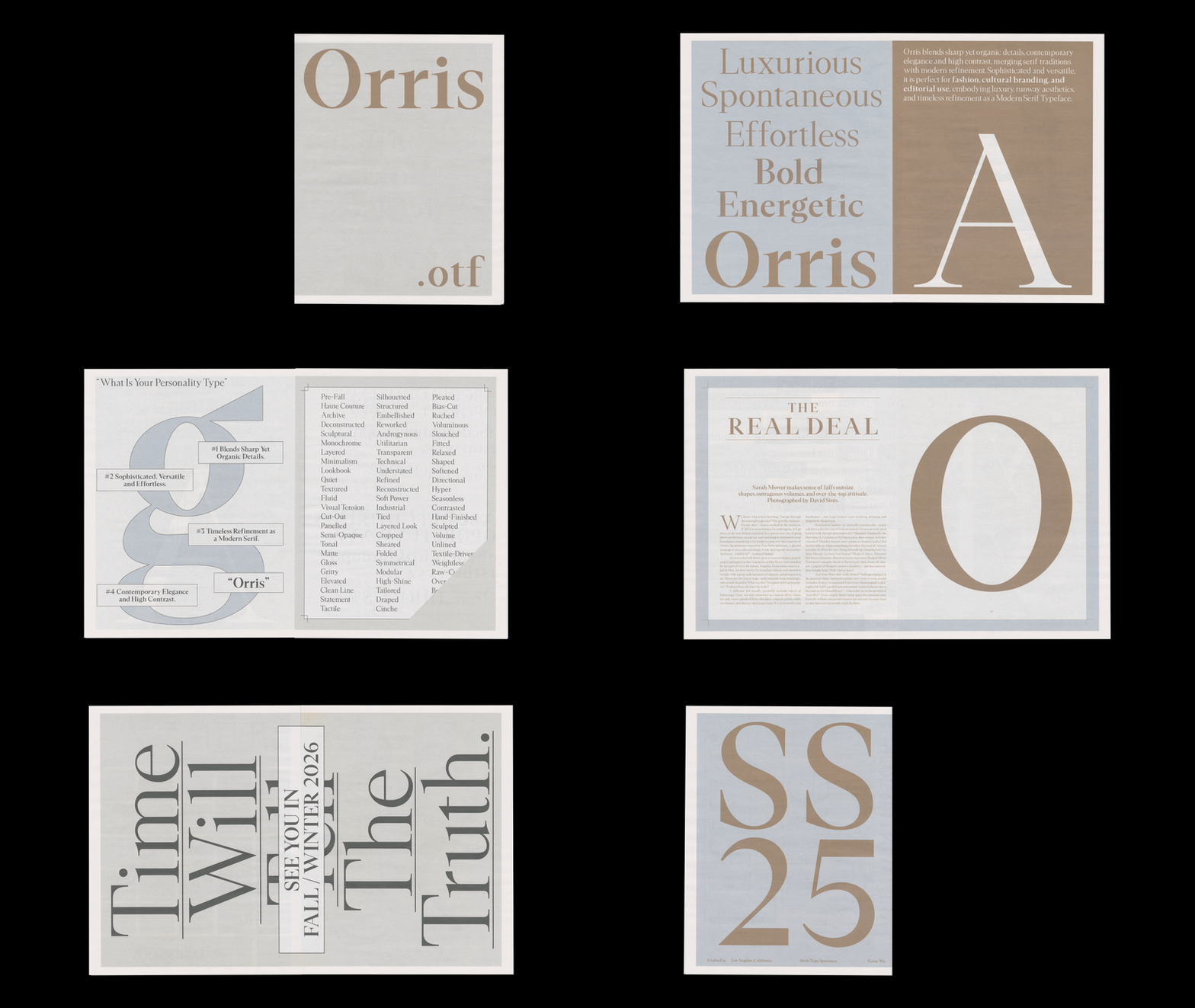
Genie Wu’s design “begins with a double take”. When living between Taiwan and the United States, the designer learned that meaning is never fixed, it simply shifts and reshapes with every culture and point of view. “That habit of looking twice informs how I approach every project. I treat the world as layered, where everyday details, signs, and textures become entry points into deeper stories,” says Genie.
As a graphic designer working at the intersection of identity, type and narrative, Genie’s practice bridges cultural observation and design systems, paying homage to the layered world they speak of through everyday details such as signage, texture and “entry points to deeper stories”. Merging analogue and digital techniques, Genie explores how craft and code coexist in Form Revival: When Canvas Meets Code – and it shows in their work across InDesign, Illustrator, Figma and Glyphs; they bring an artistic attitude to digital applications. For Genie, it’s important that their work connects culture in a meaningful, human way, evidenced in its emotional clarity, use of space and careful formatting.
Finding grounding in art from the Renaissance and Enlightenment schools of thought, where proportion and light become tools of inquiry, these influences remind Genie to balance intuition with structure in order to bring intelligent and thoughtful structure to visual identities, always staying open to the cracks in the everyday where beauty shines through. “My influences mirror my way of seeing, rooted in observation, reflection and reinterpretation. Visually, I follow a lot of designers, photographers and magazines on Instagram, always keeping my eyes on new work that pushes boundaries,” says Genie. “It’s become a daily habit of collecting small sparks, textures, compositions, or bits of typography that feel unexpected or alive.”