
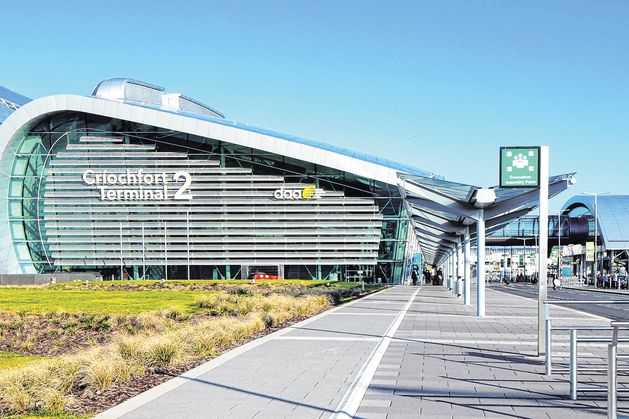
Councillors have cautioned that changes in the cap could worsen noise pollution, traffic and climate concerns for people living in the area
If a new bill is approved, planning responsibilities for the airport will transfer from Fingal County Council (FCC) to the Minister for Transport.
This could mean the ministry overriding the current limit of 32 million passengers – a cap introduced in 2007 when Terminal 2 of the airport received planning permission.
“The original cap came through the planning process and any attempt to remove the cap should have the same level of democratic scrutiny,” said Labour councillor for Castleknock John Walsh.
“I think the government’s proposals are undemocratic. They are designed to remove a level of scrutiny and accountability of the Dublin Airport Authority (DAA) – it’s designed to allow the DAA to get their way without any scrutiny from public representatives or professional planners.”
Last year, the FCC issued an enforcement notice to the DAA to comply with its planning conditions after it received complaints that they had been breached.
FCC councillors have cautioned that changes in the cap could worsen noise pollution and traffic for people living in parts of Fingal.
“The government has decided to ignore the people and sacrifice local communities in the interest of expanding flights at the airport,” cllr Walsh said.
“The government is showing a blatant disregard for the quality of life of residents living close to the airport – they have very serious concerns about noise pollution that the DAA has totally failed to address.”
A spokesperson for the DAA said it has invested €23m in noise mitigation as a response to concerns from residents in the area.
“The DAA is very aware that airport operations have an impact on local communities and works hard to minimise this,” said Kevin Cullinane, Deputy Director of Communications at the DAA.
“Our job is to operate a major international airport and ensure Ireland has the connectivity it needs with the world. We have to strike a balance between this and the needs of those living close to the airport.
“That’s always going to be difficult, but we are constantly working to minimise the impact and listen to community feedback.
“That’s why we have invested over €23m in noise mitigation, including home insulation, voluntary home purchase schemes and continuous noise monitoring for surrounding communities.”
After Ryanair, along with Aer Lingus and US airlines, sued the Irish Aviation Authority last year, Dublin Airport was allowed to handle 36.4 million passengers.
Earlier, Ryanair chief executive Michael O’Leary criticised Taoiseach Micheál Martin for not removing the passenger cap after a year in office, calling for its removal by March.
“We have a planning system in place for good reason – the cap was imposed to manage the capacity of the airport itself and to control surface traffic,” said David Healy, Green Party councillor for Howth-Malahide.
“We resolved the capacity issue with the second terminal but the surface traffic concerns remain – we could end up in a situation of constant traffic jams at the airport and passengers are going to suffer the most.
“This needs proper assessment. Instead, what we’re getting is decisions by a Minister listening to Michael O’Leary shouting at them.”
Cllr Healy added that the new Dublin Airport (Passenger Capacity) Bill 2026, which can remove the existing cap, fails to address climate concerns.
“At the very end of this piece of legislation, it says that the Climate Act (which seeks government approval of plans in line with climate change) does not apply to any decision taken on under this,” said cllr Healy.
“That’s really shocking. We can’t decide that climate change is the biggest challenge we face and then ignore it when it comes to the airport.”
The DAA has introduced noise insulation grants in local schools and purchased homes in the area under a voluntary purchase scheme for more than their market value, according to a spokesperson.
“Alongside noise mitigation, we support local communities through initiatives like the Dublin Airport Community Fund and programmes which provide direct funding to schools near the airport,” said Mr Cullinane from the DAA.
“Noise and environmental impacts are controlled through strict planning conditions, runway operating restrictions and independent aviation oversight, not by the passenger cap.
“Any future development to support Ireland’s global connectivity, sustain jobs and strengthen our economy will continue to be subject to robust regulation and oversight.”
Councillor John Walsh added that local communities would have to bear the brunt of it if climate concerns are not addressed.
“Of course we need aviation as a means of travel but we also need to recognise the urgency of the climate crisis – it’s very striking that the government seems totally indifferent to the emissions impact of abolishing this cap,” he said.
“While households, farmers, workers, and every other section of society has been told to change the way they live to combat climate change, the ministry has decided that emissions can grow freely around Dublin airport.”
The Department of Transport has been contacted for comment.
Funded by the Local Democracy Reporting Scheme