
Small Prophets BBC TwoMain takeaway: it’s good to have a hobby
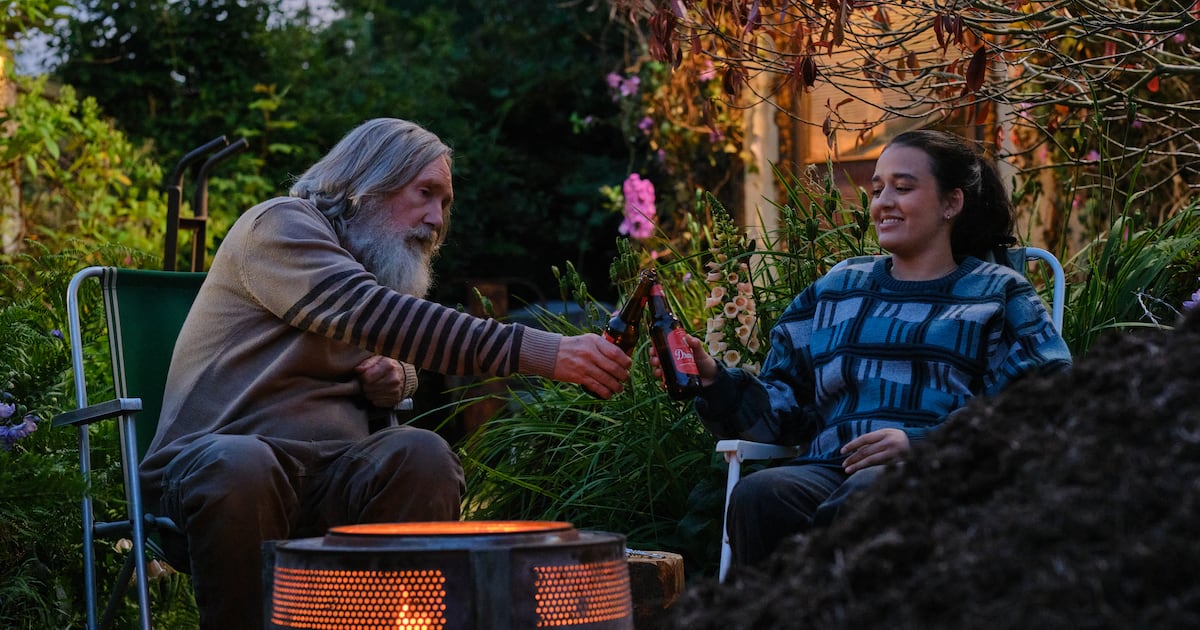
I love the new Mackenzie Crook show, Small Prophets (BBC Two). I properly love it. I’d marry it if you could marry a television programme (Also, I have just remembered: I am already married).
I don’t just love it because it’s about a bearded man (Pearce Quigley) with a messy house who likes to tinker away at unholy alchemical projects in his shed (this is practically banal in its relatability). I love it because it tells a truly original warm, funny story about loss and connection and grief that manages to wrangle more magic from its tiny special-effects budget than a whole warehouse of indentured Marvel CGI artists. I love it because it’s really about connection and colleagues and neighbours and a genuinely sweet intergenerational friendship.
I love it because it’s also about a man who works in a hardware superstore who, on the side, creates all-knowing homunculi in jars. And I love it because Crook went into the BBC, pitched that prospect to someone who was clearly trying to get fired, and managed to get it made. (“How the hell did this get made?” is generally what I say when watching my favourite TV shows).
The Lowdown Disney+Main takeaway: being cynical is passé 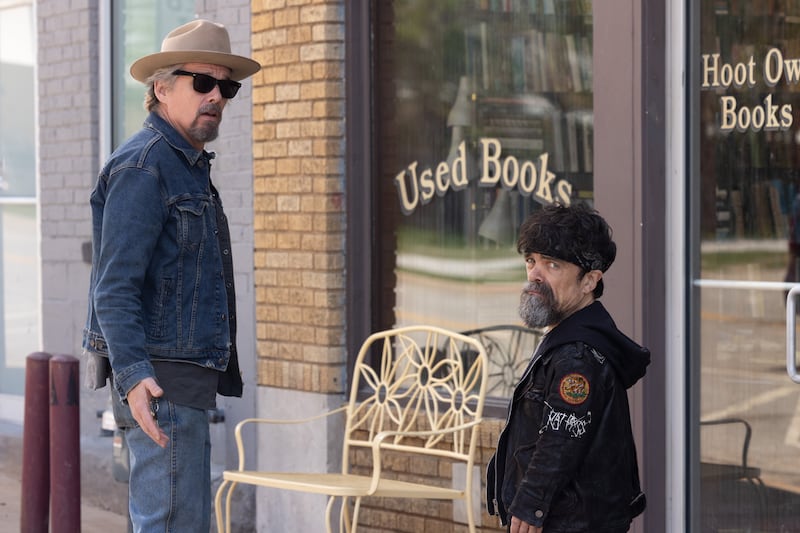 Ethan Hawke and Peter Dinklage in The Lowdown. Photograph: Shane Brown/FX/Disney+
Pearce Quigley and Ethan Hawke would, ordinarily, be very different kinds of actors but both are playing to a similar type in Small Prophets and The Lowdown – the local eccentric who has a wider importance to his community. The Lowdown, from the pen and camera of Sterlin Harjo, who also made the brilliant Reservation Dogs, is a very rare noir detective story in that it shuns cynicism.
Despite the darkness of the mystery investigated by Hawke’s Lee Raybon, a journalist/bookshop owner/“truthstorian”, this darkness is located in unequal power relationships and not the heart of all mankind. It’s about community and the virtue – not the folly – of getting involved.
Evil NowMain takeaway: it’s rare to see family dynamics so well drawn
Yes, I know that that’s a strange takeaway to have from a show that’s about a priest, a psychologist and a sort of science handyman (the three jobs left now, thanks to AI) investigating paranormal phenomena at the behest of the Catholic church, but I think about it every time I watch.
Yes, yes, the “Do demons really exist?” hokum is also pleasing to my post-Catholic brain (the answer is “probably” by the way) but whenever the action zooms into the babbling household of Dr Kristen Bouchard (Katja Herbers) with her four fictional daughters all yelling over each other and engaging in demented activities it makes me think of the families I actually know. It feel like the creators Robert and Michelle King know normal people and don’t live, like other rich people, in a space sanatorium orbiting the moon. It’s also a nice change from the more common depiction of daughters in adventure romps (“I do love you papa! By the way, I wish to be a princess! And now I will just sit here clutching a doll in the dark”).
The Iris Affair Sky/NowMain takeaway: Tom Hollander should be in everything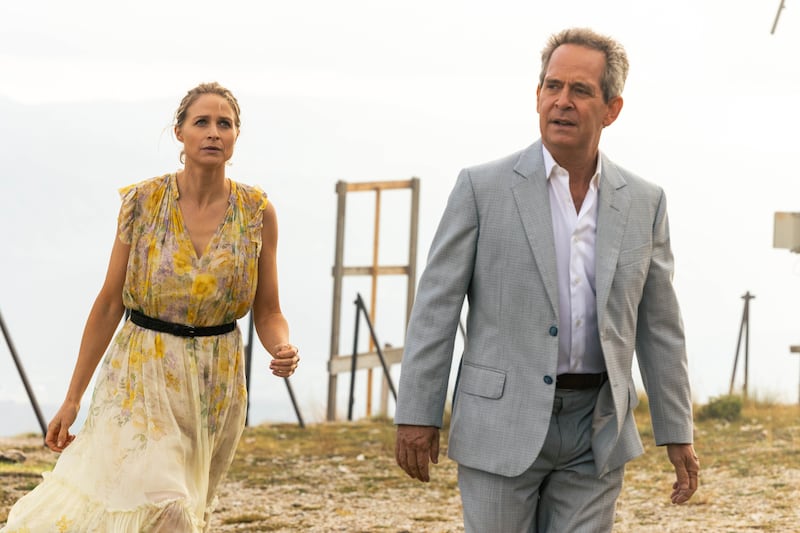 Niamh Algar and Tom Hollander in The Iris Affair. Photograph: Stefano Cristiano Montesi/Sky
The Iris Affair, not the Irish Affair, despite the presence of excellent Mullingar woman Niamh Algar. A twisty story of a slightly psychopathic super genius Iris (Algar) trying to evade an oddly likable evil billionaire (Tom Hollander) in order to save the world from ChatGPT (or some other AI supercomputer) who wants to make a really boring power point that will destroy humanity or something.
[ Niamh Algar: From sparring with Ridley Scott to lockdown in MullingarOpens in new window ]
The story is formulaic enough, but I really like the odd dynamic between the two stars. Algar is the cold and calculating one, despite being on the side of right, while Hollander is warm and empathetic, despite being on the side of the genocidally boring supercomputer. That’s his superpower really, being able to embody cuddly evil. And it’s what I strive for every day.
Slow Horses Apple TVMain takeaway: thrusting heroes are inherently annoying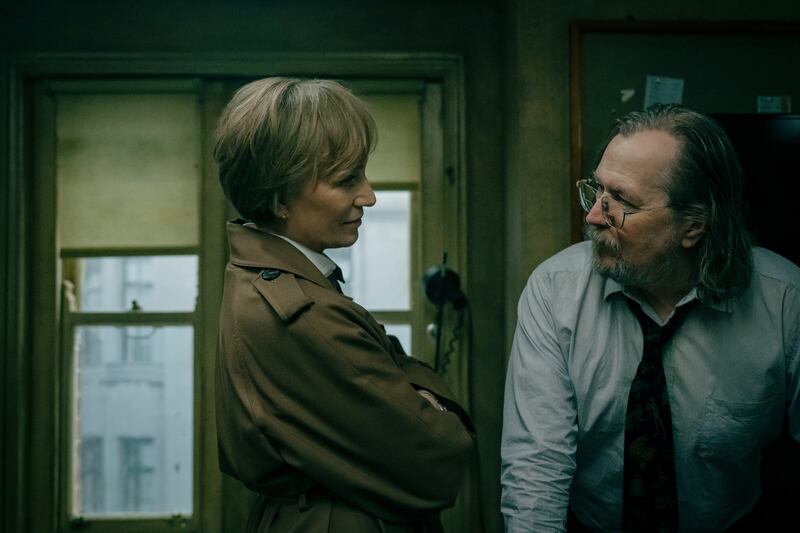 Slow Horses: Kristin Scott Thomas and Gary Oldman. Photograph: Apple TV+/Jack English
“How brave of Patrick,” you’re saying to yourself “to pick this obscure Apple show that nobody likes and which is rarely ever mentioned.” Whisht, you. I’ve had a revelation while watching the recent series of Will Smith’s adaptation of Mick Herron’s spy novels about what I liked most about it.
For years I have been watching American TV shows like Lost and The Walking Dead in which, amid a diverse ensemble of humans thrown together by circumstance, a morally certain and vaguely angry young white man strides forth. Everyone stops talking because someone traditionally hero-shaped has appeared. “Hush,” they say. “A handsome man is speaking.” And then they proceed to follow his whimsical decisions for several series, most of them dying in the process.
In Slow Horses the ostensible hero, River Cartwright (the excellent Jack Lowden) is cut from similar cloth but everyone else on screen finds his pushy sense of manifest destiny very annoying, particularly pungent spymaster Jackson Lamb (Gary Oldman, who I hope for his co-stars’ sake hasn’t gone “method”). So they constantly undermine him. Yes, River Cartwright is good at fighting and spying but he’s also a whingy manbaby and the nature of society is that we are, in fact, an ensemble cast and need to keep whingy manbabies in check.
Scavengers’ Reign NetflixMain takeaway: the best things are niche
A gorgeously animated show about some humans spaceship-wrecked in a bizarre and intricately drawn (literally) ecosystem that is trying to kill them. That ecosystem is so beautifully rendered that you can’t help but root for it much of the time. This show was developed from a short by creators Joe Bennett and Charles Huettner and it is inventive and brilliant. It does what excellent art is supposed to, in that it makes me look at the actual fantastical ecosystem I live in (Marino) with wonder. This show was quite possibly designed just for me, so I was sadly unsurprised it was cancelled after one season. There is probably no economically valid reason it exists. Look, the best things are niche.
A Knight of the Seven Kingdoms NowMain takeaway: big fella/small fella double acts are back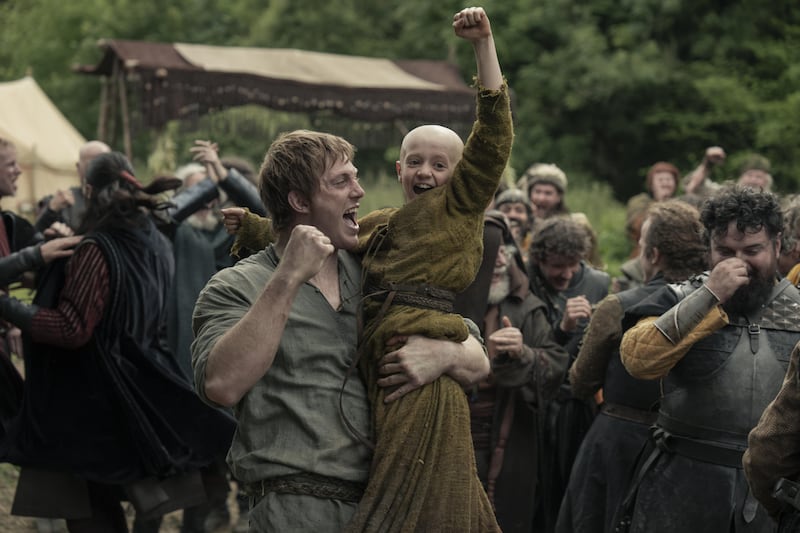 A Knight of the Seven Kingdoms: Peter Claffey as Ser Duncan the Tall and Dexter Sol Ansell as Egg. Photograph: Sky/HBO
For old-school laughs, put a big fella with a small fella: C3PO and R2D2, Oliver Hardy and Stan Laurel, George Bush and Tony Blair, Rod Hull and Emu, my nephews. In this instance, the Game of Thrones franchise, overwhelmed by its own sprawling mythology, has wisely chosen to focus on a big likable lunk, the hedge knight Ser Dunk (Peter Claffey) and his teensy squire Egg (Dexter Sol Ansell) as they have small-scale adventures. Ser Dunk is also from whatever part of Westeros has Irish accents, which adds to the whole vaudevillian vibe (20 years ago this would have seemed racist but we score well on most quality-of-life metrics now).
Fisk NetflixMain takeaway: I need to visit Australia
I’m genuinely unsure if I actually like this very funny, deadpan sitcom about the eponymous Melbourne-based attorney (Kitty Flanagan) or I just like Australians. “Who cares?” says you, probably in the Facebook comments.