
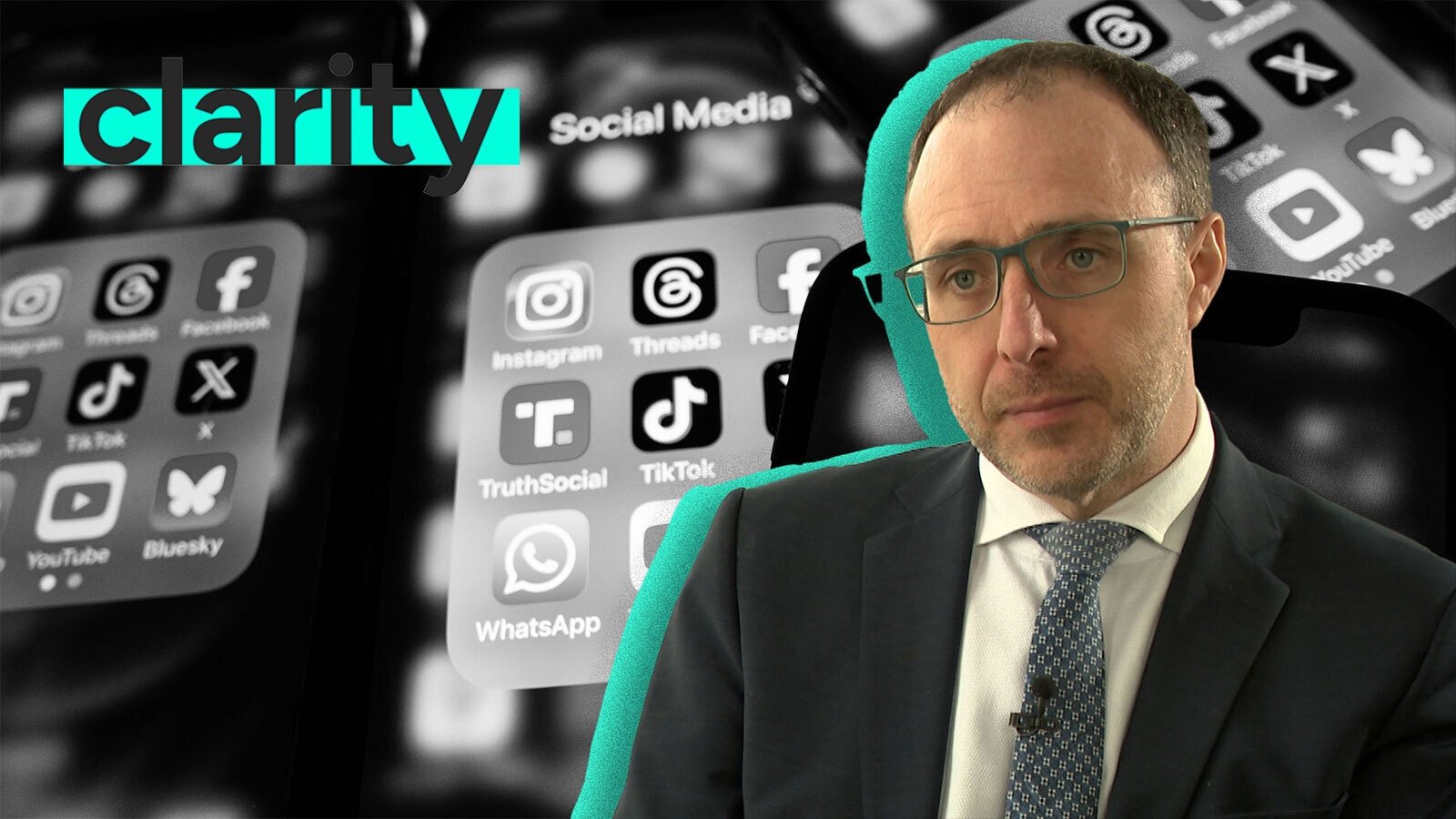
Minister of State Robert Troy has told RTÉ that he contacted gardaí in relation to what he called ‘extreme’ and ‘vile’ messages directed at him and his staff.
The messages followed a video update he posted online about a cemetery in Mullingar.
“There were some very nasty messages left on my office number, and one in particular that really upset the people who work in my office,” he said.
The video update Minister Troy posted was intended to bring clarity to people in the Muslim community in the Midlands after the tragic death of four-year-old Abdur Rehman. Abdur was knocked down and killed near his home in Mullingar, but later buried in Dublin.
However, it triggered a slew of vile messages, online videos, and phone calls.
“I went in one morning and [staff] were saying it was the worst they’ve ever heard,” Mr Troy told RTÉ.
Gardaí confirmed to RTÉ that they were notified of “alleged public order offences” that occurred on 30 January. “Gardaí attended the scene and investigations are ongoing.”
What led to these calls is an example of how information can often be reframed on social media, without context or nuance, to drive engagement.
The meeting
Last year, four-year-old Abdur Rehman was knocked down and killed near his home in Mullingar.
“That family was a member of the Muslim community, and that young boy was buried in Dublin,” Mr Troy told RTÉ.
Following Abdur’s funeral, which Mr Troy attended, he said members of the Muslim community approached him.
“They said to me they would like to have members of their community buried in the community that they live and work and contribute to,” he said.
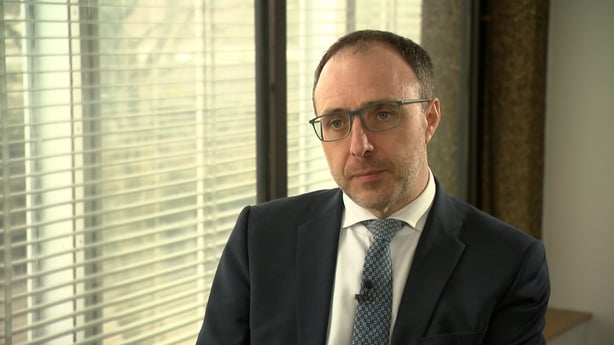
Longford–Westmeath TD Robert Troy said a meeting with Westmeath County Council backed up that the Muslim community could be accommodated at Ballyglass Cemetery
Mr Troy then set up a meeting between members of the Muslim community and Westmeath County Council on 20 January.
“There was no need to actually make a case to have members of Muslim community accommodated in Ballyglass, because at the meeting the senior officials present just reinforced what was already happening,” he said.
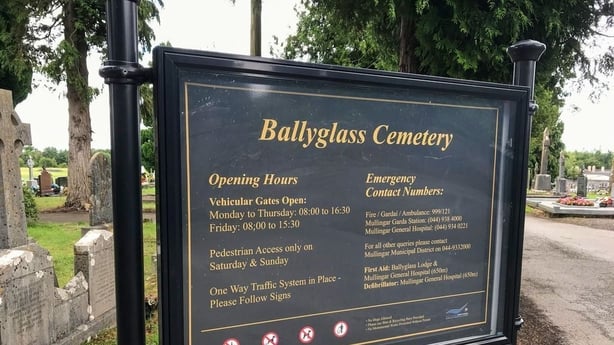
“That [the cemetary] was municipal. It had in the past and continues to offer burial grounds for people of all faiths and none.”
Westmeath County Council confirmed to RTÉ that Ballyglass is a “municipal cemetery owned and managed by Westmeath County Council”.
“It is, and has always been, a non-denominational burial ground, open to all members of the community regardless of faith or denomination,” the council said.
Mr Troy said that due to burial practices, Muslims “have to face to the east” and “as a consequence of that, the location of the grave within Ballyglass was something that was spoken about, and the council said that that could be accommodated” in future.
After the meeting, Mr Troy posted a video to Instagram, to relay the message to the Muslim community in particular, that burials could take place in their local cemetery.
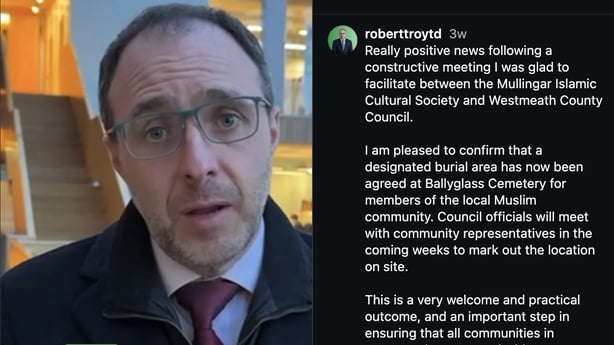
Robert Troy posted a video to Instragram on 20 January
Video goes viral
For days, the video received minimal engagement, with less than 2,000 views, and no significant controversy.
Nine days later, however, on 29 January, a prominent anti-migrant account posted the video on X, with the caption: “Truly disturbing. Minister of State at the Department of Finance Robert Troy, announces a plot of land at an Irish cemetery will be handed over to Muslims. We’re watching Catholic Ireland disappear before our eyes.”
To date, that video has been viewed over 500,000 times, with over a thousand comments and 4,000 reposts, according to X’s own metrics.
An analysis by RTÉ using a social media listening tool showed that between 20 January and 11 February, mentions of Robert Troy spiked from almost zero before the video was posted, to more than 5,000 between 29-31 January.
As this post took off across different social media platforms, there was no mention that Ballyglass was a municipal burial ground, that has always facilitated burials regardless of faith or religion.
The narrative was reframed by online commentators to suggest that the cemetery was “consecrated ground” where “only Catholics can be buried”.
On YouTube, Irish users labelled Mr Troy a “cockroach”, a “hostage”, and accused of giving away an “ancestral, Christian, Catholic graveyard.” One post on X described Mr Troy as a “traitor”, claiming he and the Government was allowing an “Islamic takeover”.
We need your consent to load this flourish contentWe use flourish to manage extra content that can set cookies on your device and collect data about your activity. Please review their details and accept them to load the content.Manage Preferences
From there, that narrative spread across different social media platforms, gaining more and more traction.
In some cases, the messages were amplified by accounts outside Ireland, which consistently post similar types of anti-migrant content.
On Instagram, an account called Raging Europeans, which posts content related to migration and migrants from across Europe, reposted the video to its more than 500,000 followers falsely claiming “politicians like Robert Troy are handing over sections of our consecrated cemeteries to Muslim groups for burials”.
It then urged people to take a stand: “Enough is enough. Time to stand up, reclaim our identity, and stop this quiet replacement.”
That video has been viewed over 160,000 times. According to Meta’s own transparency information, this account is based in Sweden.
London-based consultant in open-source intelligence and computational social science Sohan Dsouza, said its branding, language and cross-posting patterns link it to a wider network of linked accounts across Instagram.
Combined, these accounts have well over 1 million followers on Instagram.
This network is part of a growing ecosystem of accounts that use similar formats and strategies to drive engagement and outrage, Mr Dsouza says.
Apart from pornography and increasingly AI slop, posting anti-migrant content “is one of the most lucrative engagement patterns in terms of the themes we have seen, accounts basically explode in popularity based on this”.
“You don’t need to really do much by way of dark money or anything like that to get something going like this. You just have to align the incentives to make the promotion of rage-bait and unnuanced media as profitable as can be,” Mr Dsouza said.
“Once they get into that whole ecosystem, then they really explode in engagement and the engagement is what drives the monetisation.”
Robert Troy said the vileness directed at him over his Ballyglass cemetery post was ‘surprising’
Ciarán O’Connor of the Institute for Strategic Dialogue described the episode involving Robert Troy as a “textbook case study of how misleading information circulated online can cause a surge in hatred or hostility against public officials”.
“This public figure was labelled a traitor in numerous posts I’ve reviewed. Personal details about them were posted online, and in some instances, explicit conspiracy theories targeting the Muslim community were shared also,” he said.
Other posts alluded to the “Great Replacement Theory”, which Mr O’Connor said is “a conspiracy theory that posits that white majority populations and countries are being systematically or sinisterly replaced by national governments or international organisations”.
In this case, he said, “a hyper local example” was reframed as evidence of the “great replacement of Catholic Ireland.”
Staff receive abuse
In posts across social media, publicly available contact details for Mr Troy’s constituency office were also shared.
Mr Troy said: “[It was] quite surprising, really, some of the vileness that was directed at me. I suppose I’m a grown man. I can take it, mightn’t like it, but towards members of the community who do nothing wrong, it wasn’t nice.”
This prompted Robert Troy and his team to post a clarification on Instagram on 2 February, “in light of a number of vile and abusive messages”.
“I put a clarifying statement up then on my own Facebook because I felt maybe people misunderstood what was after happening, that this was not Catholic graveyard, that this was something that was happening already,” he told RTÉ.
That post also had around 3,000 comments, the majority of which, Mr Troy said were negative.
Asked about claims that Catholic Ireland was being replaced, Mr Troy said: “As somebody who is a believer myself, a frequent mass attender, I don’t believe that supporting and acknowledging other people’s faith, customs, diminishes their own.”
He said it was important to “assure the people who have legitimate fears, those fears are addressed, and that those people are not left open for exploitation by people in the minority who do want to use this as a method of sowing division and for racism.”