
Previous Slide◀
Next Slide▶
1 of 8
Motorcycle airbags may have been around for years but they’ve only recently gained mainstream awareness with road riders.
Now, one of the biggest players have revealed their latest creation, and they say it’s their lightest, most comfortable, and most advanced self-inflated lifesaver to date.
Engineered by Alpinestars, the new Tech-Air 5 Plasma brings more than two decades of development to the table, offering what the Italian brand say is ‘next level’ safety.
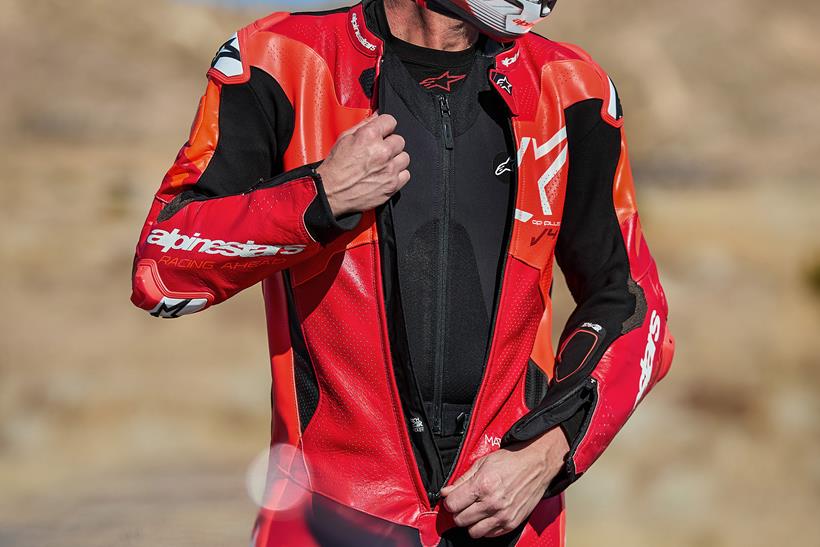
Priced at a not-insignificant £699.99 and available in XS-4XL, the Tech-Air 5 Plasma supersedes the old Tech-Air 5 in the range, offering changes to the sensing hardware, software updates, and a 0.4kg weight saving over its predecessor.
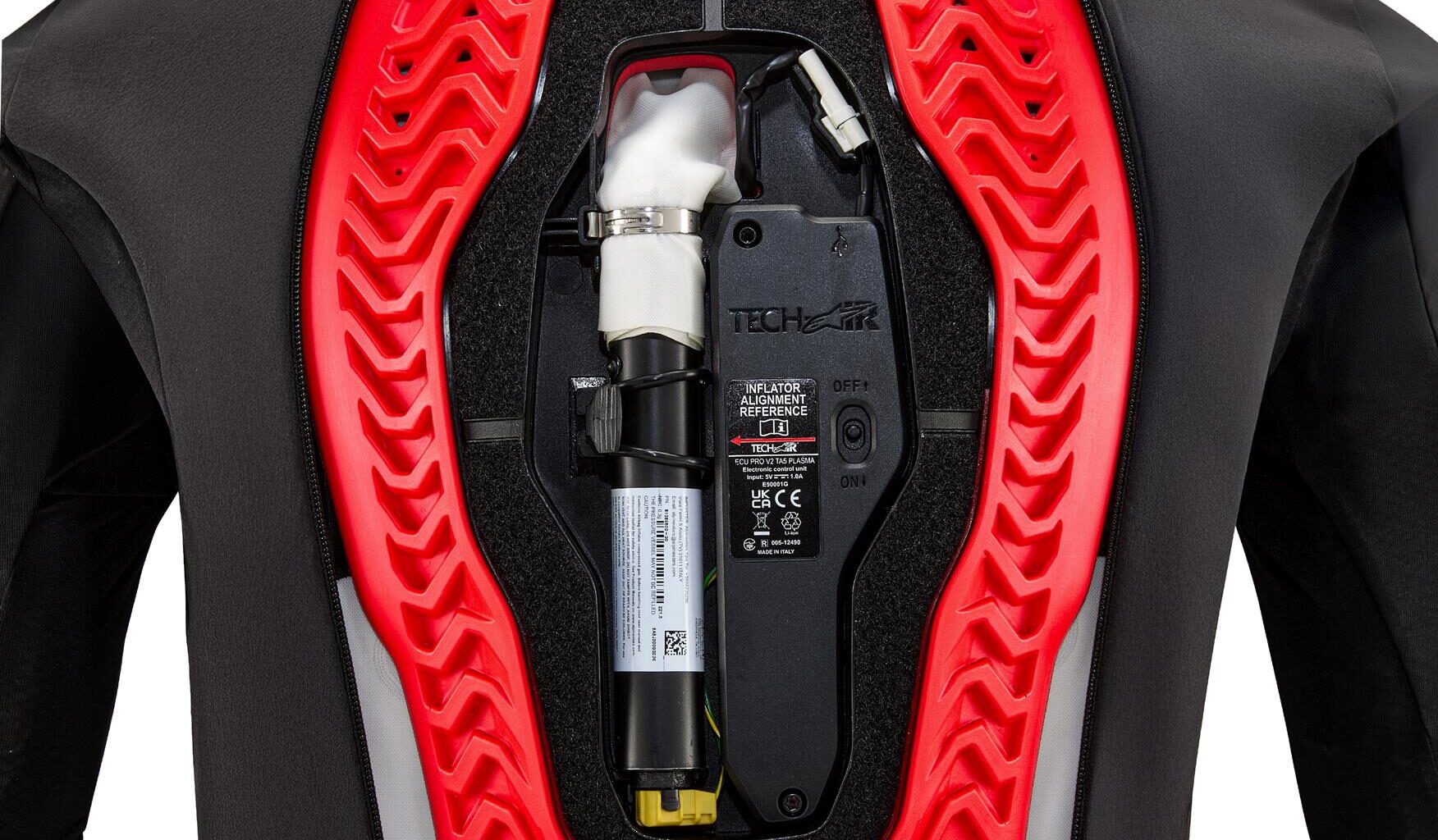
At the heart of the system lies a six-sensor set-up, consisting of tri-axial accelerometers and a tri-axial gyroscope. These monitor movement, feeding data into an AI-driven algorithm.
That algorithm is powered by a database stretching back to 2004, when the company began collecting information from their MotoGP racers.
Since then, Alpinestars have racked up millions of riding miles and thousands of crash info points to shape the way that their latest system responds.
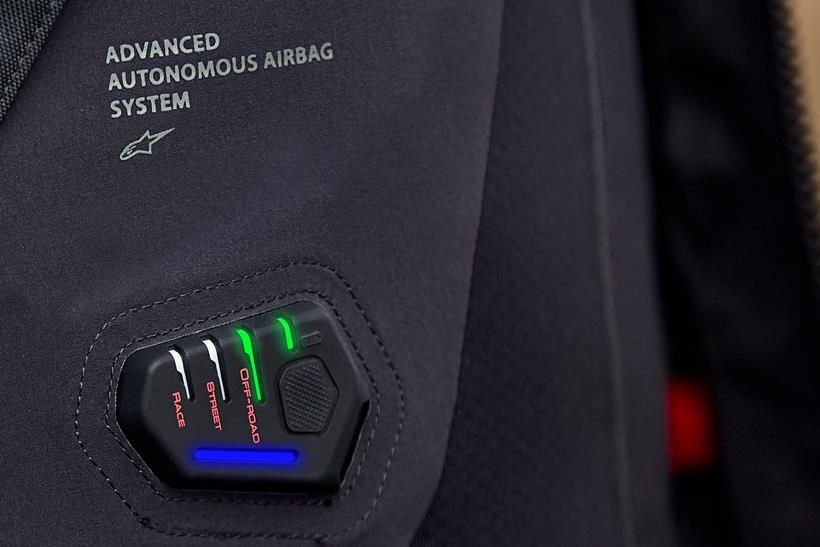
With such a huge body of information to work with, the clever engineering folk behind the Plasma have been able to offer multiple riding modes – Street, Race, and Off-Road – all featuring tailored deployment sensitivity.
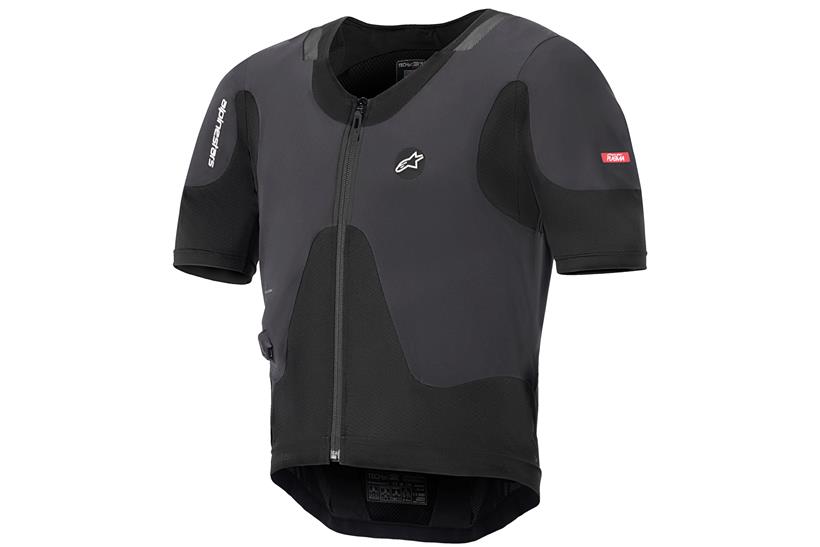
When a crash is detected, the vest inflates in as little as 20 milliseconds. Arming involves simply zipping the vest up and closing a magnetic flap at the front; an LED light in combination with a sensory vibration signals the system is ready for action. These vibrations also indicate when a mode change has been carried out, or to signal deactivation.
Like most things nowadays, there’s an app to go with the Plasma, giving riders access to system status, battery life and firmware updates. The app also includes a ‘MyRide’ feature, allowing users to record rides and map routes, as well as providing access to the user manual.
Power comes from an integrated lithium-ion battery offering up to 30 hours of riding time, with charging via a USB-C port located within the LED display module. At 1530g, the whole assembly is more than 25% lighter than its predecessor and is in fact Alpinestars’ lightest airbag yet.
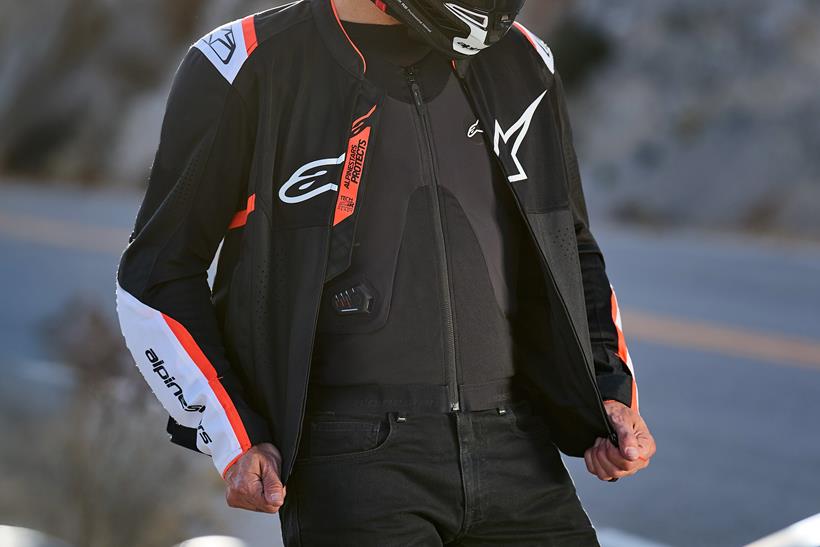
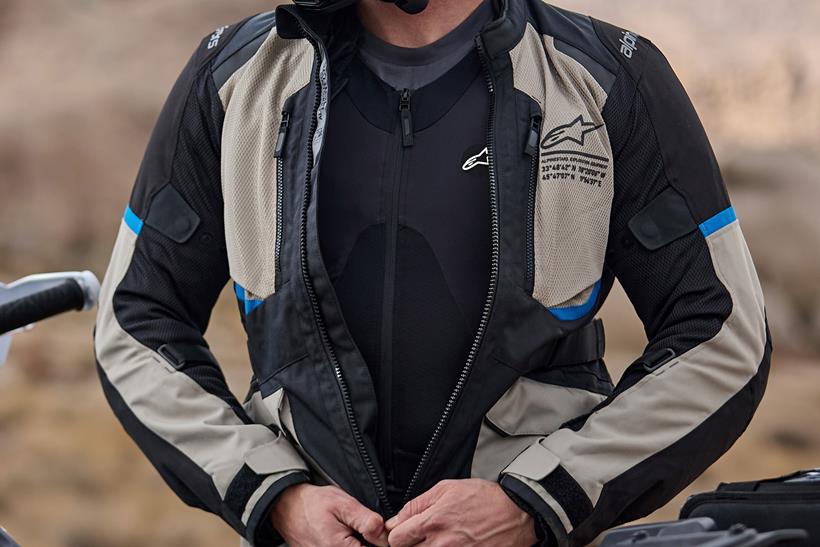
Alongside less mass to contend with, the Plasma is said to be more flexible and slimmer than ever, meaning it can comfortably tuck under your preferred riding jacket (sans back protector) – albeit that comes with the drawback of slightly reduced coverage compared with some other airbags on the market, including Alpinestars’ own Tech-Air 7 and 10 models.
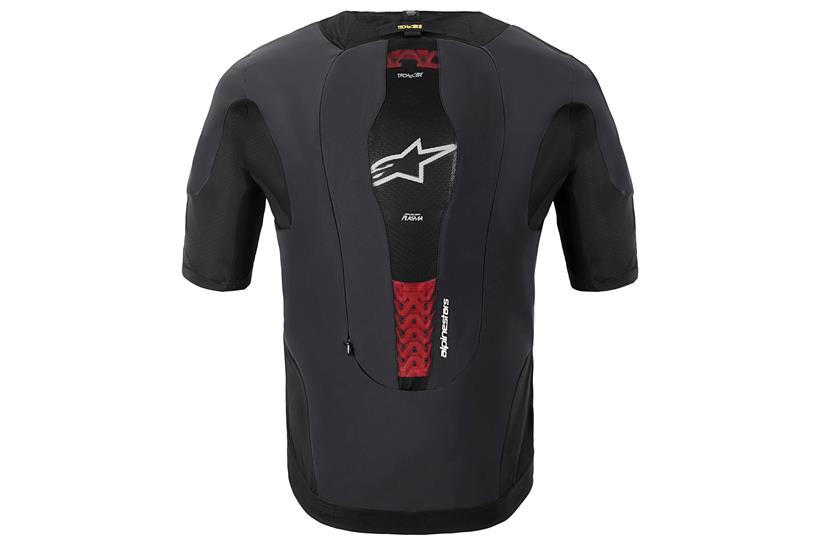
Elsewhere, while no airbag is truly breathable, the Plasma is designed with several airflow holes in the shoulders and back element of the airbag.
In terms of protection, a Level 1 back protector also features, while the inflatable airbag itself is similarly certified to EN1621-4:2013 Level 1. EN1621-4 tests resistance to narrow-object impacts using the same striker methodology applied to conventional armour.
After a deployment, the gas inflator can be replaced by the user at home for £89.99, provided the bladder has not been damaged – each bladder is rated for up to six inflations before replacement is required, which costs £299.99.
Alpinestars recommend replacing the complete system after 10 years, with routine servicing advised at two-year intervals or every 500 hours of riding.
A brief history of airbags
Japanese company Mugen Denko, introduced their ‘Hit-Air’ jacket in 1998, but Alpinestars won the race to release an electronically operated version, rather than the tethered units of old.
The brand began research into inflation-based safety devices at the turn of the 21st century before testing their first electronic airbag in 2004. This early system comprised two 60-litre balloons.
In the same year, they began sourcing data from racers before going public in 2009, when the Tech-Air Race debuted in MotoGP.
Roll on two years and customers could get their hands on the tech, but only via top-shelf one-piece leathers. That was the case until 2014, when Alpinestars launched their first standalone ‘modular’ airbag system.
The MCN take
Safety when riding a motorcycle is paramount, so it’s great to see advancement in airbags continuing to move forwards. However, at £699.99 the technology still has a way to go to become accessible to all.