
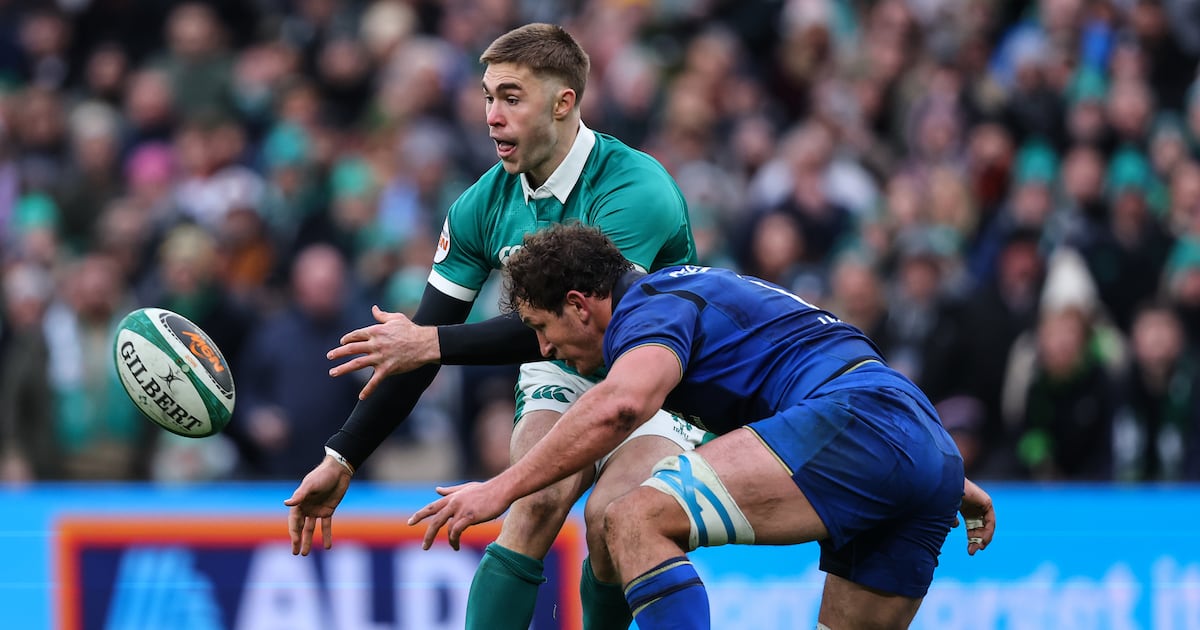
Jack Crowley has been through the ringer over the past three years.
Left on the bench behind Johnny Sexton in the 2023 World Cup quarter-final, Crowley guided Ireland to a Six Nations title in 2024.
Then he was dropped.
Sexton said it best this week: we’ve gone through too many World Cup cycles with one outhalf (and one tighthead prop). Eventually that catches up on a team.
Crowley’s reaction to being benched would have been watched closely by Andy Farrell and the other Ireland coaches. His team-mates would have taken note of his attitude.
Everyone has seen how he bounded into each test match since losing the 10 shirt. Be it at outhalf, centre or fullback, Crowley left an imprint on the last 20 minutes. Overall, he was aggressive and composed in equal measure.
That says a lot about his character.
I know exactly how he felt about losing his place in the Ireland team. When you are the main man, who has delivered for your country, only to be dropped, your ego takes a hammering. You feel very sorry for yourself.
The real torture is the benched player cannot express his true feelings. You have to suck it up and support the starting 10 because a poor attitude or knocking on the coach’s door for an explanation can backfire. You can end up back at your province.
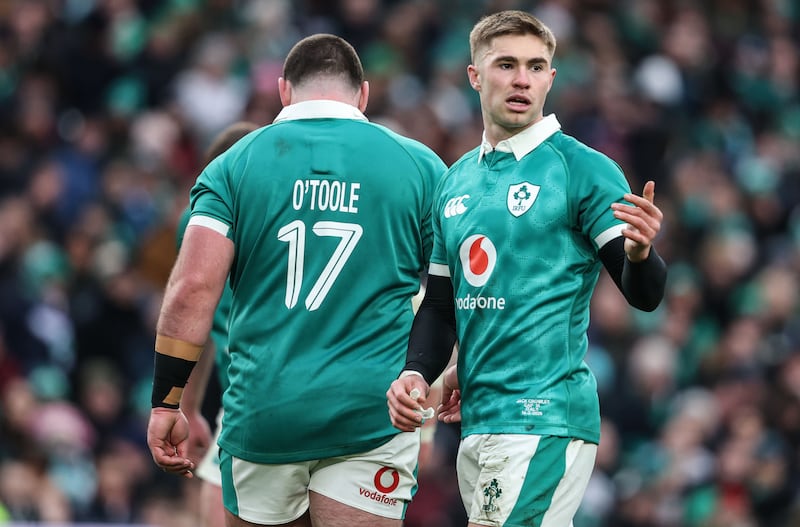 Jack Crowley had to prove he is a resilient professional athlete. Photograph: Inpho
Andy Farrell is a canny selector. And he has Sexton as an assistant coach. The chopping and changing at outhalf has people in a tizzy but the definition of insanity is to keep doing the same thing and expect a different result.
So, Crowley was dropped for the greater good – the long-term gain of having two established outhalves on the panel. He had to stay quiet and prove he is a resilient professional athlete.
It would go against every fibre of his being to accept being the backup 10. I know this feeling. At least the bench in rugby is not purgatory. Eventually, your chance will come.
It was 10-10 at the Aviva Stadium last Saturday, with 55 minutes on the clock, when Crowley entered the game. The next seven minutes told us everything we need to know about him as a player.
Italy just had a try disallowed for a forward pass. Ronán Kelleher threw a quick lineout to Caelan Doris at the front, and Doris fed Jamison Gibson-Park a few metres inside the Ireland half.
Crowley was not the first receiver. James Lowe took it to the line and passed to Stuart McCloskey who went out the back to Crowley.
Suddenly, Ireland had created a four on three. Crowley wasted no time sending the looping Lowe over the gainline.
The outhalf was everywhere. He took two quick touches before a solid clear out at a ruck. In a split second he was back in the line to stretch Italy from one touchline to the other before McCloskey transformed into a quarterback for Robert Baloucoune’s brilliantly finished try.
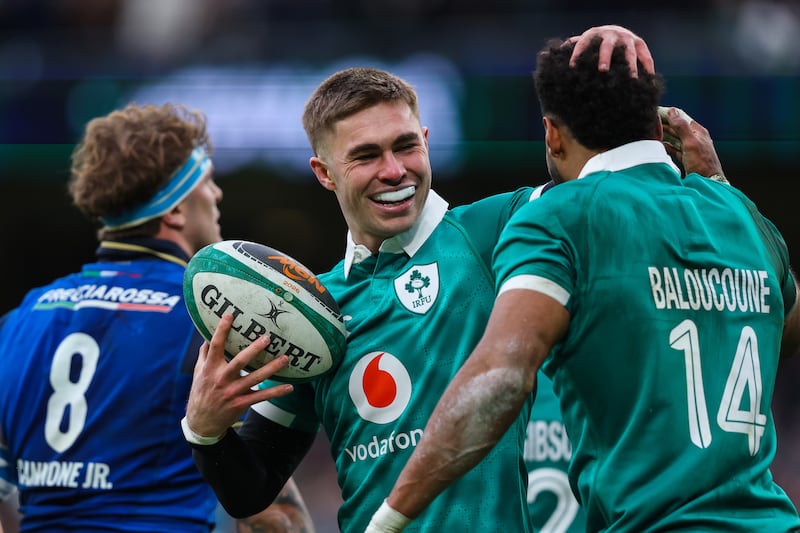 Jack Crowley with Robert Baloucoune after Ireland scored a third try against Italy. Photograph: Ben Brady/Inpho
All eyes were on Crowley as he kicked the conversion and a penalty to make it 20-10. His opening seven minutes off the bench proved the winning and losing of the game.
Nobody will be more pissed off than Crowley after he shanked a late penalty over the dead-ball line. It denied Ireland a bonus point. It was a lapse in concentration that will focus his mind before what comes next.
Twickenham used to intimidate me. The team goes in the back way to the stadium, where you see all the Land Rovers and wax jacket brigade. Stepping off the bus, you have to walk through the crowd before going under a tunnel. The hostility is palpable. You feel very Irish in the home of English rugby.
[ Power points: why scrum battle could be crucial in England v Ireland clashOpens in new window ]
Twickenham got the better of me the first and second time playing there, especially when “Swing Low” began to reverberate around the cold, concrete edifice. They sing when they are in control. When George Ford hasn’t a spec of muck on his all whites.
(Side note: for all the talk of targeting the Ireland number 10s defence, that is exactly what needs to be done to England: trample over Ford or send decoy runners down his channel so the big hitters fold in, and space is created elsewhere.)
The fear for this Ireland team heading over to London comes from past experience. When the scrum is going skywards and the place is heaving, they let you know all about it.
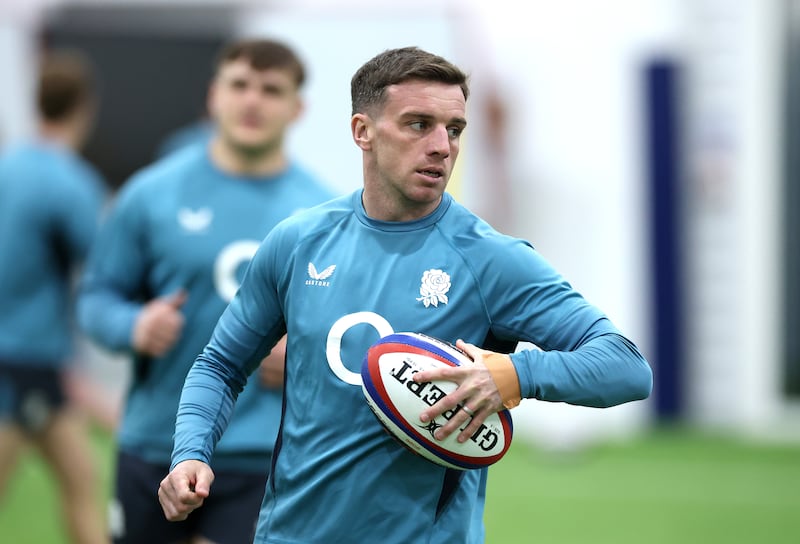 George Ford at an England training session. Photograph: David Rogers/Getty Images
On St Patrick’s Day in 2018, we took England apart inside a freezing Twickenham. The stadium was silent by the end as the Joe Schmidt playbook became clear for everyone to see. CJ Stander’s try stands the test of time. Winning 24-15 to complete the Grand Slam changed how I felt about going back.
The next time I stepped off the bus I stalled and removed my headphones to take in what was being said. Over the years, I began to enjoy Twickenham rather than just trying to survive the experience.
But you need to win there first. That was the real breakthrough for Ireland during this period. We forced the established powers in international rugby to take us seriously. By beating them. Repeatedly.
This is the worst time to be going to the home of English rugby. They were so poor at Murrayfield last weekend, that a backlash is guaranteed. Tom Curry and Ollie Lawrence return to cause maximum damage while Henry Pollock gets his first start as they seek to stop Ireland from repeating what Scotland did to them.
[ How Ireland can beat England and what they can learn from ScotlandOpens in new window ]
The secret to beating this English team is to deny them building a three, six, nine-point advantage. Clearly, they struggle to chase a lead. Their game is all about control. The Scots were ferocious in contact before Finn Russell moved a big English pack around the park. As a result, Steve Borthwick’s master plan was indecipherable as they lost all shape in attack even resorting to one-off carriers.
The harsh lessons Ireland took from Paris, England can take from Murrayfield. And that’s the worry. There is no margin for error playing them on their own patch.
I take confidence from Tadhg Furlong getting minutes under his belt and Tom O’Toole’s performance at loosehead against Italy.
If the Ireland scrum holds and Ford’s armchair ride is disrupted, there is a chance that the newer Irish internationals will shake off the fear factor of a Six Nations trip to Twickenham.
Take off the head phones, soak it all in.