
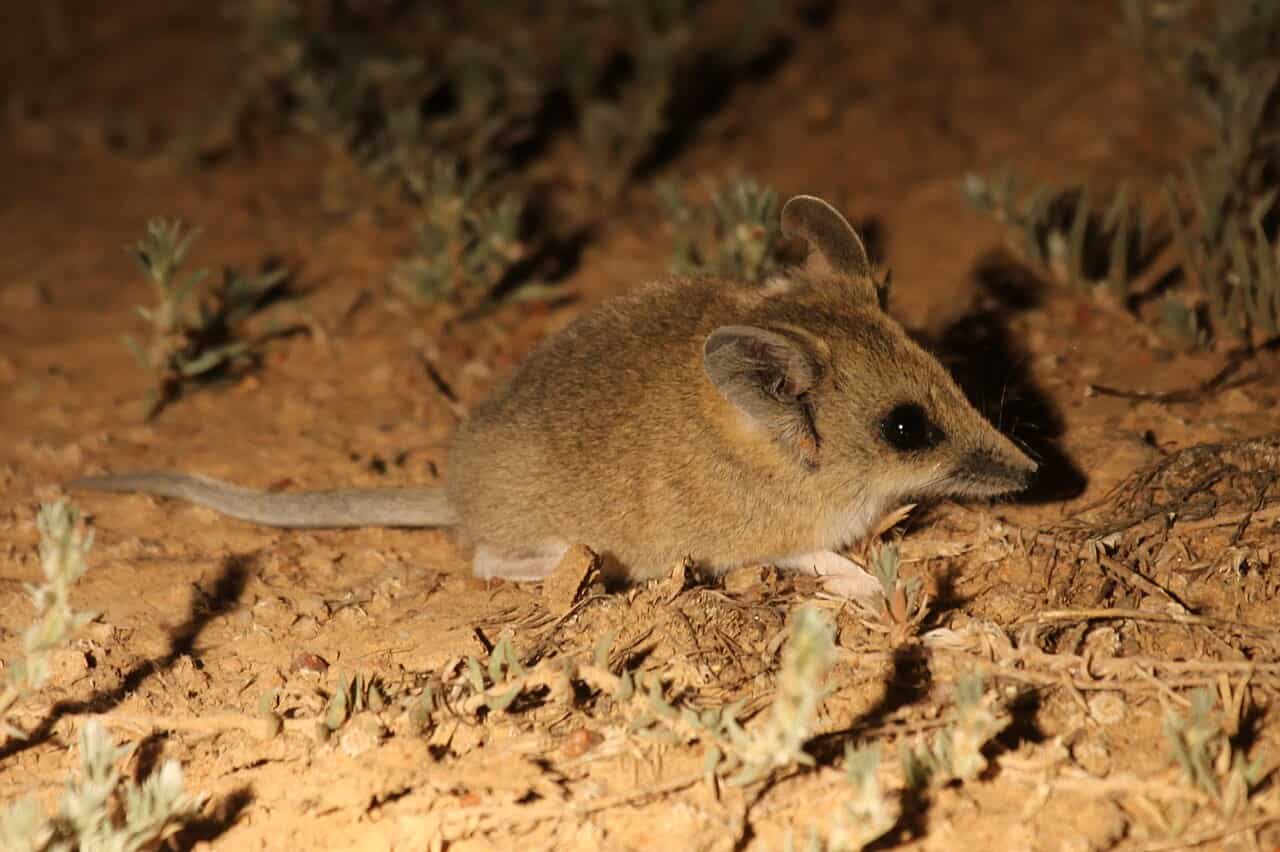
 The fat-tailed dunnart (Sminthopsis crassicaudata). Credit: Wikimedia Commons
For an animal smaller than a paper clip, the first journey of a newborn dunnart is astonishing. Moments after birth, each baby—no heavier than a grain of rice—must crawl across its mother’s fur to reach the safety of her pouch, a race no one had previously filmed.
Researchers in Australia have captured the feat on camera for the first time, documenting how the fragile neonates propel themselves forward with surprising strength and urgency. Their observations, reported in Royal Society Open Science, show that even at just 5 milligrams, the newborns climb to the pouch on their own.
A 20-second Window
Marsupials are famous for giving birth to extremely undeveloped young. Unlike placental mammals, whose babies grow for months in the womb, marsupial newborns emerge after very short pregnancies and must complete development while attached to a teat.
For many small Australian species, the exact moment of birth has remained almost impossible to observe. Dunnarts are nocturnal, lack a reliable pregnancy test and give birth quickly—sometimes in less than a minute per batch of young.
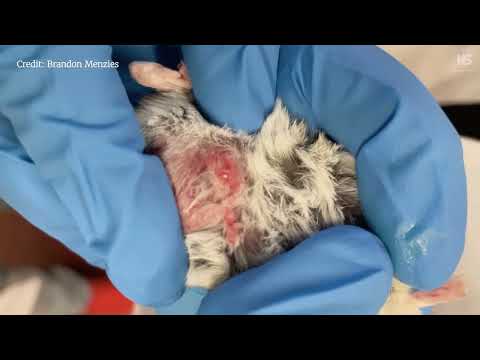
That changed when a researcher noticed blood in a breeding enclosure and gently examined a female. Tiny newborns were already wriggling toward the pouch.
“We just saw the pouch young sort of waving their arms and crawling and wriggling,” Brandon Menzies of the University of Melbourne told New Scientist. “It’s very much a freestyle-swimming type of crawl, or a commando crawl,” he added.
He managed to film about 22 seconds before returning the mother to her normal position, a moment that provided the first direct evidence of how this species begins life.
The footage shows newborns sweeping their heads side to side while pumping their forearms roughly 120 times per minute. That’s faster than similar movements seen in related marsupials. Their forelimbs are already muscular and tipped with tiny claws, anatomical clues that climbing is essential from the very start.
×
Thank you! One more thing…
Please check your inbox and confirm your subscription.
Earlier theories had proposed very different mechanisms. Some hypotheses have suggested mothers may help guide newborns toward the pouch, including via fluids or positioning during birth, though direct evidence has been scarce. Dunnarts, the new study shows, rely on their own strength instead.
The Fastest Baby Climbers
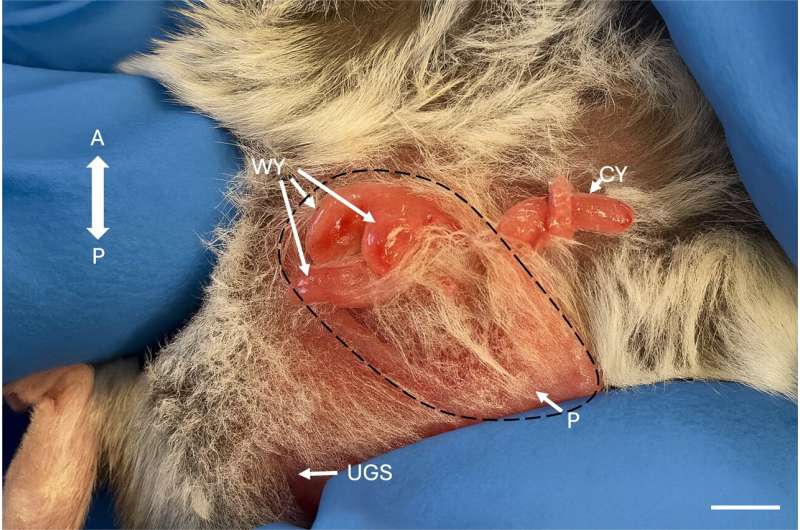 Three wriggling young (WY) were attempting to find the teats by moving their heads side to side inside the pouch (P). One crawling young (CY) was disoriented when the mother was inverted for pouch checking and was actively crawling over the lip of the pouch. Credit: Royal Society Open Science
The crawl may be the first test of survival.
Female fat-tailed dunnarts can produce up to 17 offspring but have only 10 teats available for feeding. Only the fastest and strongest newborns secure a place to continue developing.
This harsh arithmetic is common among carnivorous marsupials. Tasmanian devils, for example, may produce around 30 young yet raise only four. Scientists think the strategy reflects the relatively low energy cost of producing tiny embryos, combined with fierce competition after birth.
Now, these new observations suggest that crawling ability itself could determine which individuals live. Once attached to a teat, the strenuous head-swinging and crawling motions stop, implying the journey demands significant energy.
Beyond basic biology, the work carries broader interest. Fat-tailed dunnarts belong to the same broader carnivorous marsupial group as the extinct Tasmanian tiger and are being studied as biological models in research exploring the possibility of de-extinction. Understanding their earliest development could prove crucial for such ambitions.
For now, a brief 20-second recording offers the clearest view yet of how one of the world’s smallest mammals begins life.