
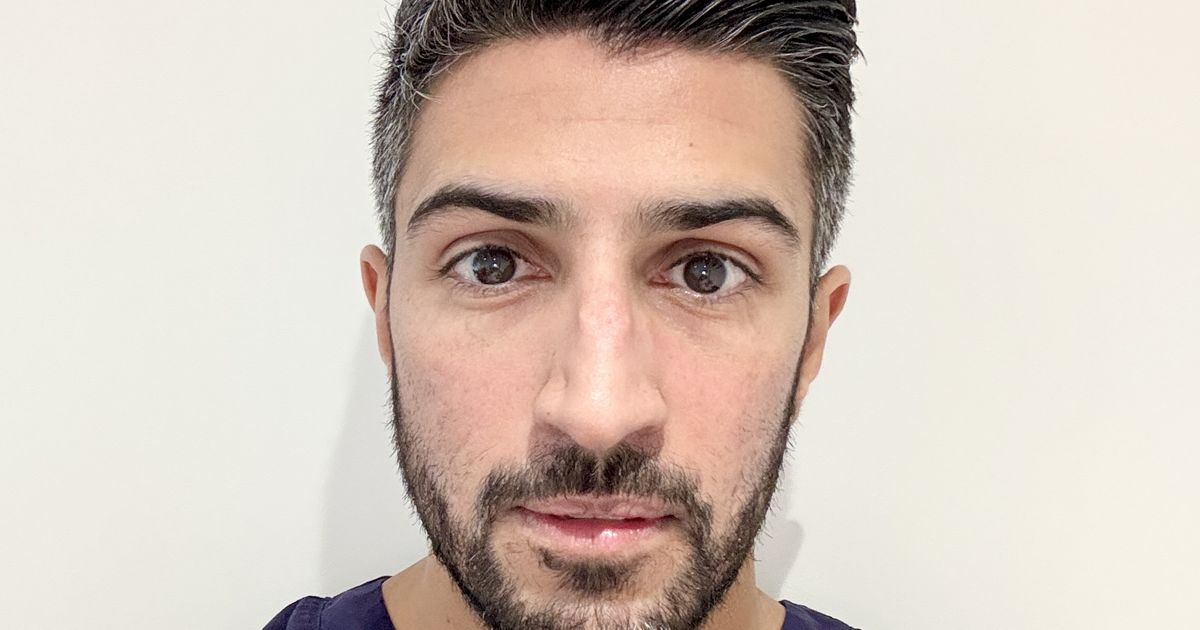
The UK doctor lost two stone taking the weight loss jabs and then quit – but had to go back onto jabsNeil Shaw Assistant Editor (Money and Lifestyle)
13:40, 19 Feb 2026Updated 14:18, 19 Feb 2026
Doctor who took Mounjaro has message for anyone considering it
A doctor who decided to take weight-loss injections says he was shocked by the unexpected mental and behavioural changes he experienced after taking Mounjaro. Dr Sachin Khunti decided to try the medication after discovering he met the clinical criteria for obesity.
Before starting treatment, the 33-year-old weighed just under 15st 4lb and had a 38.5-inch waist. After three months on the drug, he dropped to 13st 1lb – a loss of almost two stone – and reduced his waist size to 35 inches. But Dr Khunti says that the most surprising change was psychological as the drug quietened his “food noise” and even reduced his desire for alcohol.
“What surprised me most while taking it was how quiet food noise became, the constant background thoughts about food were noticeably reduced,” said Dr Khunti.

Dr Sachin Khunti talks about his experience with Mounjaro (Jam Press)
“My friends and family noticed a change, mainly in appetite, but also in mood. While on treatment, I had significantly less interest in snacking or alcohol. When I stopped, those cues gradually returned.
“Compared to previous weight loss attempts through calorie restriction alone, I felt more stable and less irritable while on medication, which my wife definitely noticed.”
However, when he stopped the drug after three months, the cravings returned. Within two months of stopping, his weight rose to 85.5kg and his waist increased to 36.3 inches.
He said: “What surprised me most after stopping was how quickly appetite signals and cravings returned, particularly during social events or periods of stress. It reinforced for me that obesity biology does not simply disappear, and that long-term strategy is essential.”
He has since restarted treatment and is back to approximately 83kg on a 5mg dose under medical supervision. Dr Khunti says he experienced mild nausea, constipation and reflux during the early weeks. He said his decision to start taking Mounjaro was based on medical risk – not aesthetics.
Dr Khunti said: “As a South Asian male with elevated LDL cholesterol and a strong family history of cardiometabolic disease, I met clinical criteria for obesity and recognised the importance of early intervention. After reviewing my risk profile and treatment options, I consulted a regulated private provider and began tirzepatide under appropriate medical supervision.”

Dr Sachin Khunti
Dr Khunti says taking the medication himself has deepened his empathy for patients. He said: “It has strengthened my understanding of the lived experience, particularly the impact on appetite regulation and food noise.
“It has reinforced for me that medication is not simply a prescription for weight loss, but part of a broader prescription that includes adequate protein intake, resistance training to preserve muscle mass, sleep optimisation and structured physical activity. It has also deepened my empathy for patients navigating obesity in a society where stigma is still common.
“Experiencing both the biological and psychological components firsthand has reinforced the importance of setting realistic expectations and planning for long-term maintenance, rather than viewing medication as a short-term fix.”

Dr Sachin Khunti was shocked by the unexpected mental and behavioural changes (Jam Press)
Dr Khunti cautions that the injections are not suitable for everyone. He added: “Obesity is a chronic, relapsing condition, so for many people treatment may need to be long-term, similar to other chronic diseases.
“However, medication should always sit within a structured plan including nutrition, resistance training, sleep optimisation and behavioural support. GLP-1–based therapies are not suitable for everyone. They should not be used in pregnancy or breastfeeding, in individuals with a personal or family history of medullary thyroid carcinoma or Multiple Endocrine Neoplasia type 2 (MEN2), or in those with certain significant gastrointestinal or endocrine conditions.
“They require proper medical assessment, monitoring, and a balanced discussion of risks and benefits.”