
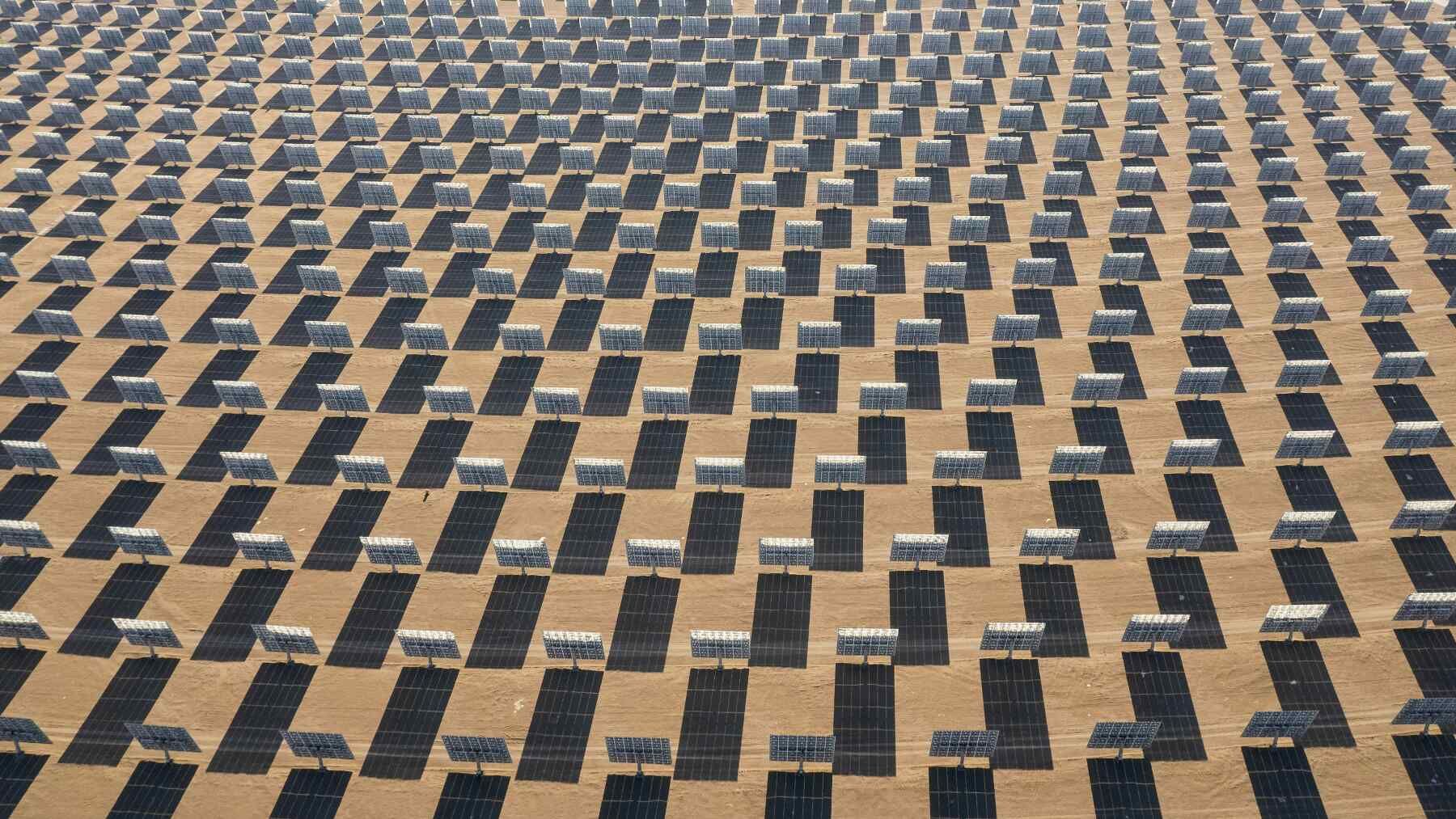
You’ve probably seen photos of solar farms stretching across desert landscapes with rows of panels, metal frames, and heat and dust underneath.
Most people assume nothing survives there.
But at one of the largest solar sites in the United States, something unexpected began happening beneath those panels — just as energy production hit record levels.
It’s forcing a bigger question about what really happens when renewable energy projects meet fragile ecosystems. Is the impact what you think?
Gemini was always much more than just a solar plant
When you hear “massive solar plant in the desert,” what do you picture? Miles of panels, bulldozed land, and nature pushed aside.
That’s the usual assumption.
When large-scale infrastructure goes up, fragile desert ecosystems take the hit. It feels like a trade-off you can’t avoid: clean energy on one side, habitat disruption on the other. In places like the Mojave Desert, that tension feels even sharper. Water is scarce, soil is delicate, and recovery can take decades.
So when a project as large as the Gemini Solar Project was built in Nevada, most people probably expected the same story: a heavy industrial footprint, and environmental cost.
End of discussion.
But here’s where things get interesting.
Developers didn’t follow the traditional “scrape everything flat” playbook. Instead of stripping the desert down to bare earth, they left much of the native soil in place—including the dormant seed bank hidden underground.
At the time, it sounded like a technical choice, and no one considered the long-term repercussions.
Yet years later, researchers came back to the site and started noticing something they hadn’t anticipated. The land beneath the panels wasn’t behaving the way people assumed it would, and the consequences became serious.
And that’s the part that makes you pause.
Unexpected ecological response to a successful solar project
When you picture a massive solar farm in the desert, you probably imagine scraped land and flattened earth with panels everywhere and nothing else.
That’s usually how it works: developers often use a “blade and grade” approach by clearing the surface, leveling it out, and starting fresh.
But at the Gemini Solar Project in the Mojave Desert, things played out differently than the usual pattern. Instead of stripping the land bare, developers chose to leave the natural desert soil mostly intact. They preserved the existing seed bank buried underground.
At the time, it seemed like a practical decision and the right way forward. Years later, it turned into something else.
When researchers revisited the site, they noticed a shift happening beneath the panels. A rare desert plant—the three-corner milk vetch—started appearing in numbers no one expected. Before construction, only 12 examples had ever been documented in that area. By the second year after completion, researchers counted 93.
That’s not a small bump. And here’s what makes it interesting
Those plants emerged from soil that had been disturbed during development—but not destroyed. The preserved seed bank gave dormant seeds the chance to germinate. Instead of disappearing, the species seemed to be thriving in this modified environment.
What’s most surprising is the ability of solar power plants to influence their surroundings. This has been proven in the desert and even in Switzerland, amidst the snow. Could it be that photovoltaics has a potential that goes far beyond simply generating energy?
For years, the story felt simple: build big solar, lose fragile habitat. But Gemini complicates that narrative. By preserving the desert’s seed bank instead of erasing it, developers didn’t just generate power — they left room for life to respond. And in this case, it did.
That doesn’t mean every project will boost biodiversity. But it does suggest impact isn’t always one-directional. Clean energy and conservation may not be automatic enemies after all — if design choices truly matter.