
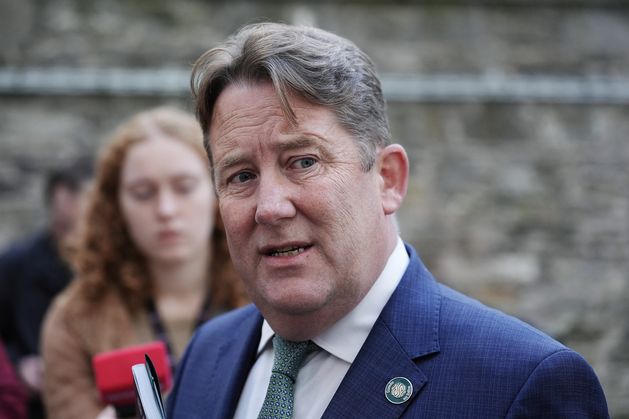
Darragh O’Brien says proposals from competition authority are “not Government policy”
The Competition and Consumer Protection Commission (CCPC) wants the Government to allow all drivers use their own cars to provide taxi rides, without needing a special licence. It made the proposal in response to consumer demand.
The CCCPC says there is a shortage of taxis nationwide, and published a survey that found four in 10 people who tried to hail a cab in December reported difficulties doing so.
However in a statement, Minister O’Brien said the protection of the consumer and personal safety are vital objectives and must continue to be central to how the taxi sector is regulated and operated.
“The model where anyone with a private car, not licensed as a Small Public Service Vehicle, and an app can provide taxi services does not exist in Ireland. It is not government policy and there is no intention to introduce it,” he said.
Minister O’Brien acknowledged that the structure of the taxi and hackney market has chance since deregulation in 2000, and particularly in recent times because of the role of dispatch operators. These are platforms such as Uber, Bolt and Freenow that take booking requests from passengers and pass them on to licensed drivers.
“I have requested that the National Transport Authority conducts a regulatory assessment of dispatch-operator licensing in Ireland in the context of ensuring that the regulatory framework for this element of the overall sector is sufficiently up to date and robust to respond to developments since the enactment of the Taxi Regulation Act 2013,” the minister said.
He asked the CCPC, taxi drivers and passengers to make submissions to the review.
The general manager of Freenow said while there are supply challenges in rural areas, simply increasing driver numbers won’t solve the problem.
“Most taxi drivers work in urban centres where demand is concentrated. A sharp increase in new licences would likely skew the balance further towards cities, leaving rural areas no better served,” said Danny O’Gorman.
“A sudden influx of new entrants would undermine the ability of existing SPSV-licensed professionals to earn a stable income. Our research shows that proposals to deregulate the sector could see drivers lose nearly €400 a month in earnings.”
The Freenow boss claimed that over half its drivers would consider leaving the sector if unlicensed operators were allowed.
“Full deregulation is a race to the bottom that would inevitably lead to a decline in service quality. We believe the key to improving the taxi industry is through targeted measures, such as reform to the Local Area Hackney Scheme,” he added.
Welcoming the report, Uber said it was clear that the Minister for Transport and the NTA need to begin a “serious reform process that improves access and availability for consumers and drivers”. A spokesman said it supported calls for a National Taxi Strategy that strengthens the market while supporting a well-regulated industry.
The Taxis for Ireland Coalition (TFIC) said the CCPC report was an important intervention that should kickstart a wider conversation about industry reform.
The group was formed in 2023 and brings together organisations that say they need a functioning taxi system, such as the Restaurants Association of Ireland, and the Licensed Vintners’ Association.
Adrian Cummins, CEO of the restaurants’ association, said: “We all know that the current approach isn’t working – particularly at peak times, and for rural Ireland. It is time to start the conversation on meaningful reform of the taxi industry, involving all stakeholders, with a clear focus on delivering a modern, fit-for-purpose taxi system that people can rely on.”