
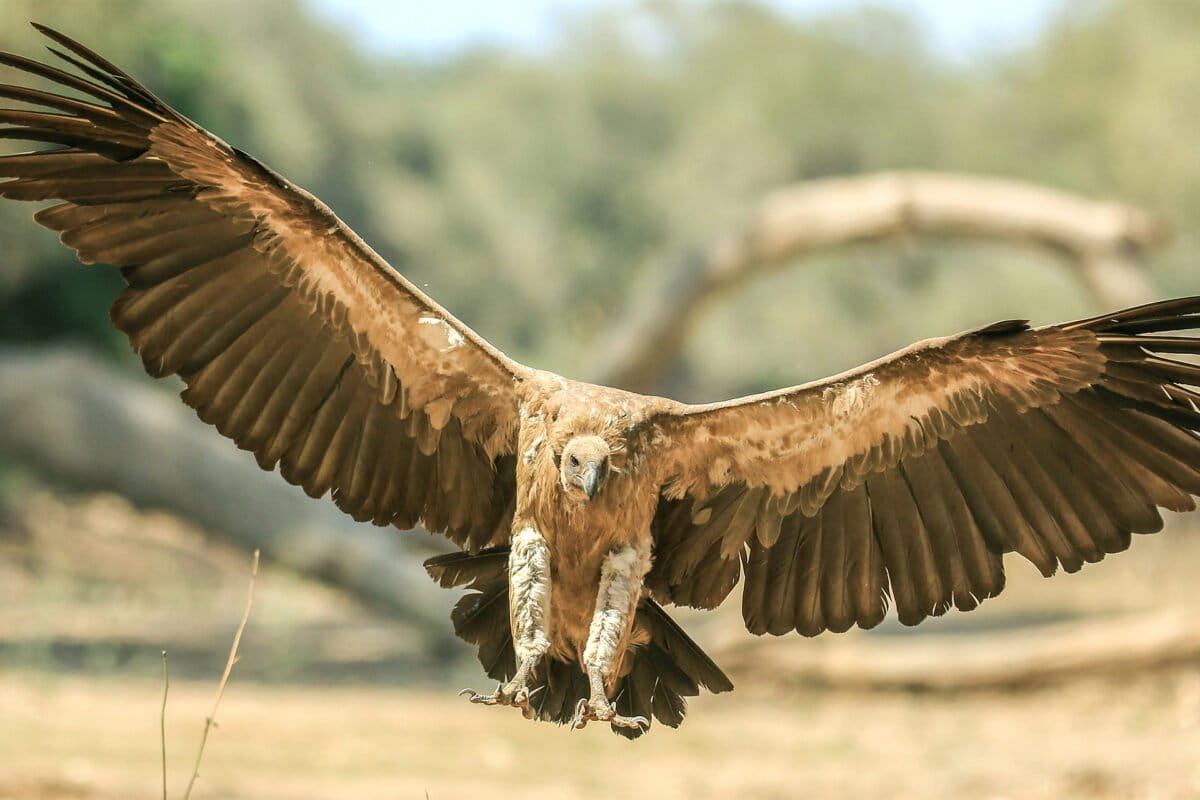
Vulture safe zones have multiplied across Southern Africa to address the numerous threats facing these scavengers.The vulture safe zone concept originated in Asia as a response to the drastic decline in the region’s vulture populations due to diclofenac poisoning.Opinions are mixed on their effectiveness to address the multitude of threats facing species in Africa.In the coming months, conservation organizations are aiming to streamline the concept in Africa, with the aim of standardizing how these safe zones operate and monitor populations, and ultimately how they protect threatened species.
See All Key Ideas
Protecting vulture populations in Africa presents some unique challenges for conservationists. These slow-breeding and ecologically vital scavengers range over vast territories and are vulnerable to poisons targeting other species and expanding infrastructure like power lines. Creating “vulture safe zones” has emerged as a way to address these broad and varied threats, but putting them into practice is proving difficult.
South Africa’s oldest vulture safe zone is centered in Tswalu Kalahari Reserve, in the southern Kalahari Desert. Since the 114,000-hectare (282,000-acre) safe zone was established in 2019, on land owned by the wealthy Oppenheimer family, its managers have taken steps to protect critically endangered white-backed vultures (Gyps africanus) and endangered lappet-faced vultures (Torgos tracheliotos) nesting there.
Establishing the reserve as a safe zone involved things like covering reservoirs with nets to prevent drowning, and halting the use of lead ammunition. Wendy Panaino, an ecologist at Tswalu Kalahari Reserve, told Mongabay that, ultimately, the aim is to make this 120,000-hectare (296,000-acre) reserve a safe haven for threatened species like the white-backed, lappet-faced and white-headed vulture (Trigonoceps occipitalis).
“Tswalu was a massive success,” says Linda van der Heever, species project manager at BirdLife South Africa. “It really is, in many senses, a textbook vulture safe zone.”
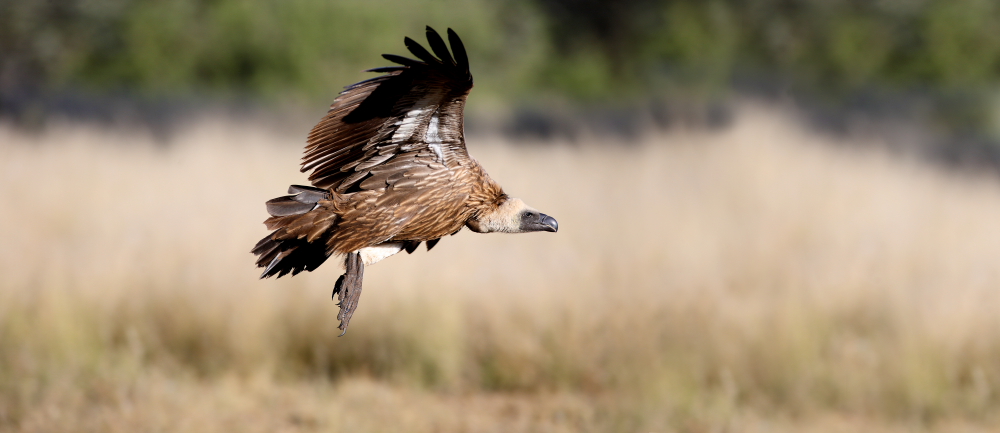 A vulture in Tswalu-Kalahari Reserve, South Africa. This reserve was designated as vulture safe zone in 2019. Image courtesy of Duncan MacFadyen / Tswalu-Kalahari Reserve.
In the past decade, several safe zone projects of this kind have kicked off in Africa, each adopting a variety of measures to protect vultures.
“The idea is that it must either be relevant in terms of the breeding, the roosting, the foraging, or the land utilization of these birds,” says Danielle du Toit, a field officer with the Endangered Wildlife Trust.
Their creation has been led by a variety of NGOs across Botswana, South Africa, Mozambique, Zambia, Zimbabwe and Nigeria. Some of these sites target the protection of breeding colonies, roosting sites or vulture feeding grounds. Almost since their inception in Africa in 2018, experts have debated key points such as when a safe zone is actually safe, whether they’re large enough, and whether they can stave off vulture declines across the entirety of their range.
“Sometimes they are just safe zones in name,” says André Botha, co-chair of the Vulture Specialist Group at the IUCN, the global wildlife conservation authority. “In other instances, there’s meaningful work happening.”
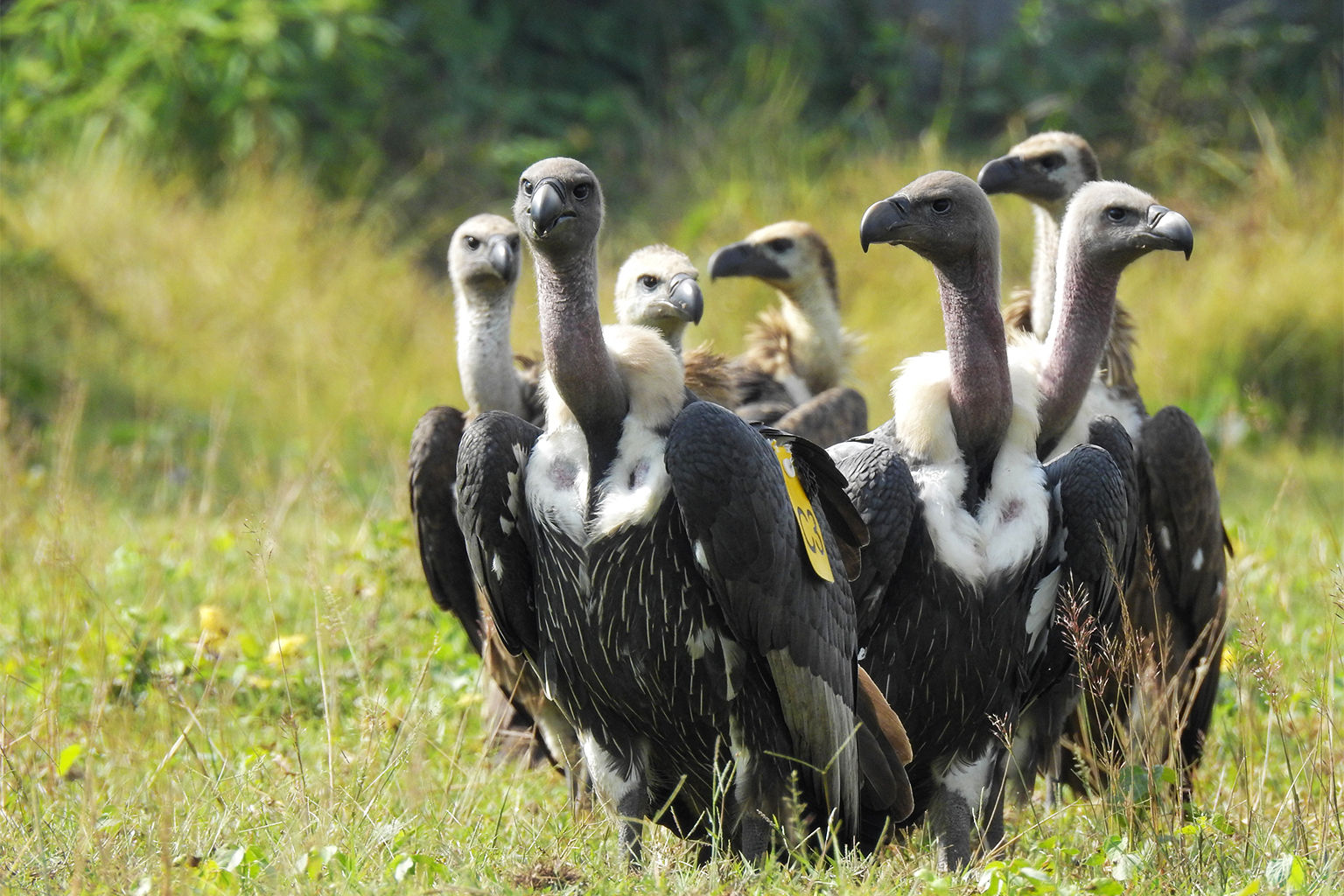 White-rumped vultures in Nepal’s first vulture safe zone in the Gandaki-Lumbini region. It remains the only site declared a safe zone in Asia thus far. Image courtesy of Ankit Bilash Joshi
The concept
At the root of these debates is a contrast between how safe zones were initially defined and implemented in Asia and the later creation of similar zones in Africa. Vulture safe zones began in Nepal in response to the rapid decline of Asian vulture populations caused by the birds scavenging from carcasses of livestock treated with the drug diclofenac — a commonly used anti-inflammatory for veterinary use, but highly toxic to vultures.
The idea was to rid areas of diclofenac and other nonsteroidal anti-inflammatory drugs (or NSAIDs), and ensure safe access to food for these raptors.
Asian experts developed safe zone criteria, notably including that safe zones should cover a 100-kilometer (60-mile) radius from a nesting colony (a total area of around 3.1 million hectares, or 7.8 million acres). That figure is based on the movement patterns of tracked and tagged birds, says Chris Bowden, co-chair of the IUCN Vulture Specialist Group.
There are 10 active safe zone projects in Asia, with an 11th in the works. Meeting the Asian criteria is a laborious — and often costly — process that requires extensive monitoring, tagging of vultures, and testing of hundreds of carcasses for diclofenac.
So far, only one site in Nepal has fully eliminated the diclofenac threat. That zone spans the Gandaki–Lumbini regions and covers roughly 720,000 hectares (1.8 million acres), with telemetry data from tagged vultures used to define the final area covered.
The others, Bowden says, are regarded as “provisional” safe zones while they continue working to satisfy all the criteria. But they’re already having a positive impact, says Ankit Bilash Joshi, vulture conservation program manager for Bird Conservation Nepal, as surveys show that vulture populations are recovering.
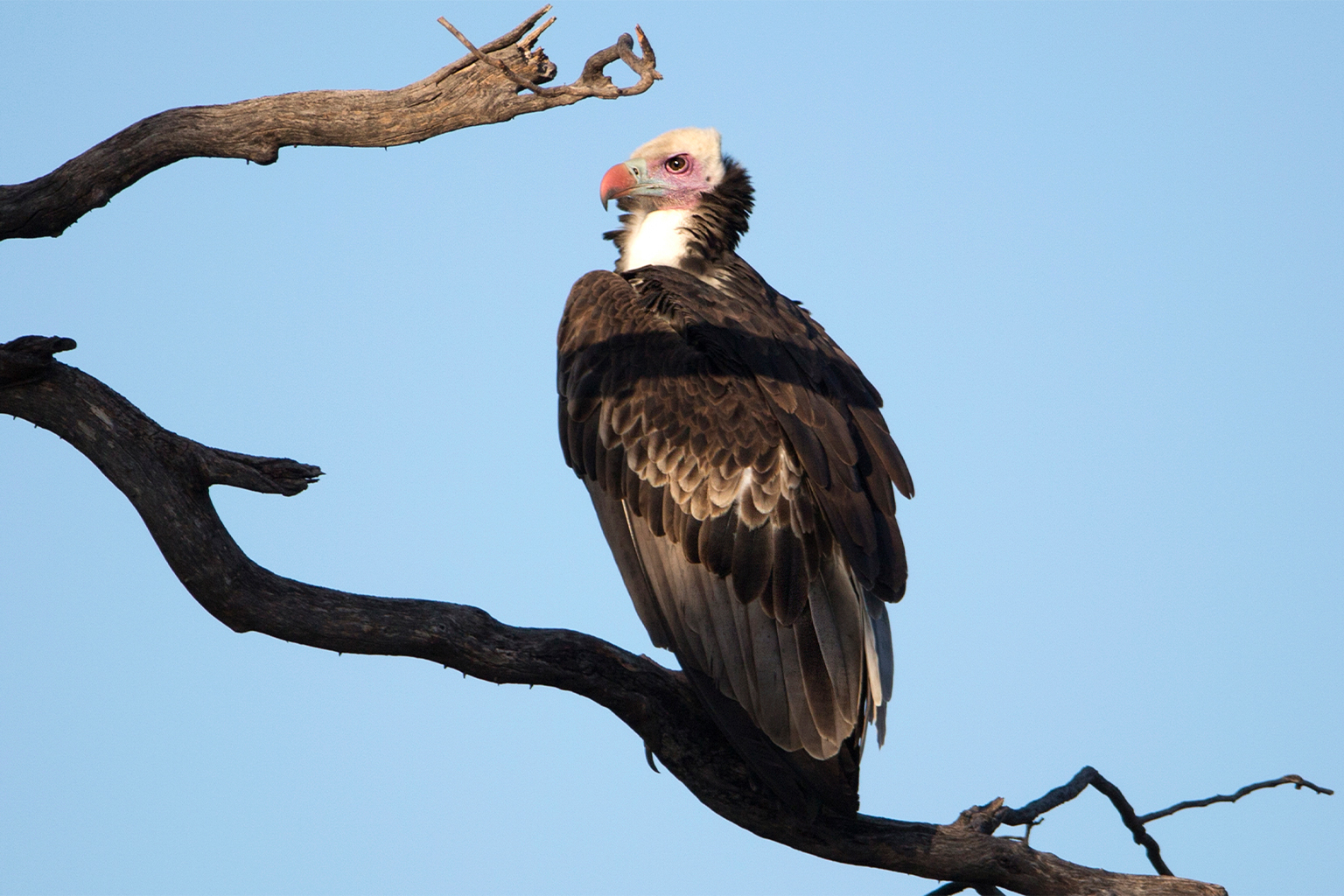 A white-headed vulture. Image courtesy of Dave Dell/ Birdlife Zimbabwe.
Adapting safe zones for Africa
In 2017, the Convention on the Conservation of Migratory Species led the development of the Vulture Multi-species Action Plan for African and Eurasian vulture species. This plan included vulture safe zones as a key conservation action, noting that “National networks of Vulture Safe Zones have the potential to offer a realistic, achievable and effective grass roots approach to vulture conservation.”
Around one year later, the first vulture safe zone in Africa began to take shape. BirdWatch Zambia declared a vulture safe zone in the Southern African country that now covers around 474,000 hectares (1.2 million acres), spanning an assortment of game reserves and farms.
“Our main aim is to reduce the threats to vultures and to make sure that they are thriving in these spaces, whatever size they are,” says Mary Malasa, program manager at BirdWatch Zambia.
Like in Asia, Zambia’s safe zones primarily sought to address the threat of accidental poisoning caused by diclofenac. But similar to conservationists elsewhere in Africa, they’re now also working to address a multitude of other threats, including intentional poisoning, poaching, the loss of trees vultures nest in, and collisions with power lines.
Du Toit says the Endangered Wildlife Trust aims to minimize the primary threats it has identified to almost zero. She says the organization has achieved this in one of the two landscapes it’s working in — the Kalahari safe zone, where monitoring suggests that white-backed vulture numbers are now increasing.
Mortalities of the raptors in this 270,000-hectare (667,000-acre) expanse of the Kalahari that’s declared safe are either due to dangers that persist outside the safe zone (including poisoning) or to other causes, such as predation, she says.
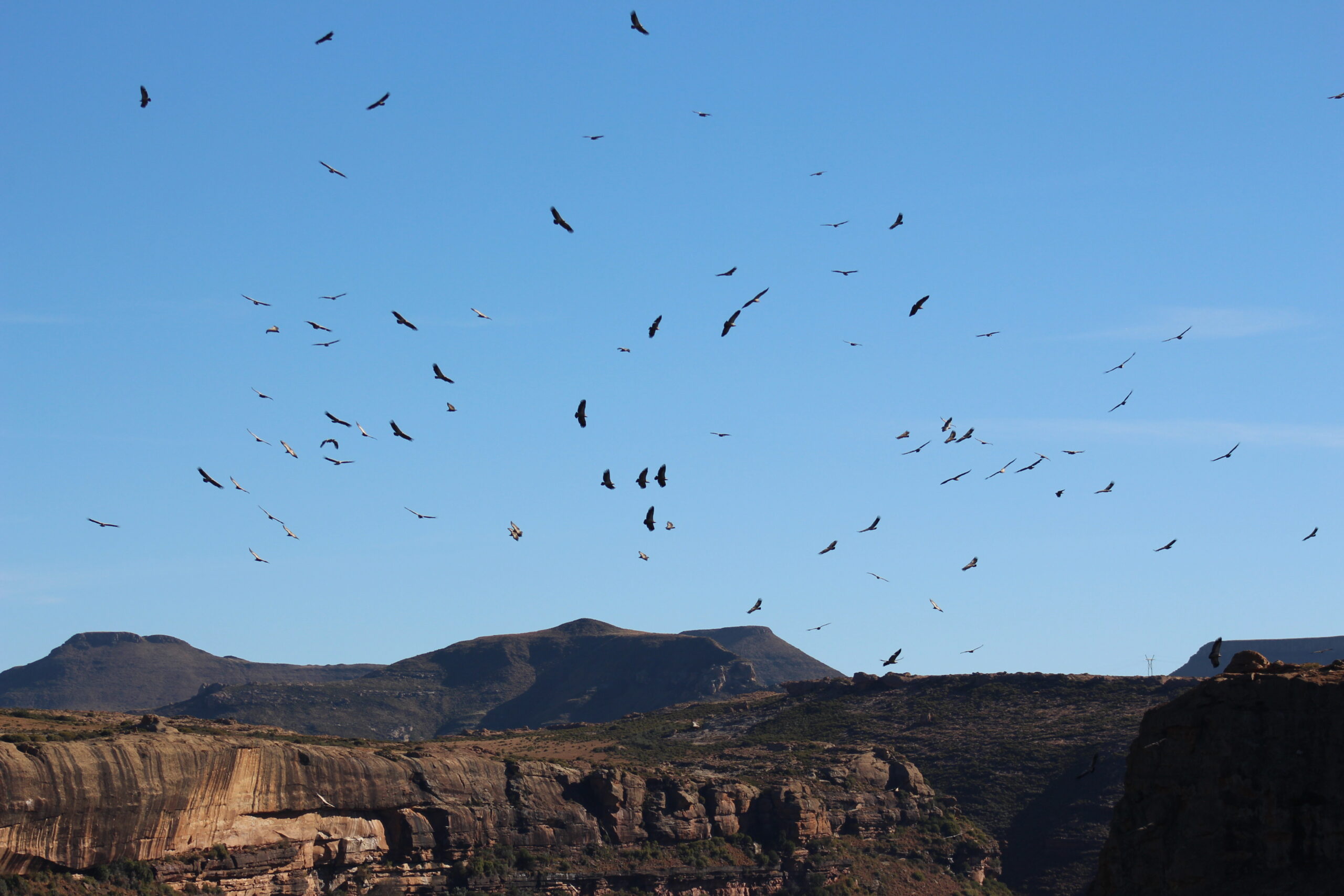 Cape vultures in South Africa’s Eastern Cape. Image courtesy of Endangered Wildlife Trust.
Gauging success
“The challenge with many vulture safe zones is that vultures do not stay put,” says van den Heever from BirdLife South Africa. White-backed vultures may nest in Tswalu, for instance, but will routinely fly beyond the reserve’s boundaries to other parts of South Africa or neighboring countries. “They can die on a poisoned elephant carcass there.”
A 2022 study found that white-backed vultures forage across a minimum of 2.4 million hectares (5.9 million acres). That figure jumps to 7.5 million hectares (18.5 million acres) for Rüppell’s vultures (Gyps rueppelli).
“Without being able to protect the bulk of the area where a given population feeds, it’s unlikely that vulture safe zones are going to be successful in an African context,” says Corinne Kendall, an author on that paper and program director for Southern Africa at the Peregrine Fund.
But van den Heever says that declaring breeding colonies as safe zones is still hugely beneficial. That’s because adult birds won’t fly as far when breeding, so removing the threats in the surrounding area can prevent their death or injury due to poisoning or some other cause. “If we can prevent that, at least we can encourage a healthy cohort of vultures to enter the juvenile phase,” she says.
In contrast to the positive example of Tswalu, the Zululand vulture safe zone presents different challenges. BirdLife South Africa launched this safe zone in 2020. Van den Heever says her organization and others have worked together against the same suite of dangers as those that have been removed from Tswalu — patching together a broad expanse of private reserves and farms across which reservoirs are covered, and the use of lead ammunition sharply reduced.
“The biggest problem there [in the Zululand vulture safe zone] is the continued poisoning of vultures for belief-based use,” she told Mongabay. NGOs have responded to more than 60 suspected poisonings in the region since 2019. One incident in 2022 caused the death of more than 50 vultures, many of which had their heads removed.
“There’s a lot that we can do, but unfortunately, we can’t prevent these mass scale poisonings that’s threatening white-backed vultures,” van den Heever says.
Conservationists report deliberate poisoning as a problem facing other safe zones. They also report some positive signs that efforts to enlist local communities to protect vultures from this threat are bearing fruit. In Zimbabwe, a vulture safe zone is working with villagers living in and around Gwayi Environment Conservation Area. Leeroy G. Moyo, who manages the Preventing Extinctions Programme at BirdLife Zimbabwe, says since his team began community work in Gwayi, there haven’t been any poisoning incidents.
Still, he says hazards to vultures persist in the area, including the widespread use of lead ammunition.
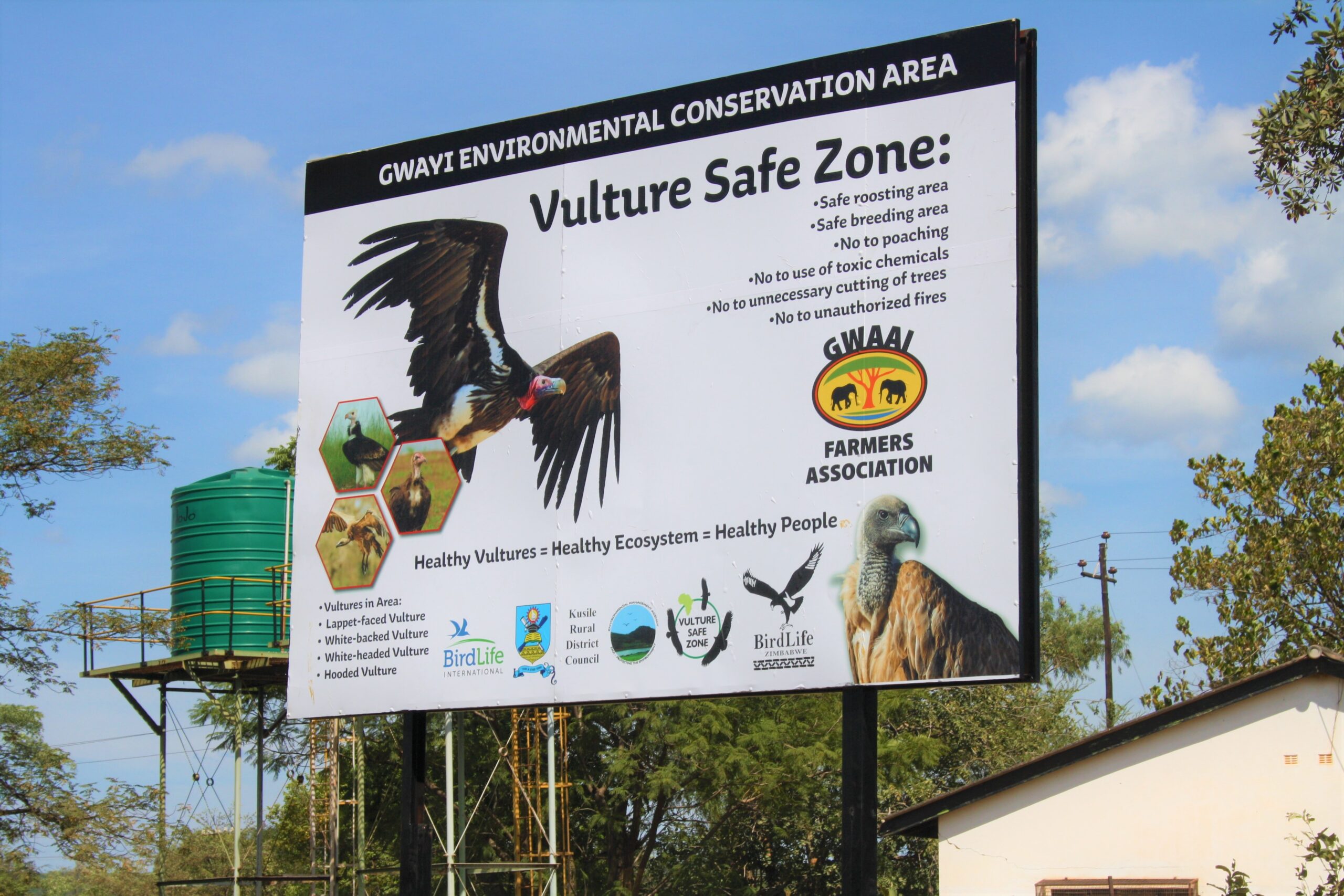 A road sign installed near the Gwayi vulture safe zone in Zimbabwe. Image courtesy of Birdlife Zimbabwe.
Agreeing on what’s safe
Amid a swath of different approaches to vulture safe zones, conservation organizations in Southern Africa are creating guidelines to move forward.
“At the end of the day, what we want is to create safe spaces for the vultures, but we all agree that there is need for a guide,” says Lovelater Sebele, senior vulture conservation officer for Southern Africa at BirdLife International. “It means we [will] have a standardized way of monitoring a vulture safe zone and declaring the area a vulture safe zone.”
Kendall from the Peregrine Fund says a key part of this definition should be that vulture safe zones are set at an “ecologically meaningful size,” similar to the guidelines set out in Asia. Botha from the Vulture Specialist Group agrees that moving toward the Asian approach would be beneficial for African vultures, and also calls for a workable blueprint developed for safe zones in communal lands.
BirdWatch Zambia’s Malasa echoes the need for shared guidelines. She says work on creating vulture safe zones in Zambia has allowed her organization to engage with communities and schoolchildren to change perspectives on much-maligned vulture species. “What if these areas were not vulture safe zones? What would have happened if we didn’t work with the landowners in these areas?” she says.
Banner image: A white-backed vulture in Zimbabwe. Image courtesy of Chris Collyer/ Birdlife Zimbabwe.
Poisoning crisis could drive vulture extinction in South Africa’s Kruger region
Citation:
Kane, A., Monadjem, A., Aschenborn, H. K. O., Bildstein, K., Botha, A., Bracebridge, C., … Kendall, C. J. (2022). Understanding continent-wide variation in vulture ranging behavior to assess feasibility of Vulture Safe Zones in Africa: Challenges and possibilities. Biological Conservation, 268, 109516. doi:10.1016/j.biocon.2022.109516
Feedback: Use this form to send a message to the author of this post. If you want to post a public comment, you can do that at the bottom of the page.
