
The Testament of Ann Lee
Director: Mona Fastvold
Cert: 15A
Starring: Amanda Seyfried, Lewis Pullman, Christopher Abbott, Tim Blake Nelson, Thomasin McKenzie, Stacy Martin, Matthew Beard
Running Time: 2 hrs 16 mins
How appropriate that this study of the woman who founded the Shaker sect asks a significant leap of faith from approaching viewers. It is one thing to invite empathy with an 18th century mystic whose cult invited its own annihilation by shunning all copulation. It is another to tell that story through the medium of a lolloping, incantatory musical that borrows tunes from the movement’s own hymns. Religion is not a big draw to contemporary audiences. And just think how people who hate musicals love to broadcast that dislike.
No matter. Little you have seen before will prepare you for the emotional sweep of The Testament of Ann Lee. True, Mona Fastvold, who co-wrote The Brutalist with her partner Brady Corbet, has travelled some of this ground already. The new film, shot on rich 35mm stock by William Rexer, again takes a harrowed idealist from oppression in Europe to life as forger of legends in the New World. But this is a grainier, weirder, more unearthly project than The Brutalist. It digs deep into forgotten spiritual origins.
The project would be inconceivable without a remarkable performance from an apparently possessed Amanda Seyfried. We first meet her as a harassed, beleaguered young woman in the developing Cottonopolis that was Manchester. She and her husband, Abraham (Christopher Abbott), find themselves drawn to a division of Methodists committed to ecstatic, celebratory worship. It requires no great psychological insight to make inspired guesses at the origins of Ann’s antipathy to carnal lust: her husband reveals colourful sexual preferences; each of her four children dies in infancy. Nor does one need a premature Freud to explain sexual sublimation in the sect’s tumbling, rapturous ceremonies.
Those massed epiphanies give composer Daniel Blumberg, Oscar-winner for The Brutalist, ample opportunity to explore an uncanny meld between opera, hymn and folk exhalation. Just as strong are the solo numbers that tease out traumas within Ann’s whirring brain. “I hunger and thirst. I hunger and thirst,” she breathes in the film’s big earworm. “An ocean I see without bottom or shore. Feed me, I’m hungry.”
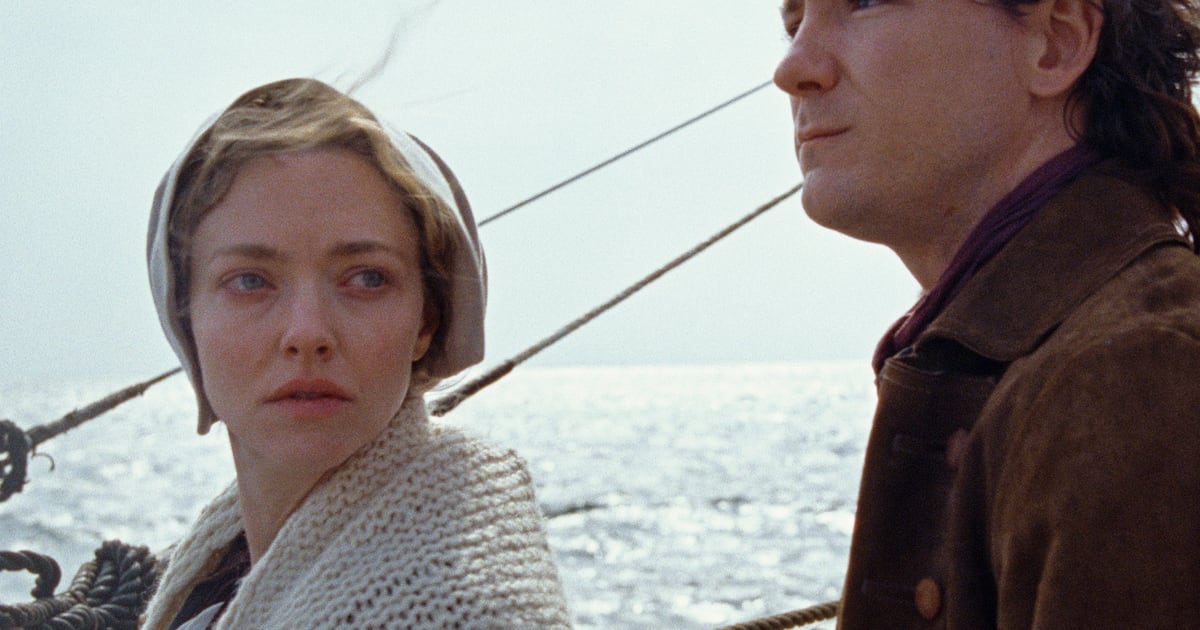
The film proudly argues for the often underexplored potency of female charisma. Ann Lee proves to be a veritable Jeanne d’Arc. Alas, Lancashire not being quite ready for such a gender upending, she and her followers end up setting sail for an America on the point of secession. Such fine actors as Thomasin McKenzie, Stacy Martin and Lewis Pullman are among those offering spiritual support.
Fastvold continues to ask a lot of the audience. Little in the sect’s religious philosophy will make sense to the average contemporary churchgoer, never mind the secular viewer. But the heroic strains of Ann Lee are plain to behold. The Shakers, a quasi-socialist commune, soon find common cause with the American Patriots in their fight against the colonisers, not least because of the rebels’ commitment to religious freedom.
Seyfried’s slightly impish appearance – eyes wide with wonder – occasionally, in these sylvan surroundings, suggest a woodland spirit, but the steel in her delivery dispels any such frivolous comparisons. How she has failed to trouble the Oscar nominations remains a mystery.
Ann Lee is a political film. It is about one version of a good America. It hardly needs to be said it touches on religion. But, from the spooky opening shots, looking forward to melodic ceremonies within looming New World trees, the film also operates at a mythical level beyond everyday concerns. Like the ecstasies depicted, it pulls you out the everyday and propels you into spiritual nowhere. There has (as even its detractors will admit) been nothing else like much like it.
See it in lovely 70mm if you can.
Screens in selected cinemas from February 20th. On general release from February 27th.