
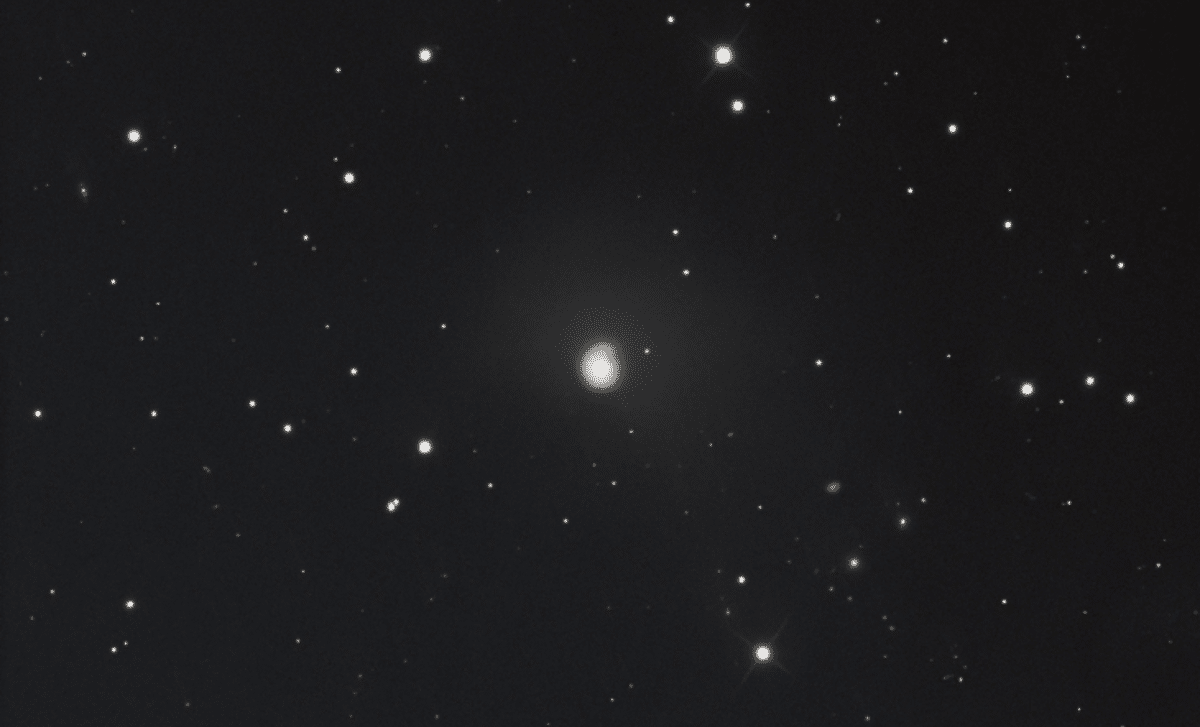
Comet 29P/Schwassmann-Wachmann, a cold-volcano comet that has long intrigued astronomers, recently became the focus of a stunning discovery. After a major explosive outburst on February 10, 2026, the comet’s coma expanded into an extraordinary spiral, drawing comparisons to a fossilized snail shell. This rare phenomenon has puzzled scientists, who are now investigating what caused such a dramatic shift in the comet’s appearance.
The Surprising Transformation of Comet 29P
On February 10, 2026, Comet 29P/Schwassmann-Wachmann, an icy, cryovolcanic body located between Jupiter and Saturn, experienced a massive eruption. According to LiveScience, this explosive event released up to a million tons of cryomagma, a mixture of frozen gas and dust that is found inside comets. The eruption caused the comet’s coma, a cloud of gas and dust surrounding the nucleus, to grow dramatically. This is not an uncommon occurrence for this comet, but the shape of the coma this time was startlingly different. Instead of the usual cloud-like form, the coma expanded into a spiral, which resembled the shell of an ammonoid fossil or a snail shell.
Amateur astronomer and astrophotographer Eliot Herman, captured the unusual shape from the Rio Hurtado valley in Chile. The photos showcased a pattern that was both stunning and baffling. The spiral shape formed after the comet’s icy surface cracked and released cryomagma in an uneven manner. The event highlighted the comet’s dynamic and unpredictable nature, which is a constant source of fascination for astronomers.
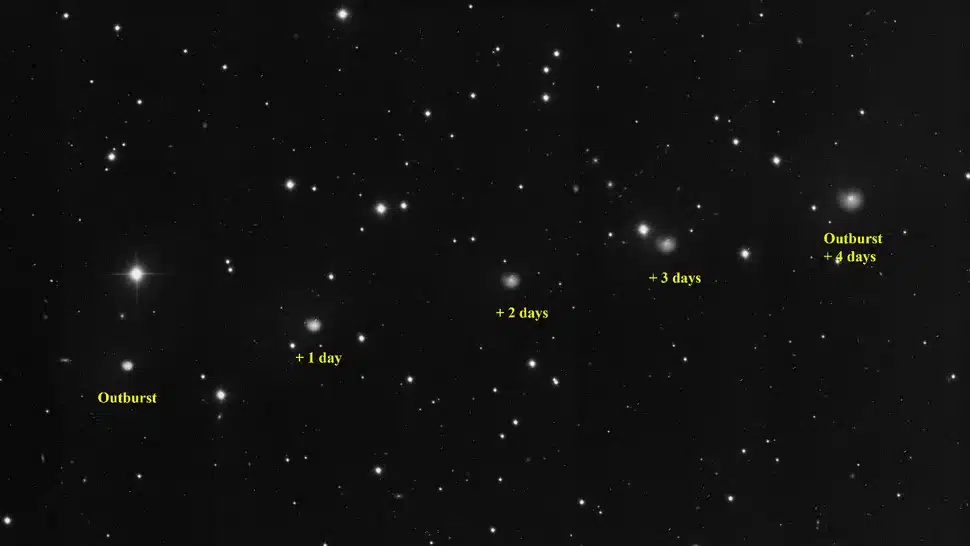 In the days following the Feb. 10 outburst, Comet 29P’s coma has expanded into a distinct spiral-like shape.
Image credit: Eliot Herman
What Is Cryovolcanism, and Why Is It Important?
Cryovolcanism is a term that refers to volcanic-like eruptions involving frozen materials rather than molten rock. Unlike typical volcanoes on Earth, which spew lava, cryovolcanic comets eject a mixture of ice and gas when their internal pressure builds up. Comet 29P belongs to a rare group of icy bodies known as cryovolcanic comets. These comets are often far from the Sun, yet they still experience eruptions when their frozen interiors get heated by solar radiation. The material ejected during these eruptions causes the comet’s coma to grow in size and brightness, making it visible even from Earth.
The explosion that occurred in February 2026 is not the first time that 29P has displayed such dramatic outbursts. However, it was one of the brightest and most intense. According to Spaceweather.com, the comet’s luminosity increased by 100 times following this particular event. This sudden brightening signals that an important eruption took place, comparable in intensity to some of the top eruptions the comet has experienced in the past 25 years.
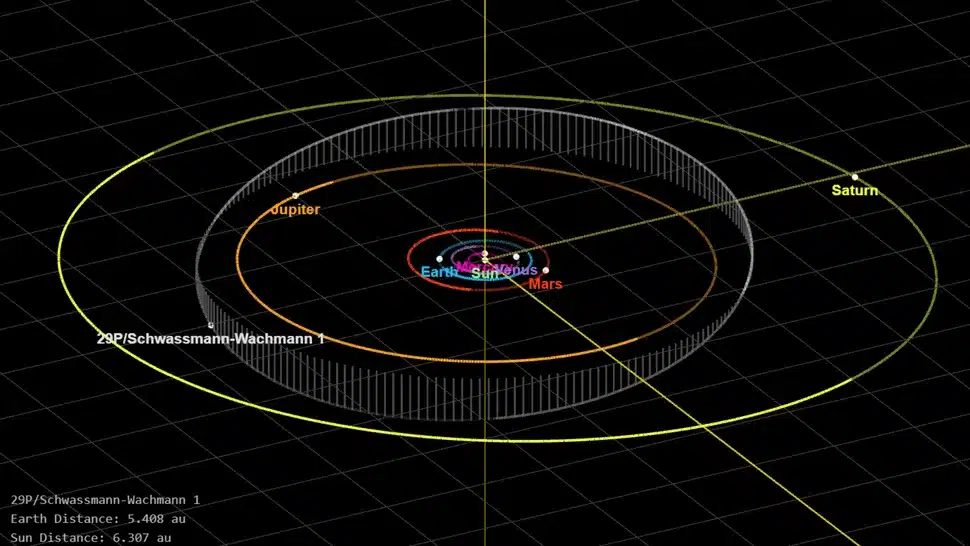 Comet 29P has a roughly circular orbit around the sun and is further from our home star than Jupiter, making its cryovolcanism somewhat surprising.
Image credit: NASA/JPL/Small-Body Database Lookup
The Mystery of 29P’s Eruptions: Unpredictable and Unexplained
Despite its frequent eruptions, Comet 29P remains one of the most enigmatic objects in the solar system. What makes its eruptions puzzling is the comet’s orbit, which remains almost constant in distance from the Sun. While other comets, especially long-period comets, experience eruptions as they approach the Sun, 29P’s eruptions occur regardless of its proximity to the star. This has left researchers scratching their heads, trying to figure out what causes these sudden and massive outbursts.
In fact, Comet 29P experiences an average of 20 eruptions each year, many of which are small and not immediately noticeable. However, the larger eruptions, like the one observed in February 2026, are much rarer and release massive amounts of cryomagma into space. The unpredictability of these eruptions is what makes studying 29P so challenging. Experts are still unclear about the exact mechanisms that trigger such events.
In an interview with Spaceweather.com, Richard Miles, an astronomer with the British Astronomical Association, stated that these eruptions are often followed by smaller “aftershocks,” which may continue for days or weeks after the initial explosion. This pattern of aftershocks makes it difficult for astronomers to predict when another major eruption might occur, even after observing one. This ongoing mystery surrounding 29P’s behavior continues to fuel scientific interest in the comet.