
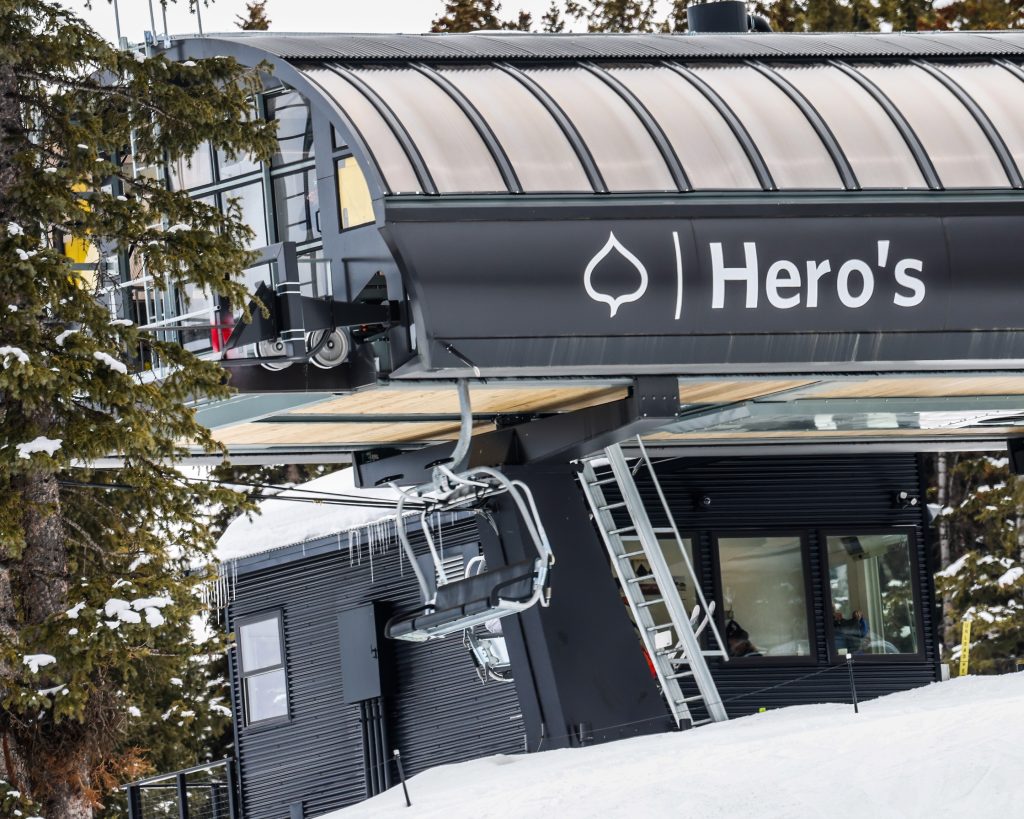
 The top of the Hero’s chairlift is seen on Sunday, Feb. 15, 2026, on Aspen Mountain.
Austin Colbert/The Aspen Times
Colorado’s record-low snowpack is already raising concerns about increased wildfire risk and water shortages this summer, even as the mountains are still in the depths of winter.
Statewide, the snowpack levels are just 61% of median for this time of year, and it would take consistent, record-breaking snowfall for the rest of the season to reach normal peak snowpack levels, according to the U.S. Department of Agriculture.
“We really should be bracing for an unusually early and potentially severe fire season,” Colorado Division of Fire Prevention and Control public information officer Tracy LeClair said. “Some of the conditions are worse than we saw in the big years, like 2012 and 2020, where we saw some of the largest fires and some of the most destructive fires in Colorado history.”
Those historic fire seasons were preceded by winters with well-below-average snowpacks, LeClair said. But this winter season, the snowpack is the worst Colorado has seen in decades. For weeks, the state’s snow telemetry network, which dates back to about 1987, has ranked the snowpack as the worst on record.
In the latest report from the U.S. Drought Monitor, parts of Summit, Eagle, Pitkin, Lake and Park counties were experiencing exceptional drought — the most intense level of drought. Meanwhile, most of northwest Colorado is under extreme drought or severe drought status.
The snow drought that has persisted through the season has shifted the fire risk “into the late winter months,” LeClair said. She noted that lack of snow has also led fire agencies across the state to delay or cancel prescribed burn projects, like pile burns, which require snow on the ground to burn safely.
“The snowpack acts as a critical natural reservoir for moisture that we really need to accumulate throughout the winter and then melt slowly in the spring,” LeClair said. “I think we’re going to see the snowpack melt off a lot sooner and potentially a lot faster because we’ve had extended warmer weather.”
With skier visitation down, Colorado’s mountain economies have suffered — and the lack of snow could upset summer tourism as well.
 A three-month outlook shows below-average chances for precipitation in Colorado. The state is experiencing some of the lowest snowpack levels in decades that are raising concerns about wildfire risk and reservoir storage.National Oceanic and Atmospheric Administration/Courtesy illustration
Already, Frisco has decided to close its boat ramp for the 2026 season, due to “extreme drought conditions” and guidance from Denver Water suggesting that the Dillon Reservoir won’t fill with enough water to reach the docks. The loss of offering dock slips will reduce the town’s revenue by more than $300,000.
Nathan Elder, Denver Water’s manager of water supply, said the patchy snow that Coloradans have been skiing on all winter is all there is to melt into the state’s reservoirs this summer. As of Feb. 1, the inflow forecast for the Dillon Reservoir was just 55% of normal, so only about half of the normal amount of water is expected to flow into the reservoir this run-off season, Elder said. He noted that half of the Denver Metro area’s water supply comes from the Colorado Headwaters Basin and high elevation areas.
“Snowpack right now, it’s highly concerning,” Elder said. “… We’re really preparing for a drought this year. We’re preparing to implement some level of water-use restrictions and send out lots of communication encouraging customers to conserve.”
Statewide reservoir storage is about 86% of median, compared to 94% of median this time last year, according to the U.S. Department of Agriculture’s Colorado Water Supply Outlook for February. The report states, “It’s certainly not ideal to have low reservoir storage during these dry years.”
With the low snowpack, there is not much water right now to melt into those reservoirs come spring. The Laramie-North Platte and Colorado Headwaters river basins, which encompass much of northwest Colorado, have some of the lowest streamflow forecasts in the state, at 50% of 58% of normal, according to the water supply outlook.
 A U.S. Drought Monitor map published Feb. 17, 2026, shows extreme and exceptional drought conditions spreading across Summit, Eagle, Pitkin and other mountain counties. U.S. Drought Monitor/Courtesy illustration)
Colorado Snow Survey Supervisor Brian Domonkos said that while the snowpack is low, he is hopeful that the recent shift to more wintry weather will continue with wetter conditions through the spring.
While it is very unlikely Colorado will be able to get back to normal snowpack levels, Domonkos said there’s “a fair amount of winter to go,” so it is possible that the state could make up some of its snow deficits in the next couple months.
At least right now, forecasts don’t match his optimism. The National Weather Service’s latest one-month outlook predicts slightly below-average precipitation across Colorado, and the three-month outlook looks even worse for the state.
“Just because the snowpack isn’t good, doesn’t always mean that the runoff won’t be OK,” Domonkos said. “We can have rain in the spring or even rain in the summer that can really boost runoff. Does it happen a lot? No. Can it happen? Yes.”