
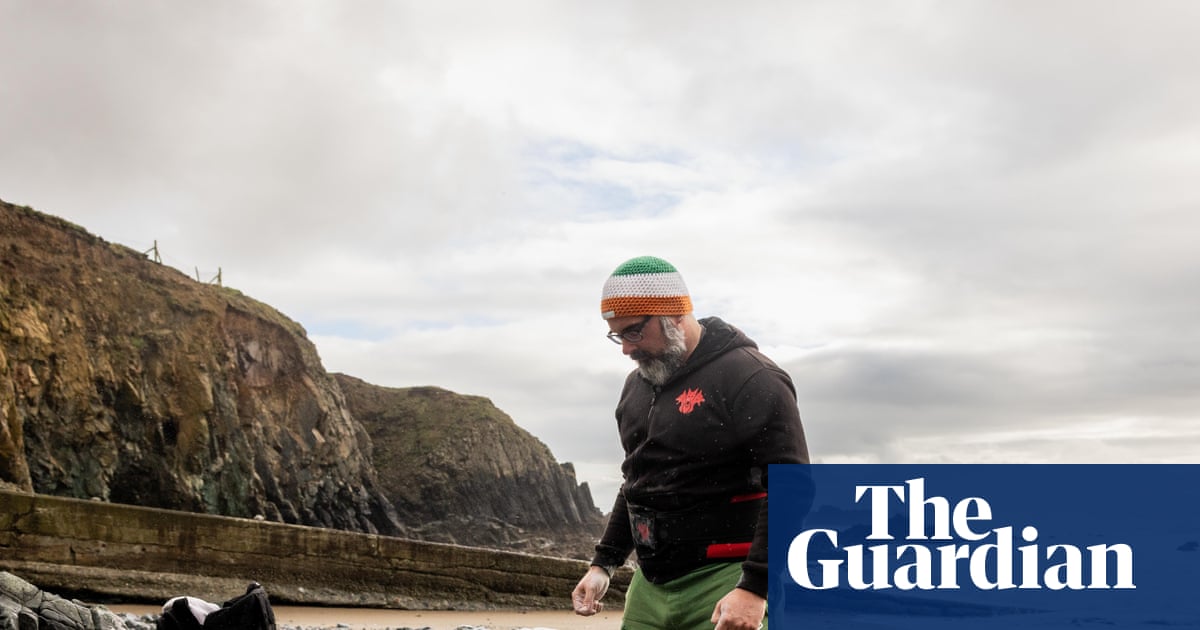
Your article on the ancient sport of stone lifting in Ireland (14 February) didn’t explain the historic origin of the rocks. Most of these boulders are glacial erratics, eroded and transported by Irish ice sheets during which the rocks have their edges worn down as they grind against other rocks. This explains their rounded appearance.
Prof Murray Gray
Queen Mary University of London
My great-great-great-grandfather, born in Ireland in 1824, was living in Wapping in 1861, working as a “ballast-getter”. Henry Mayhew’s London Labour and the London Poor (1851) said these were “men employed in raising ballast from the river by bodily labour … they are all very powerful men … mostly very tall, big-boned and muscular.”
Mo Heard
Bexhill, East Sussex
Have an opinion on anything you’ve read in the Guardian today? Please email us your letter and it will be considered for publication in our letters section.