
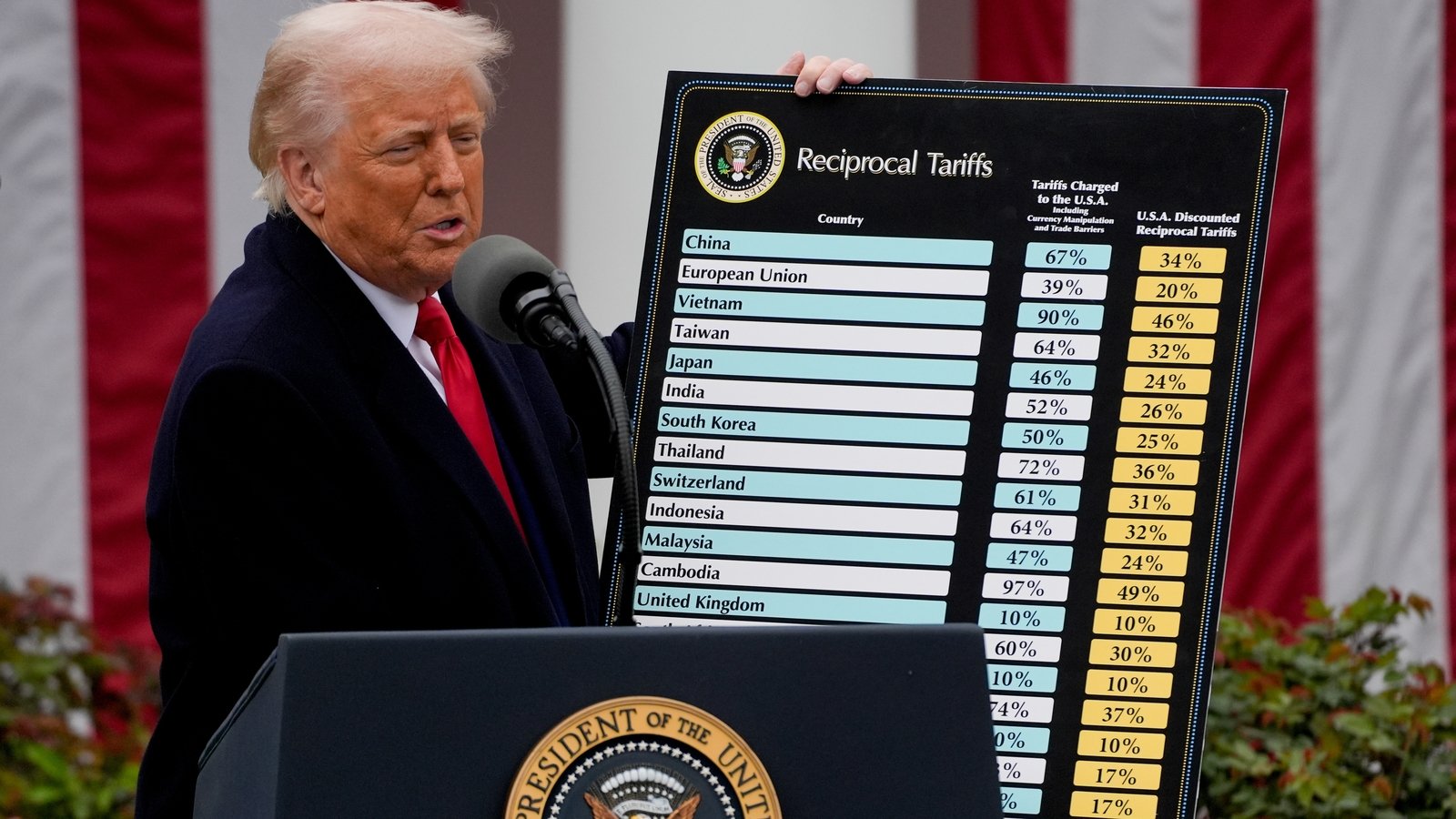
The US Supreme Court has ruled that Donald Trump exceeded his authority in imposing a swathe of tariffs that upended global trade, blocking a key tool the president has wielded to impose his economic agenda.
The conservative-majority high court ruled six-three in the judgment, saying the International Emergency Economic Powers Act (IEEPA) “does not authorise the president to impose tariffs”.
The ruling does not impact sector-specific duties that Mr Trump has separately imposed on imports of steel, aluminum and various other goods.
On 2 April last year, on a date Mr Trump labelled “Liberation Day,” the president announced what he called “reciprocal” tariffs on goods imported from most US trading partners, invoking IEEPA to address what he called a national emergency related to US trade deficits, though the US already had run trade deficits for decades.
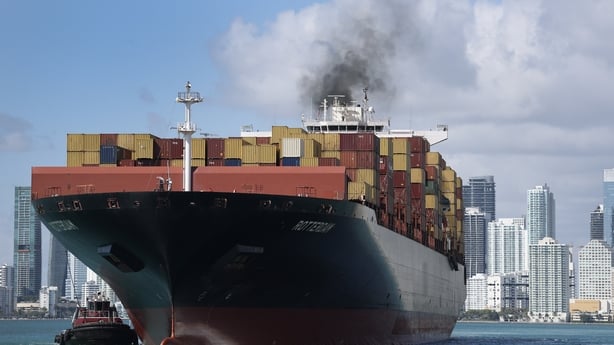
Economists say the cost of a US tariff refund could be as high as $175 billion
Tánaiste and Minister for Finance Simon Harris said the Goverment is “monitoring the situation closely” following the US Supreme Court ruling on tariffs.
Minister for Foreign Affairs and Trade Helen McEntee said she noted the ruling and described it as a “significant development”.
The European Union is carefully analysing the court’s decision and will continue to advocate for low tariffs, an EU spokesperson said.
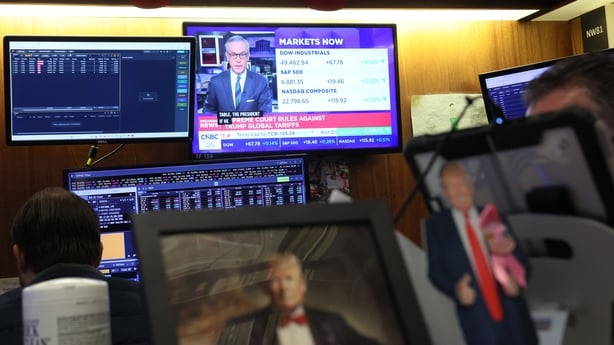
News of the Supreme Court ruling on tariffs is seen on a television at the New York Stock Exchange
Mr Trump is due to hold a press briefing this evening to address the Supreme Court’s decision, White House spokeswoman Karoline Leavitt said in a post on X.
While Mr Trump has long used tariffs as a lever for pressure and negotiations, he made unprecedented use of emergency economic powers upon returning to the presidency last year to slap new duties on virtually all US trading partners.
These included so-called “reciprocal” tariffs over trade practices that the White House deemed unfair, alongside separate sets of duties targeting major partners Mexico, Canada and China over illicit drug flows and immigration.
Now, thousands of businesses will decide whether to pursue refunds, as it means more than $175 billion (€148bn) in US tariffs collected could be refunded, Penn-Wharton Budget Model economists said.
The court noted today that “had Congress intended to convey the distinct and extraordinary power to impose tariffs” with IEEPA, “it would have done so expressly, as it consistently has in other tariff statutes”.
Read more: What happens next after US tariff ruling?
Formal probes which could ultimately lead to more such sectoral tariffs remain in the works.
Europe’s STOXX 600 index extended gains following the ruling while gold prices came off the day’s highs in the immediate aftermath.
All three major US stock indexes moved higher immediately following the Supreme Court’s decision.
The S&P 500 and the Nasdaq are on track to notch weekly gains, while the blue-chip Dow is currently flat versus last Friday’s close.
The US Supreme Court’s decision affirms earlier findings by lower courts that tariffs Mr Trump imposed under IEEPA were illegal.
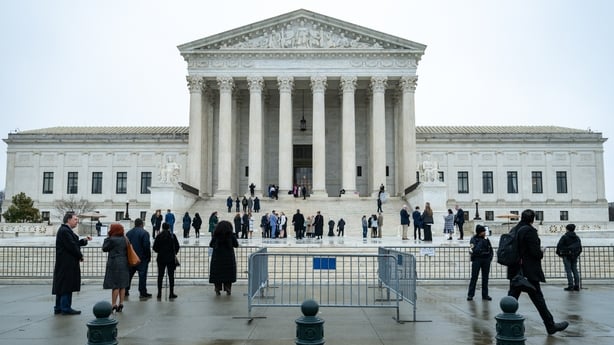
The conservative-majority Supreme Court ruled six-three in the judgment
A lower trade court had ruled in May that Mr Trump overstepped his authority with across-the-board levies and blocked most of them from taking effect, but that outcome had been put on hold as the US government sought an appeal.
An EU spokesperson said the bloc remained in close contact with the US administration and was seeking clarity on what steps it would take.
“We take note of the ruling by the US Supreme Court and are analysing it carefully. We remain in close contact with the US administration as we seek clarity on the steps they intend to take in response to this ruling,” said the spokesperson.
“Businesses on both sides of the Atlantic depend on stability and predictability in the trading relationship. We therefore continue to advocate for low tariffs and to work towards reducing them,” added the spokesperson.
The UK government said it expected its “privileged” trading position with the US to continue after the ruling.
“The UK enjoys the lowest reciprocal tariffs globally, and under any scenario we expect our privileged trading position with the US to continue”, a British government spokesperson said in a statement.
“We will work with the (US) administration to understand how the ruling will affect tariffs for the UK and the rest of the world,” they added.