
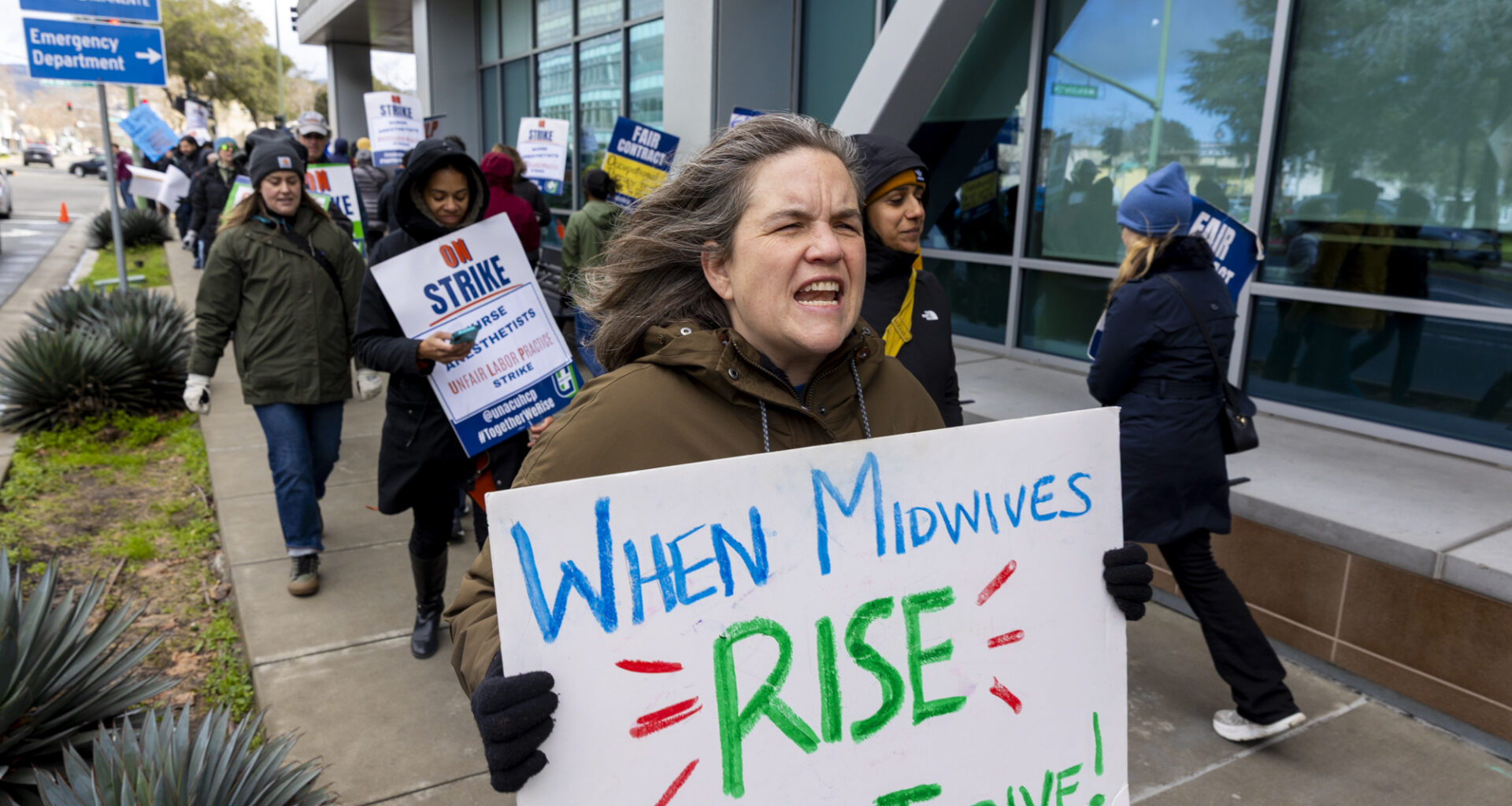
As an estimated tens of thousands of Kaiser health care employees stretch their open-ended strike in California and Hawaii into a fourth week, several told KQED they worry about how they’ll afford rent, student loan payments, child care expenses and other bills if the union and employer fail to reach a deal soon.
Their union, which led two much shorter walkouts at Kaiser last fall, is not offering financial assistance for the nurses, physician assistants, physical therapists, pharmacists and others relinquishing wages to strike. Some said they are dipping into retirement accounts, increasing credit card debt or considering part-time jobs elsewhere to make ends meet.
Yet, even with dwindling or depleted savings accounts, the strikers said they remain determined to hold the line for their livelihoods and job improvements they hope will benefit patients.
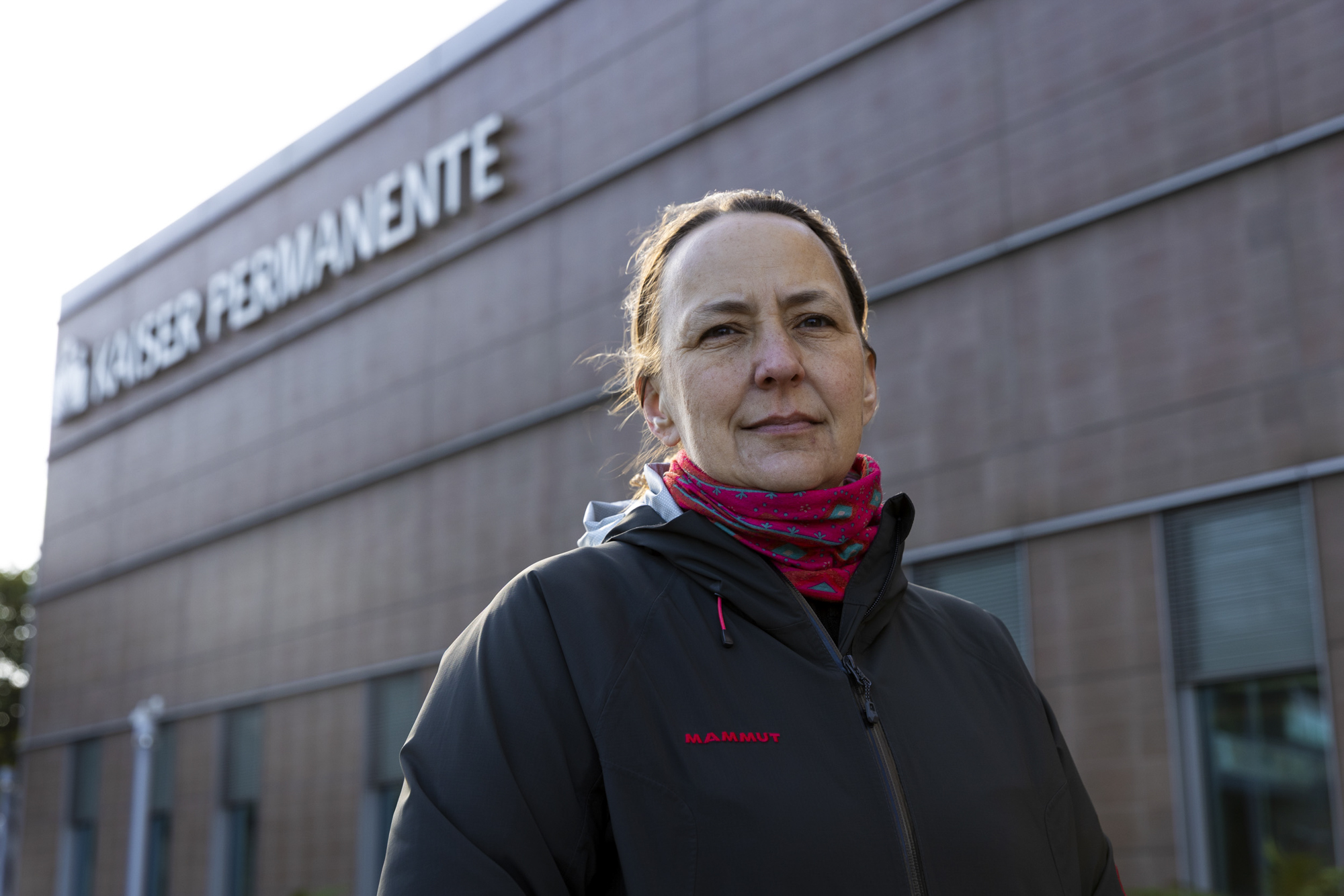 Michelle Baird, a nurse midwife from Kaiser Oakland, poses for a portrait while on strike at the picket line outside Kaiser Permanente Oakland Medical Center in Oakland on Feb. 19, 2026. (Tâm Vũ/KQED)
“I am constantly in this state of low-grade panic,” said Michelle Baird, a nurse midwife who has delivered babies and cared for mothers since 2015 at Kaiser facilities in Oakland, Berkeley and Pinole. “I really am good at not sounding or looking panicked because the work I do needs calmness, but I don’t feel calm at all.”
A self-described pessimist, the 53-year-old steeled herself early for the possibility that Kaiser could take months to make significant concessions in bargaining. In preparation, Baird worked as many shifts as she could before she and up to 31,000 health care professionals walked off their jobs on Jan. 26.
Now, Baird said her household in Berkeley has already canceled subscriptions, stopped online shopping and quit eating out at restaurants. She hopes she won’t have to borrow against her daughter’s college fund and is looking for a job that she could add to her schedule, even after the walkout ends.
“Really, it’s just tightening the belt, pinching pennies and worrying a lot,” said Baird, who added that her top priorities have been ensuring fair pay and keeping affordable health care benefits when she eventually retires.
‘They’ve forgotten the health care workers’
The employees want Kaiser, the nation’s largest private nonprofit health care organization, to invest more revenues in its workforce and allow more worker input on staffing and scheduling, which they said would decrease wait times for patients and improve care. The company has largely dismissed claims of chronic understaffing or deteriorating services, and it said anything more than its offer for a 21.5% wage increase over four years would be unsustainable and force it to increase premiums for customers.
Kaiser, which has expanded operations to eight states and the District of Columbia, made a net income of $9.3 billion last year, driven largely by investment gains, and nearly $13 billion in 2024, while holding reserves estimated at $66 billion or more. The Oakland-based company contends its reserves should pay for pensions, building maintenance and other long-term financial commitments, as well as serve as a rainy day fund.
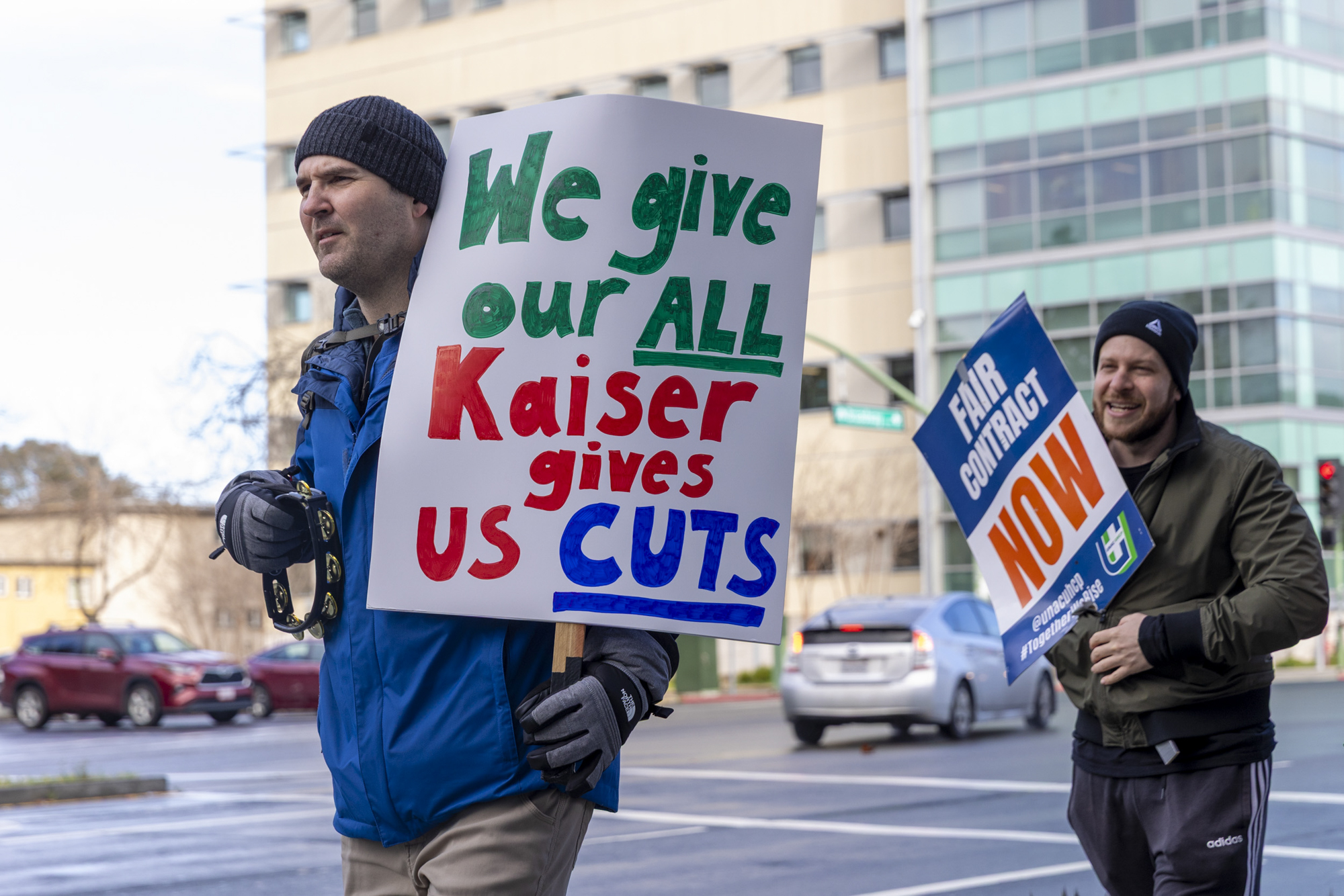 Chris Pyper (left), a physician assistant from Kaiser San Leandro, marches while on strike outside Kaiser Permanente Oakland Medical Center in Oakland on Feb. 19, 2026. (Tâm Vũ/KQED)
But employees on the picket line doubt that argument. Pyper, who works in the orthopedic surgery department in San Leandro, said Kaiser has pushed hard to cut the retirement, health care and other benefits of newer union members like himself, leaving him no choice but to strike.
“Kaiser is sitting on a lot of money they’ve made over the past few years,” said Pyper, who is paying monthly for student loans. “They’re expanding in the other states, and it just kind of feels like they’ve forgotten the health care workers who are doing a lot of the patient care.”
In a statement, Kaiser said its employees “deserve a fair contract that reflects their value.” The company, which stopped bargaining on a long-standing national contract including big-ticket issues such as across-the-board wage increases, said it’s making progress with the smaller, local units forming the United Nurses Association of California/Union of Healthcare Professionals.