
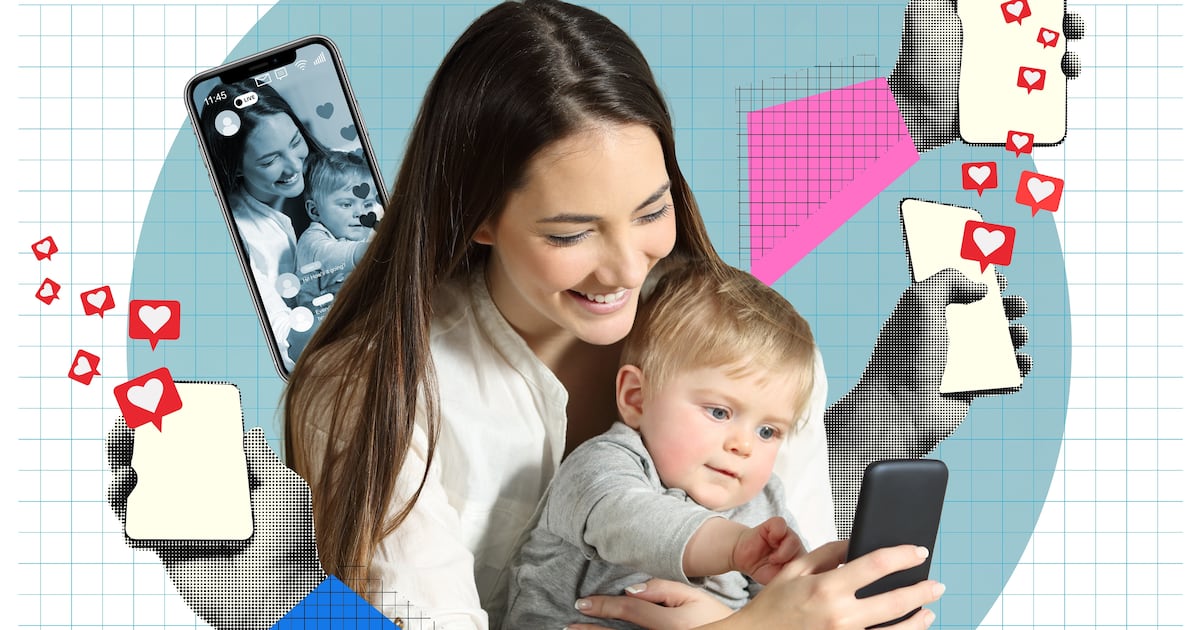
A child is going up an escalator in a crowded shopping centre. She’s young: eight years old and sweet-looking, with straggly long brown hair, a flowery jumper and a white crossbody bag. She’s holding her mother’s hand. A stranger shouts, “Hi Éabha!” Another stranger trills a happy birthday greeting. An unknown man leans in to wonder if her dad will be late to collect her from football practice. Her face is a mask of surprise, disgust and fear. Horror flickers across her mother’s expression as strangers retreat to their phones – to the images she has lovingly posted online of her cherished daughter.
For parents around the country, the recent advert from the Data Protection Commission, part of their Pause Before You Post campaign, was their nightmare come to life. It was a 40-second encapsulation of the inner conflict many parents feel – proud and adoring, they want to share images of their kids, but is it a good idea really?
Ten years ago, there was a certain innocence about posting online. Now things are different. Identity theft is a looming issue. Grok has emerged, an AI bot that allows for nudification of images. And the first generation of kids to have their images posted online are speaking out about how they feel now as adults. Brooklyn Beckham, who is estranged from his parents David and Victoria Beckham, recently said he grew up with constant anxiety, citing “performative social media posts” shared by his family online. A greater understanding around consent has come into play. There’s also a newfound understanding that a digital footprint is forever: you can delete an image, but that doesn’t mean it hasn’t been screenshotted, or doesn’t exist elsewhere on the internet.
[ Should you post pictures of children online? Parents share their viewsOpens in new window ]
Sharenting – the practice of sharing pictures of one’s children – is extraordinarily common. A study published in the Journal of Pediatrics in 2017 found that 81 per cent of children living in western countries had an online presence before the age of two. But now that Grok can create a video from a dozen images, parents are asking themselves new and unfamiliar questions: why are we sharing? Do we need to share? What is it really achieving?
I’m one of those parents who has started to question my online attitude. I very rarely post images of my child online, so I thought I was pretty safe. Then a few days ago, I got a text from an acquaintance who thought my Facebook account might have been hacked because he had received a strange message purportedly from me. When I checked, I realised someone had cloned my profile page on Facebook, and set up a new account using my details.
They had taken my profile picture, a sweet image of me and my toddler at Dublin Zoo with our faces popping out of a mock dinosaur shell. They had wrapped a gold ribbon around the image. I discovered the ribbon stood for “Childhood Cancer Awareness Month”. I can only imagine the kinds of misleading messages the hacker planned to send out about my entirely healthy child, given the gold ribbon insignia, before I reported the fake profile to Facebook and it was swiftly taken down.
Colman Noctor, a Leinster-based child and adolescent psychoanalyst, is seeing more and more families grapple with these issues. “Posting online used to seem harmless,” he says. “The consensus was that everyone else was doing it. Then over time we started to realise the risks.”
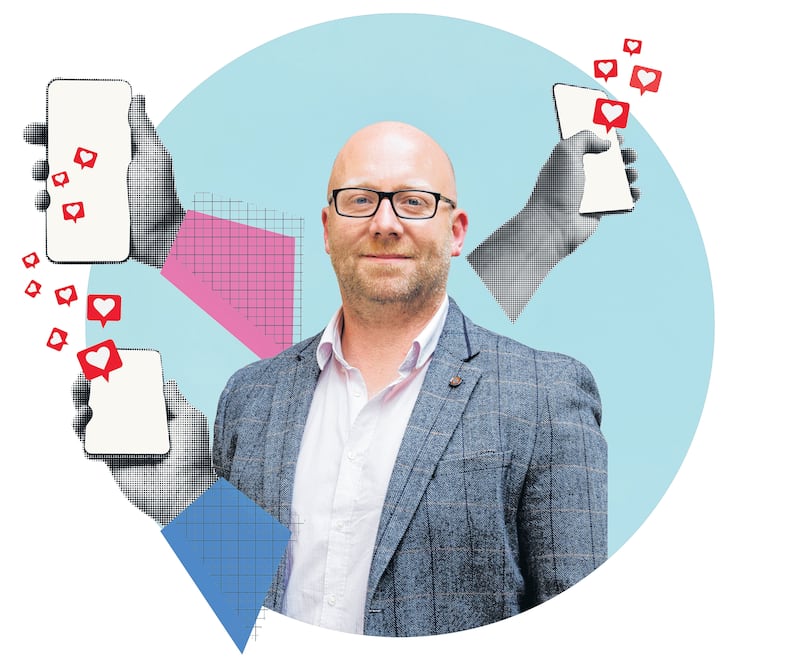 Dr Colman Noctor. Photograph: Marc O’Sullivan
In his opinion, those risks range from the predatory to the more mundane, but still challenging for your child. “Your digital footprint is like a digital tattoo in that it’s there for ever. Down the line, when they’re older, both among their peer group and when they go for job applications, when you’re posting images of your kid as an infant in the bath, that may not be something they’re fond of.”
Noctor understands the impulse to post, but counsels caution. “What’s the best policy?” he asks. “From a purist point of view, there should be no evidence of your children on social media. But look, if there’s a family photograph at a granny’s 80th, and they’re a part of that photo, in moderation that’s quite understandable and normal. To minimise risk or eliminate risk, minimise means using images of your children very sparingly and eliminating it would be to not have any evidence of them online. That’s a purist point of view, but probably the most sensible in the long term.”
Síle Seoige is a mother to two children, Cathal, aged eight, and Clíodhna, aged four. They live in the coastal community of Spiddal in Co Galway, where Seoige, a broadcaster and podcaster, hosts her Ready to be Real podcast. They enjoy, says Seoige, a very normal life. “Nobody bats an eyelid, regardless of what I do for a living.” She does not like the thought of her children being recognised on the street, something common for many well known media figures with highly publicised children. “That Data Protection ad would have been my worst nightmare.”
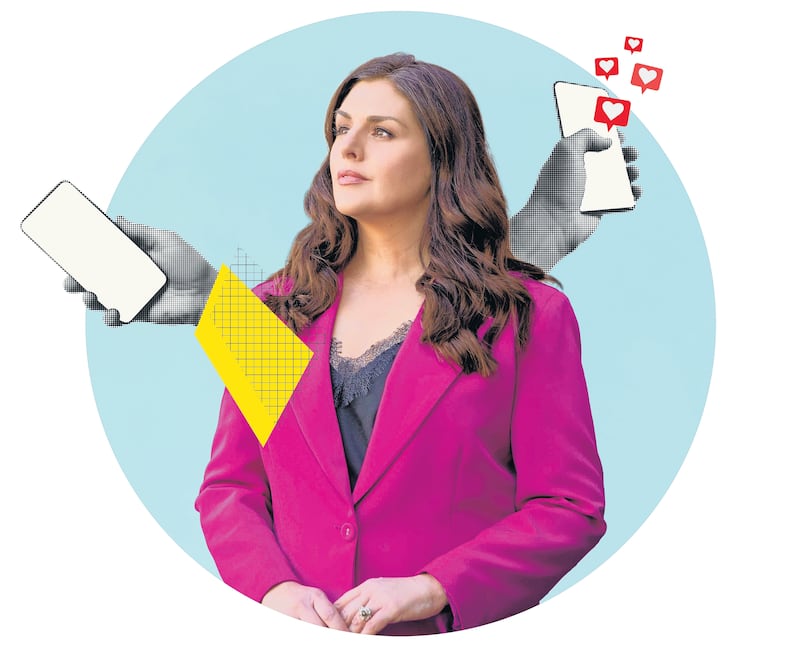 Broadcaster and podcaster Síle Seoige
She is a little rueful about some of her decisions around social media. “I think if I was to become a parent now, in 2026, I wouldn’t be sharing any images of them,” she says. “But you live and learn.” Seoige and her husband had a policy in years past: after the age of three, she would no longer post any images showing their children’s faces on social media, as their features became more “settled”, only perhaps allowing glimpses of their backs or side profiles. “Some people might think that’s a bit bonkers: you either share them or you don’t.”
For Seoige it gave voice to another part of her, the part that was a proud parent and wanted to show her babies to the world. “We’re meant to fall in love with these little humans and then there is a desire to share their images, their videos, with everyone, and show people how amazing our kids, our babies, are,” she says. She doesn’t believe in judging others for their choices, but “things are very different now”, she says. “The speed at which AI is moving is scary. As a parent, I’m terrified.”
Francis Rees, a law lecturer at the University of Essex, UK, is co-ordinator of the Child Influencer Project, which looks at the growing practice of branded child content on platforms such as TikTok, Instagram and YouTube. She understands how complicated the issue is for parents, particularly given that the risks can seem so vague and remote.
“It’s a risk exposure thing, really,” she says. “So it’s like any risk assessment. So if you’re in a workplace, there’s somewhere where bleach is stored and there’s safe handling of the bleach. It’s not to say that everybody’s going to get bleach in their eyes, but there are processes around what safe handling looks like.”
In her view, parents are being left to solve these problems alone. “There seems to be a lot of onus for parents to take accountability, which isn’t fair. We fall into pointing fingers at each other rather than looking upwards at the structures that make this happen.”
[ How can we keep our kids safe online? Here are some tips for parentsOpens in new window ]
Policy and guidance is needed, Rees says, particularly in the far more complex area of “momfluencers” online, where mothers create brands based around their status as mother figures, featuring footage of their children, often generating huge pay deals from brands anxious to grab on to their audiences. “Brands and agencies are making money from this, but nobody at the top policy-wise is telling parents how this could be done safely and well, and no one’s holding the brands and agencies to account either,” says Rees.
Some “momfluencers” say their business deals have made it possible for their families to have mortgages and holidays. (A number of well-known Irish influencers were contacted for this article, but none made themselves available for comment.)
Rees isn’t unsympathetic to the quandary they’re in – “being a parent is tough and financial support is always welcome” – but asks if they have a true understanding of the structural changes they are introducing into family life.
“As well as the benefits, it could change the parent-child relationship, making it more akin to manager-employee,” she says. “Parents are tasked not just with the management of the content, but also the sorts of things an employer would have to consider: financial commitments and contracts, health and safety, working hours and taxation. All of these things would be managed by trained professionals on a film set, but here parents are expected to just understand how to navigate this alongside everyday parenting.”
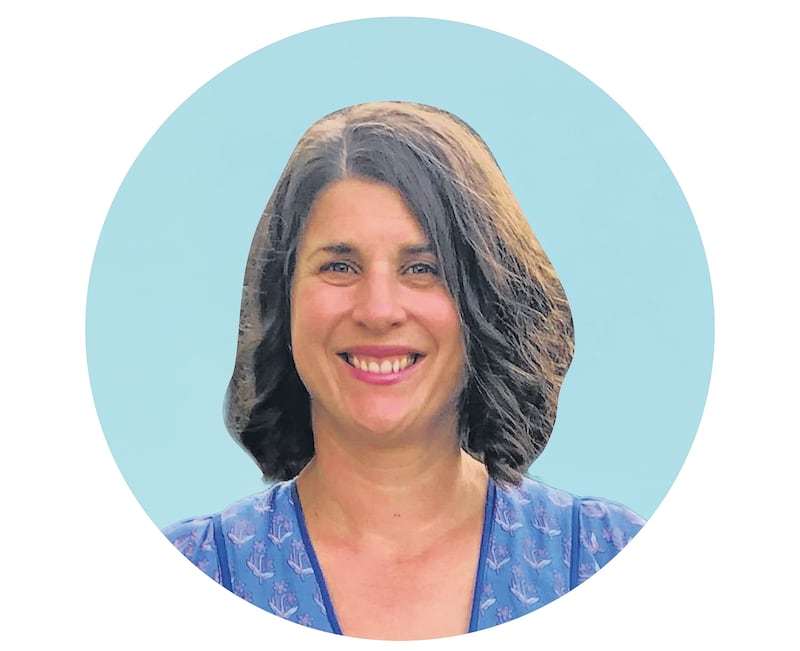 Alex Cooney is cofounder of CyberSafeKids
Alex Cooney is cofounder of CyberSafeKids, an online safety charity based in Dublin. She says when children become the content rather than incidentally appearing in it, “they’re effectively working, but without employment protections, the ability to consent, or control over how they’re portrayed”. “We teach children to protect their privacy online,” she adds. “But if their parents are broadcasting intimate details of their lives, we’re undermining that message.”
Unicef will soon launch a digital marketing toolkit for brands and agencies that will introduce concepts of risk assessment for child influencers. “This is not law as such, but will put pressure on those in practice to show they are taking child welfare into account,” says Rees. Along with her own child safeguarding toolkit, launched last year, she hopes it will offer parents more guidance and support for these uncertain times.
“We can no longer just put our heads in the sand and pretend like it’s all going to go away,” says Síle Seoige. “If I don’t think about it and just put my fingers in my ears and go, ‘la, la, la’, it’s not going to happen. That’s not the reality. It doesn’t help anyone. It doesn’t protect us. It doesn’t protect our kids.”
The Children in Content digital safeguarding toolkit is available at essex.ac.uk/research-projects/children-in-content/family