
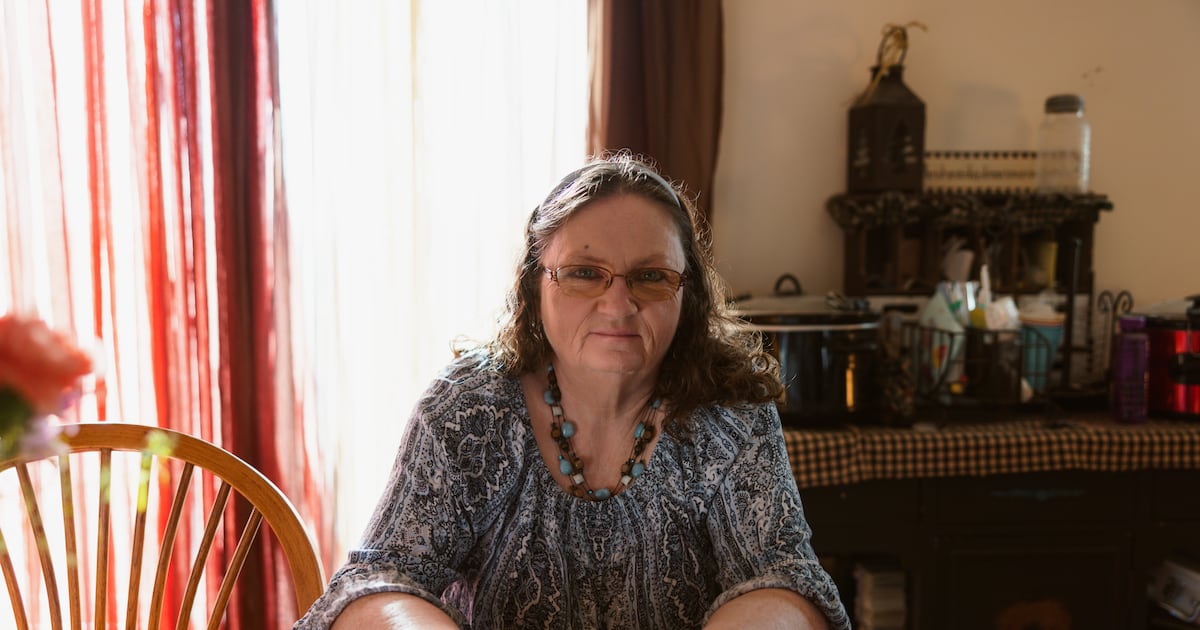
On her first night in Campbell County Detention Center, the Kentucky prison where she was housed with regular inmates, Donna Hughes Brown had no knowledge or experience of this new world apart from a collage of old prison film and television dramas racing through her mind. Fights and gangs and attacks and then, the cosmic disorientation of finding yourself “in there”. The same as anybody else.
“Yeah, my only thing I had to go on was the shock and awe of television shows,” she says, shaking her head.
“So, all I could think was: ‘Find the person you need to align yourself to the most.’ But it was funny because what had happened was, once those girls realised why I was there, they took me under their wing and just said: ‘This is bulls**t. We are here because we did something to be here. You did nothing.’ So, it was kind of refreshing to have that camaraderie.
“Funny story – a lot of those inmates are there for drug-related charges. And one day in the rec’ yard a new inmate came up to me and she said: ‘What are you here for?’ I said, ‘Ice.’ She said, ‘Oh, me too.’ I said ‘No, I don’t think so – I think it’s a different kind of ice [also a term by which the drug crystal meth is known] that we are both working with here’.”
Hughes Brown and her husband Jim Brown burst out laughing at this. It’s a busy lunchtime in the 54th Street Grill in Wentzville, about half an hour from their horse ranch in Troy, Missouri. Potato cheddar soup, sandwiches, pop classics on the sound system: the place is a favourite of theirs.
Both have been through the ringer after Hughes Brown was detained by immigration and customs officials at Chicago airport when returning home from Ireland last July. Both endured bleak nights, particularly in those months when her case was continually postponed, and their lives held in suspension. Brown coped by working and advocating with a kind of furious precision on his wife’s behalf, contacting senators and congressional offices until he was, at last, heard.
Seth Magaziner, the Rhode Island Democrat, took a strong personal interest in the case and invited Brown to Capitol Hill. In November, at a congressional hearing in which Brown was present, the secretary of the US department of homeland security Kristi Noem was forced to listen to the absurd and frightening circumstances of Hughes Brown’s detention.
By then, the details were public knowledge: she showed up on the immigration files for writing two bad cheques – which she rectified at the time – more than 15 years ago. The combined sum was less than $80 (€68). She was a green card holder and married to a navy veteran. Noem, when prompted, thanked Brown for his service that day.
“Because she had to,” he clarifies. “She didn’t want to.”
 Donna Hughes Brown and her husband Jim Brown visit their horses at a field behind their home in Missouri. Photograph: Chase Castor
 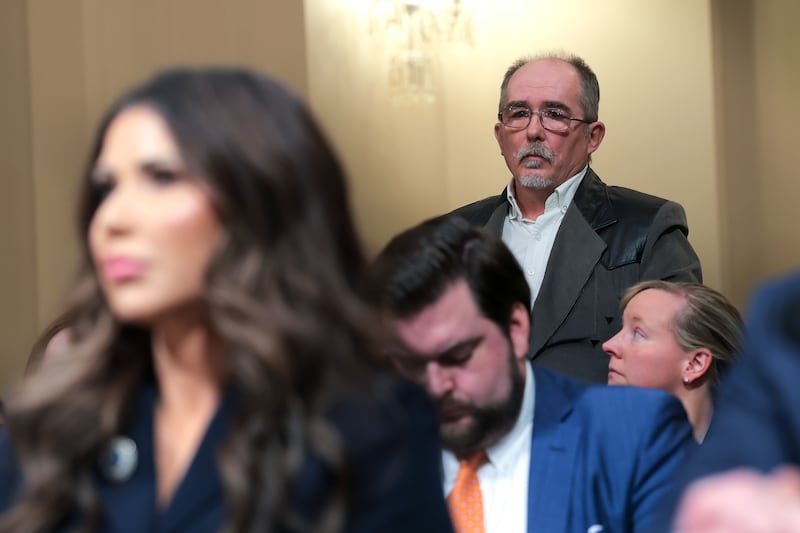 Jim Brown (back right), husband of Donna Hughes Brown, listens as US secretary of homeland security Kristi Noem testifies before a congressional committee on homeland security in Washington, DC in December. Photograph: Anna Moneymaker/Getty
  Seth Magaziner, the Rhode Island Democrat, took a strong personal interest in the case. Photograph: Win McNamee/Getty Images
Hughes Brown was released a few days before Christmas and she and her husband have spent the early part of the year reacclimatising to the life they have built in Troy, which revolves around their grandchildren, their love of horses and their work. This now includes advocating for other immigrants who have found themselves caught up in the barbed wire of the old immigration rules now ruthlessly enforced by current homeland security personnel.
While in detention, Hughes Brown took solace in a depth of fortitude that is, clearly, remarkable. She is quiet-spoken and highly articulate and not prone to dramatic statements. Even in an hour’s conversation you get a sense of the deeply ingrained poise. She was “lifted” at Chicago after a two-week trip to Ireland. She spent the first week in a cell in Broadview, on the fringes of the city, in a seven-woman cell along with a Polish woman, Beatta, Mila from Ukraine, two Chinese women, and two Latina women. English became the default language and Hughes Brown spent that week, bewildering and frightening as the situation was, teaching basic phrases through sketches and hand signals.
When officials moved her to Kentucky, she was originally housed in a “pod” or dormitory with 64 beds. Then she was moved to a “programme”-oriented dorm with 32 inmates. The bunks were steel frame and the sleeping mats were battered and worn. The common area was populated by tables and chairs. The food was to be endured. Although they were entitled to an hour per day in the yard, hot weather or heavy rain cancelled that privilege. Sometimes a full week would pass when they would be cooped in the dorm.
Through it all, she spoke daily with her husband and began learning about the circumstances of other women. In September, she met a young woman, Jamie, who moved to the US with her parents from Guatemala when she was 11. As soon as she turned 18 she applied for permanent legal status and became the subject of a supreme court case dragging out for more than five years. She was detained by immigration officials in February of 2025 and had been transferred from detention centres in Texas to Louisiana to Indiana before meeting Hughes Brown in Kentucky.
“And we spoke, and I learned she had nothing- no case number, no Ice rep’ visit, nothing,” she explains.
“She was just there. And I said to the Ice rep: Greg, have you talked to Jamie? He said, ‘I’m sure I have.’ And I said: ‘Well let’s look at your list.’ And we checked. Her name wasn’t even on it. And I said, ‘Greg, you’ve not talked to her at all.’ So, she has her first court date now but it’s not until next October. And now she has two different deportation cases. She is married to an American. Her only ‘crime’ was that she was brought to this country by her parents when she was a child. And they were illegal at that time. Her sister was picked up the same time as Jamie. And their circumstances are exactly the same. But her sister was released and is allowed to stay.”
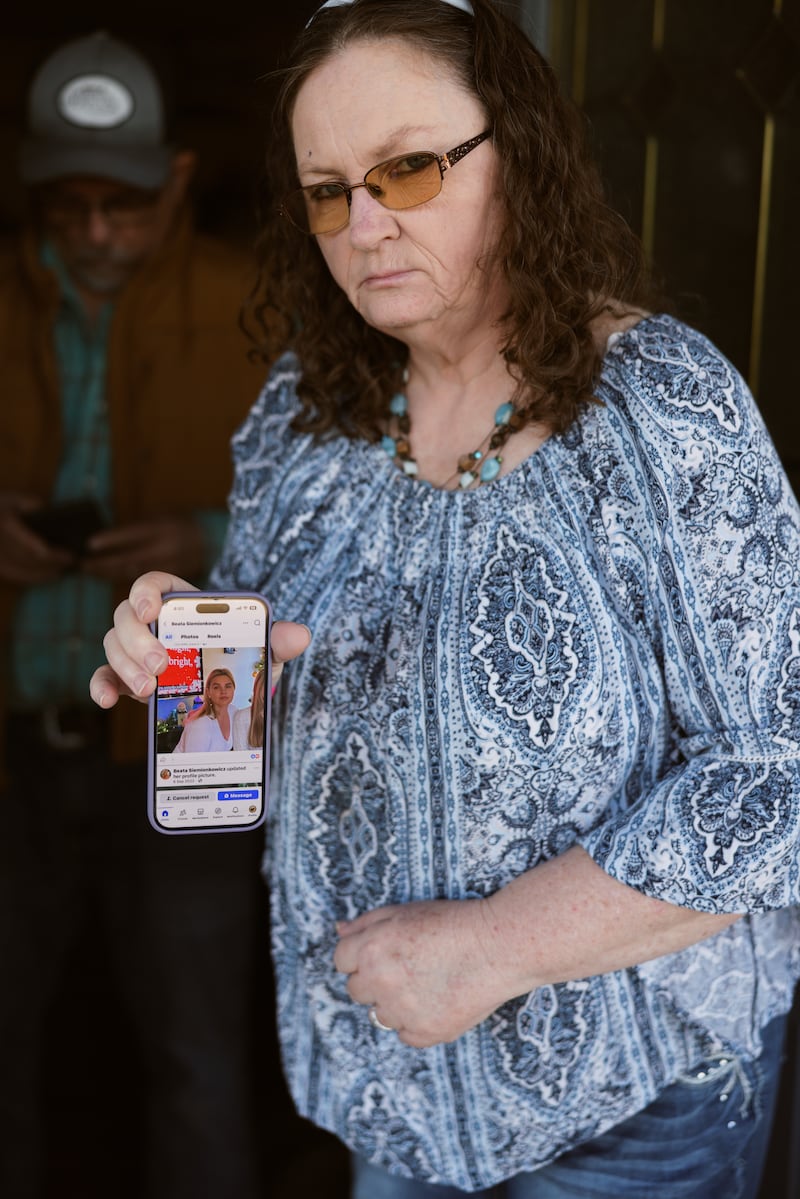 Donna Hughes Brown shows a photo of Beata, one of the DHS detainees she is helping and advocating for. Photograph: Chase Castor
The Browns have a list now of people they are going to fight for. Beatta, who is appealing a deportation order to Poland, is one. Just last week, Brown heard from a family in Texas. Curtis was 17 when he had two Xanex tablets in his pocket and had a drugs misdemeanour charge on his record. Now he is 40, married to an American woman, and is being held in a detention facility.
The couple have joined an advocacy group, Undivided, and have begun to speak at town halls and forums. Brown balances his day work with writing to and phoning the offices of politicians across the US. The pair live in a deeply Republican, conservative area. On a local level, it’s a warm, caring community.
Donna’s experience generated complex emotions: friends and neighbours were appalled that she went through six hellish months for no apparent reason. But among many locals there remains a broad approval for the zero-tolerance approach of the administration in ridding the United States of the scourge of criminals and drug dealers and murderers as vividly depicted in Donald Trump’s campaign and Oval office monologues. Brown spent the long nights of last winter reading and researching. The results have provoked in him a visceral antipathy towards what he now sees as a cynical and cruel bid for control.
“I’m pi**ed. Because, Donna’s story – there are hundreds of others in that same situation. It drives me nuts that they have been allowed to do this to people.”
“If I am the worst of the worst then America has a bigger problem than it thinks it does,” Hughes Brown adds.
“I think it is about stoking flames,” Brown continues.
“They have created a fan base that cheers on the demise of innocent people. And this administration loves accolades and hates ridicule. So, they don’t want to lose that fan base. And they also want to demonise anyone who opposes them. Project 2025 is what it is. Russell Vought [director of the Office of Management and Budget] is the author and that’s what is happening – creating an oligarchy system that can keep power and control. It is about money, power and control. It has nothing to do with caring about other people.
We have always been an international family but our roots and outlook – how we were raised – was about being Irish
— Donna Hughes Brown
“Trump said in 2016 he could literally go out in Manhattan and shoot someone and they would cheer them on. That is literally what they are doing now. And it really has to do with fear. Because in Washington, everyone kowtows to the administration. Anyone who doesn’t are blackballed and called names. Look at Marjorie Taylor Greene, at Massie, at Rand Paul.”
We speak more generally about the state of the country. Their county, Troy, is, the Browns say, overwhelmed with a meth epidemic afflicting the less privileged. For years, Jim worked in a hospital in the northern suburbs of St Louis, which has fallen into an extraordinary state of dereliction, with the attendant social problems. But he argues that nothing has been done to change this.
“The problem is that Donna is the majority. As far as who Ice is targeting. They aren’t going to the hood in north St Louis because they’d get shot and killed. They are going to Chesterfield, to the malls, and targeting grandmothers. That’s both political parties’ fault. This goes back decades. It’s purposeful oppression. Keep em poor, keep em dependent, keep ‘em drugged and high, and they have no say in the world. It is no different in the inner city than the rural community. It’s heroin in St Louis. It’s meth in the country. And it’s a voting base. The rural community is red voters. The inner city is blue. And they keep both voting groups in line, in check.”
The Browns are fully alive to the capriciousness of Donna’s story. Technically, she might have been deported on the day of her court hearing, on December 19th. They had prepared for that scenario. “I had family in Ireland so if I had to settee-surf for the duration, so be it,” she says.
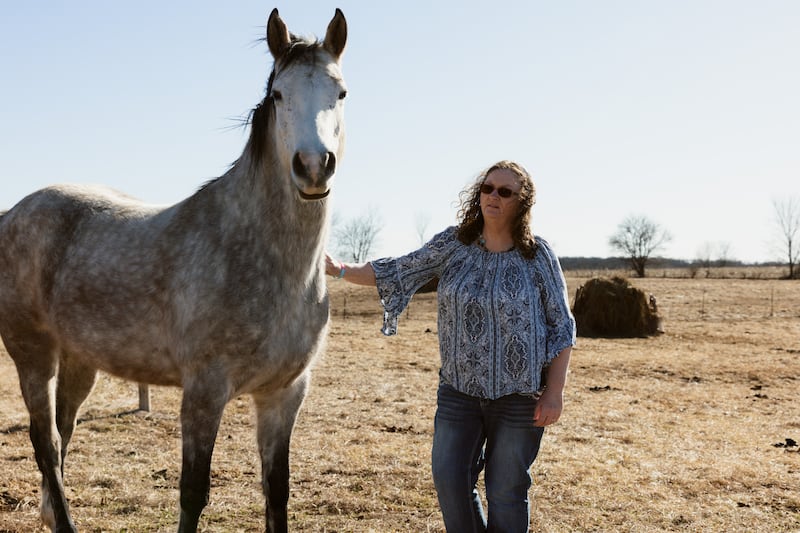 Donna Hughes Brown with her horses at a field behind their home in Bowling Green, Missouri. Photograph: Chase Castor
 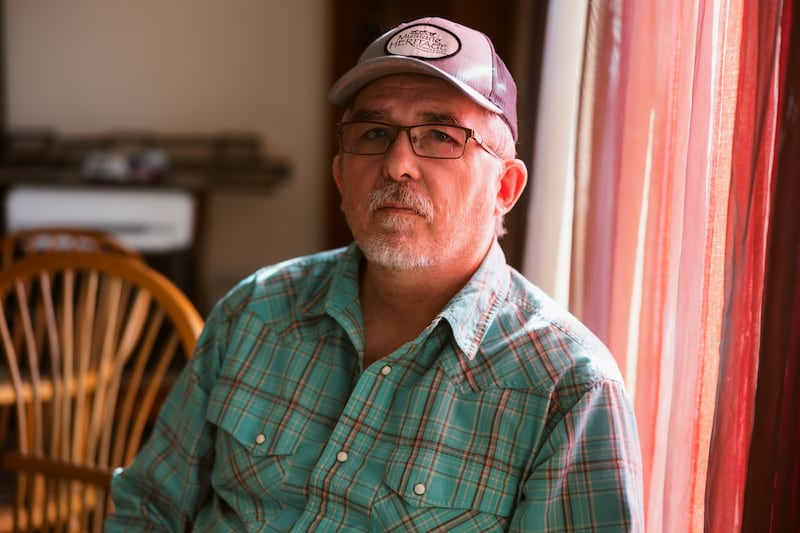 Jim Brown at his home in Bowling Green, Missouri. Photograph: Chase Castor
  Donna and Jim Brown at their home in Bowling Green, Missouri. Photograph: Chase Castor
“Jim had checked out potential hospital jobs in Dublin. It wasn’t something that I wanted. Ireland is great but it is foreign to me – and to Donna.”
As she listened to the judge that day, Hughes Brown had a gut feeling he was going to rule against her. But her attorney, quickly interpreting the legal language, scratched a note on the legal pad to tell her that he was about to find in her favour. Even then, Ice had the right to appeal, which meant she would have been detained for anything up to 30 days.
“The judge told the homeland attorney that they had 30 days to file that appeal or it became a moot point. If they decided to change their mind and not pursue, they had to let him know right away so he could let me be released. So, I was looking from anything from a minimum of a couple of days to 30 days for them to get their proverbial together and follow through on their appeal or not. I wasn’t expecting two hours. But for whatever reason they dropped it. I still don’t know why.”
[ Irish grandmother Donna Hughes-Brown to be released from US custodyOpens in new window ]
She was back in the pod when one of the guards came in and announced: “Hughes-Brown: Body and bag.”
After half a year of confinement, and stress, freedom was returned to her with four simple words. She left to hugs and tears. The couple believes that the blatant absurdity of the reason for her arrest, and the subsequent campaign spearheaded by Brown, embarrassed the administration into releasing her. She cannot be deported now.
Proponents of the zero-tolerance deportation policy have pointed out that she had decades to apply for citizenship but didn’t.
“People asked why I never got citizenship. Well, I never needed to. It would have given me the right or ability to vote. But I live, work, pay taxes and support communities. I felt Irish growing up as our heritage was ingrained in us. I was born in England. My brother was born in Jamaica. My parents met in Australia. We have always been an international family but our roots and outlook – how we were raised – was about being Irish. So, I never felt the need. My brother became naturalised here, but that’s because he joined the US army.”
On balance, Hughes Brown still believes that the United States has been good to her family and she still believes in the country. The application of a dormant law to an unreasonable degree is, she believes, the fundamental problem at the heart of the conflict between the federal immigration body and protesters across the country. Working for legislative reform will be the Browns’ joint mission in the years ahead.
“Before you are Republican, before you are Democrat or Christian or Muslim or before you identify as a cat, okay, before any of that: you are human,” Hughes-Brown says.
“And that has all been completely lost.”