
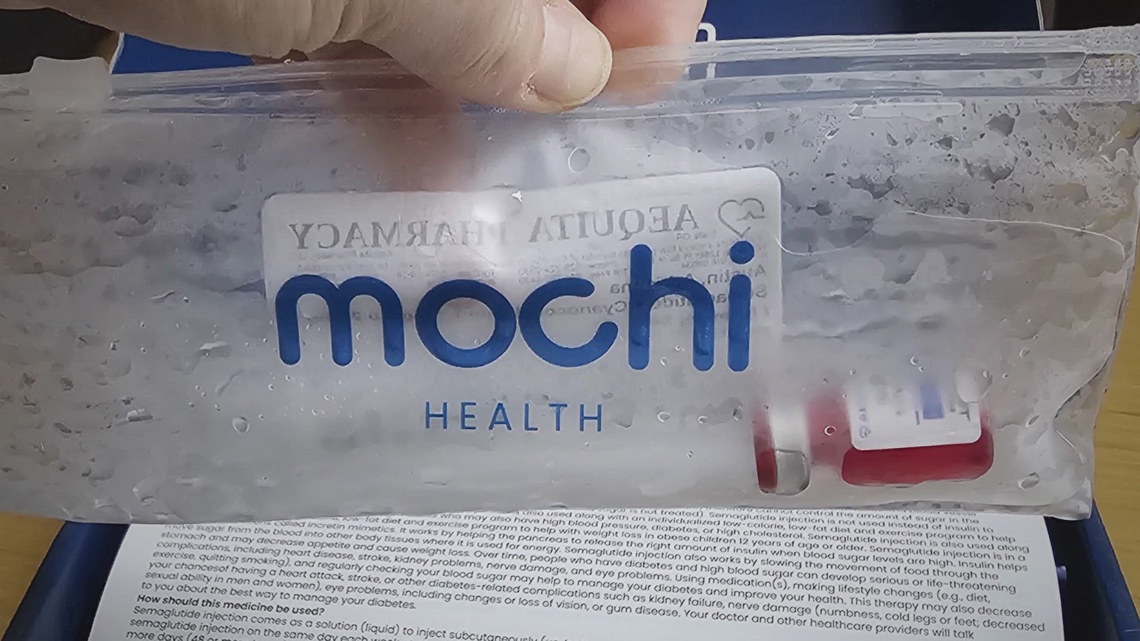
Whistleblowers expose unlicensed workers handling prescription medications at Kirkland pharmacy that supplied GLP-1 weight-loss drugs nationwide.
KIRKLAND, Wash. — In a nondescript business park east of Seattle, a startup pharmacy raced to meet surging demand for weight-loss medications.
But according to multiple whistleblowers and internal videos, the operation cut dangerous corners in its pursuit of profit.
The company, Aequita, manufactured off-brand versions of blockbuster GLP-1 drugs like Ozempic and Mounjaro at a fraction of the cost. As orders poured in from across the United States, the small Kirkland facility struggled to keep up. Operations manager James Lindsay had a solution to the manpower shortage, one that would trigger a state investigation and raise serious questions about patient safety.
According to six former employees interviewed by KING 5, Lindsay recruited unqualified workers from Home Depot and Lowe’s parking lots.
“They would come over to our main facility, our main pharmacy, and actually handle the pharmaceuticals themselves when we were short staffed and they didn’t have any state licensing,” said Paul Meyers, Aequita’s former lab manager and the only whistleblower willing to speak publicly.
Day Laborers in Restricted Areas
Internal surveillance footage obtained by state investigators reveals the extent of the violations. In one video, a day laborer opens a refrigerator stocked with GLP-1 medications bearing patient names — access that state law restricts to licensed staff only. The temporary worker sorts through tubs of medicine while the operations manager Lindsay walks past, apparently unconcerned.
Other videos show groups of unlicensed day laborers packing medications and labeling boxes for shipment, tasks reserved by law for licensed pharmacy assistants.
“They were there pretty much all the time,” Meyers recalled. “Most days that I was there, they were there.”
The pressure to maximize output was relentless, according to multiple whistleblowers who filed complaints with the Washington State Department of Health (DOH) in late 2024.
“There was definitely a big push for maximizing output of shipments,” Meyers said. When asked whether the emphasis was on safety and quality control, he was blunt: “Making money, 100% making money. And that was the primary focus.”
Meyers and other employees said the pressures came from executives at Aequita’s parent company, San Francisco-based Mochi Health.
Records show the Washington DOH assigned investigators to the burgeoning case and conducted inspections at Aequita’s Kirkland facility.
Inspectors found numerous violations and placed restrictions on Aequita’s license to compound drugs, but it is unclear what those restrictions are. A DOH spokesperson said in an email that “Aequita addressed the deficiencies that led to the limited stop placement, so they are able to operate at this time.” He said he is unable to comment further because there is a “continuing investigation.”
One pharmacist at the Kirkland facility told investigators that managers pushed him to verify prescriptions “as fast as you can,” basing salaries on output. With only “a second or two” to examine each vial, maintaining quality was “very difficult.”
The consequences became visible to customers. Mochi Health clients posted photos online showing specks of contamination floating in their medication vials — the very defects pharmacists are trained to catch.
“Very frequently, the pharmacists complained about debris being in the vials,” Meyers confirmed.
‘Glassgate’ and Frozen Popsicles
Whistleblowers dubbed one cost-cutting measure “Glassgate.” Instead of purchasing vials from medical supply companies, Aequita ordered cheaper glassware from Alibaba, the Chinese e-commerce site. The substandard vials were “breaking and shattering” both in the pharmacy and during shipment to patients.
Another shortcut involved packaging. Rather than using medical-grade ice packs to keep medications cold during transit, employees wrapped vials in frozen “Otter Pops,” a children’s popsicle treat. The practice only stopped after “tons of complaints” and “negative online posts” from customers.
Some customers claim Mochi medications made them seriously ill. Shawn Rose of Chicago documented his experience on TikTok after an injection of Mochi’s GLP-1 drug left him violently sick in January.
“At one point they told me if I wouldn’t have came in when I did, I would have probably died,” Rose said in an interview. He visited the hospital four times following the injection. Rose’s medication came from a Mochi pharmacy in Illinois, not Kirkland, and Illinois authorities are investigating.
Aequita is owned and operated by Mochi Health, a startup founded in 2022 by Myra Ahmad, a University of Washington medical school dropout from Spokane. In promotional videos, Ahmad spoke optimistically about the company’s mission.
“By starting this company and helping people sustainably lose weight, you would touch millions of lives,” she said in one social media post.
Mochi sells its products online, using the same active weight-loss ingredients as name brands but at significantly lower prices. That competitive advantage helped the company grow rapidly, perhaps too rapidly.
Company Stays Silent
When KING 5 Investigators visited the Kirkland facility earlier this month, a man who identified himself as “Dante” answered the door but declined to discuss the allegations.
“I can’t speak about it, sorry,” he said, promising that a manager would follow up. No one did.
During a second visit, after calls and emails went unanswered, the same employee refused to come to the door and waved away a news crew.
Founder Myra Ahmad responded to one email inquiry with a brief note: “Forwarding to our team who can chat with you!” No one from the team made contact.
Whistleblower Paul Meyers worked for Mochi for only four months before health department inspectors came in and limited Aequita’s drug compounding operations.
His decision to speak out weighs heavily. Looking back on his time at Aequita, he expressed deep misgivings.
“I do regret working for that company,” he said. “I have had regret working there because my effort there potentially could have hurt people. And that’s not what I want to do.”
The Washington State Department of Health investigation into Aequita’s practices continues. The case highlights growing concerns about the largely unregulated market for compounded weight-loss drugs, where the promise of affordable alternatives to expensive brand-name medications can clash with the unglamorous reality of pharmaceutical safety standards.
If you or anyone you know has had problems with Mochi and its delivery weight-loss medications, contact the KING 5 Investigators at investigators@king.com.
This story is part of $elling $kinny, a KING 5 investigative series examining companies that manufacture off-brand diet drugs known as GLP-1s.