
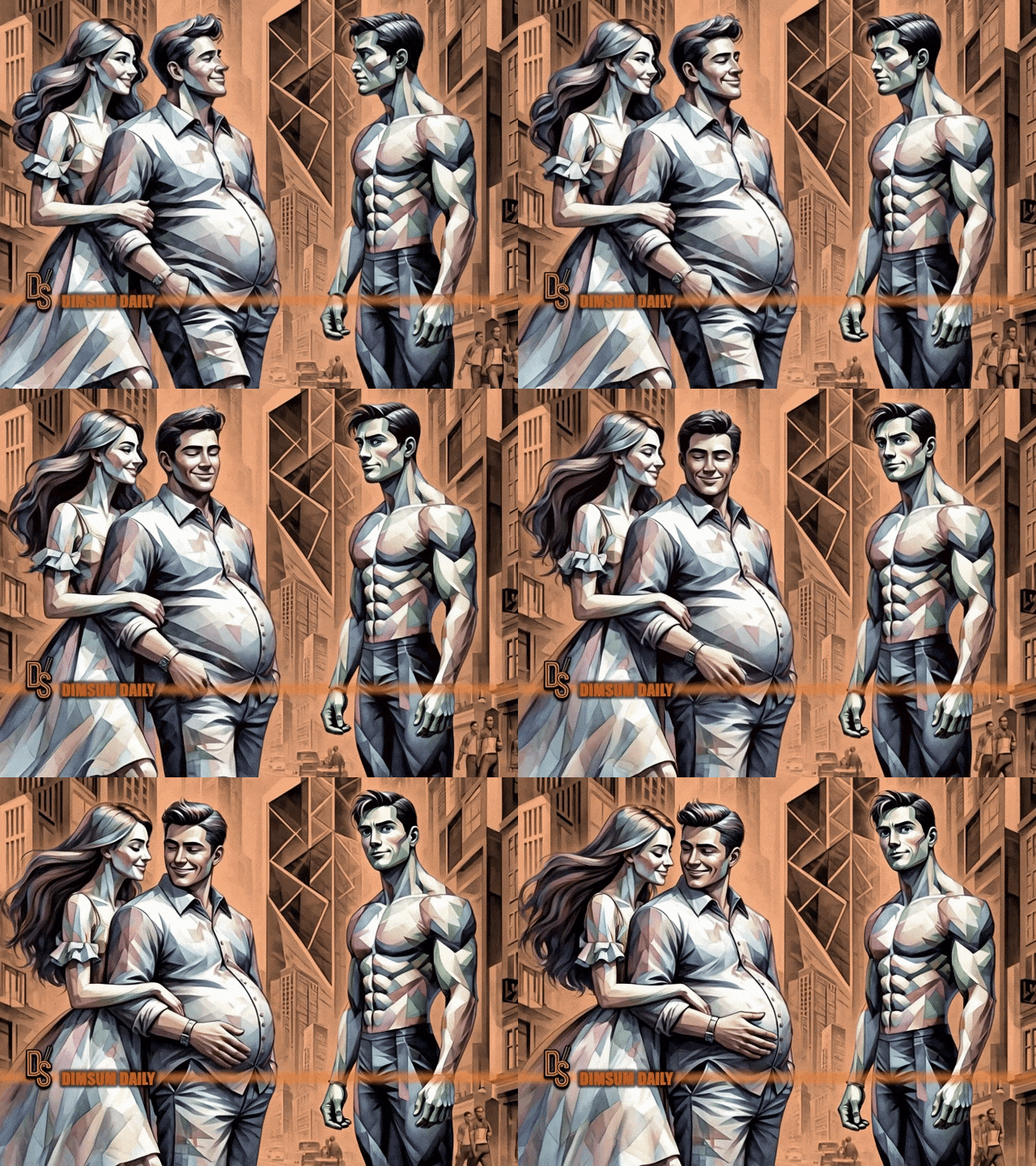
19th February 2026 – (Hong Kong) The modern male physique has become a public project. There are apps for counting macros, watches for counting steps, mirrors designed to flatter lighting, and social feeds that turn torsos into status updates. Yet amid this noisy marketplace of abs and angles, a quieter preference keeps resurfacing – plenty of women say they like the so‑called “dad bod”.
This is not, despite internet caricature, a vote for neglect. It is a vote for a particular message that bodies send—about temperament, priorities and the kind of life a partner might share.
In everyday conversation, “dad bod” rarely means obesity, nor does it mean someone who has never moved beyond the sofa. It usually points to a man with some underlying strength—broad shoulders, sturdy arms—paired with a little softness around the midsection. The silhouette suggests he exercises, but also eats dinner without turning it into a spreadsheet. It implies capability without performance.
That impression matters because attraction is not a purely visual transaction; it is an act of inference. People look at a body and draw conclusions about the mind that lives inside it. Sexologists and relationship researchers have long observed that, for many women, desirability is tangled up with perceived warmth, emotional availability and reliability—traits that are difficult to photograph but easy to project.
A slightly softer build can be read as approachable. It can signal “I won’t judge you for having dessert” and “my life has room for weekends that are not organised around leg day.” In an age when so many interactions feel like auditions, approachability is not a consolation prize. It is the gateway to chemistry.
There is also a security component, and it is not as crude as “bigger equals better.” What many women report finding safe is a form of steadiness – the sense that a man’s self‑worth is not hanging from a body‑fat percentage. A physique that looks lived‑in—healthy, not extreme—can suggest psychological balance. It says, without words, that he can be disciplined without being brittle.
This aligns with a recurring finding in the broader literature on body preference i.e. many women favour moderate, healthy builds over hyper‑muscular extremes. Some surveys and cross‑cultural studies have pointed toward a “sweet spot” in the mid‑range of BMI—often cited around 23–27—where bodies look robust, adult and attainable. The appeal is partly aesthetic, but it is also social. Moderate bodies are easier to imagine in ordinary life – eating in restaurants, travelling without stress, and sharing routines without policing them.
The six‑pack, by contrast, is not just a look—it is a lifestyle. Visible abdominal definition typically requires sustained leanness, careful diet, and (for many men) significant time devoted to training, sleep optimisation and food control. None of these are bad. Plenty of people enjoy the structure, the sport and the self‑mastery. The complication is what observers think that structure does to a relationship.
For some women, the very features that make a six‑pack impressive can make it feel expensive. If a man’s calendar is dominated by the gym, his meals rigid, his evenings constrained by prep and protein targets, he may appear less spontaneous and less available. Even when he is perfectly kind, he can be perceived as someone in a long‑term relationship with his own reflection.
The cultural stereotype is familiar – the man who is always “on plan”, who treats holidays as threats, who measures rather than tastes. It is unfair to many fitness‑minded men, yet stereotypes persist because they contain just enough recognisable truth to spread. If a woman has dated one person who turned dinner into a lecture, she may interpret a chiselled abdomen as a warning label rather than a selling point.
There is also the matter of competition. A very sculpted body can raise the social temperature in a room. Some women will like that – it can be thrilling, signalling high energy and sexual confidence. Others will find it intimidating or exhausting, because it suggests a partner who attracts constant appraisal and may be rewarded for attention. Research on mate choice sometimes notes that exceptionally attractive people can be perceived as higher “risk” for long‑term commitment, fairly or not, because they receive more opportunities and may be assumed to be less settled.
Meanwhile, the dad bod tends to read as domesticated—in the best sense. It evokes the man who can carry bags, laugh loudly, order what he wants, and focus on the person opposite him rather than the mirror behind the bar. It is less “I am sculpting a brand” and more “I have a life”.
None of this proves women dislike six‑packs. Many women do like them, particularly for short‑term attraction, or when the physique is paired with humour, kindness and a non‑obsessive attitude. The problem is absolutism—men hearing “women like abs” and interpreting it as “women like only abs.” That misunderstanding encourages a misallocation of effort: endless crunches, minimal social skill; perfect macros, limited emotional fluency.
The more useful lesson is that the body is a signal, not the whole message. Strength is attractive; so is ease. Discipline is attractive; so is flexibility. Health is attractive; so is presence. If the aim is to be compelling to women—not just to the gym’s most enthusiastic compliment‑givers—then the goal is not a particular abdomen. It is a whole person – someone who looks after himself, but also has time; who is proud, but not preoccupied; who can commit to habits, and also to people.