
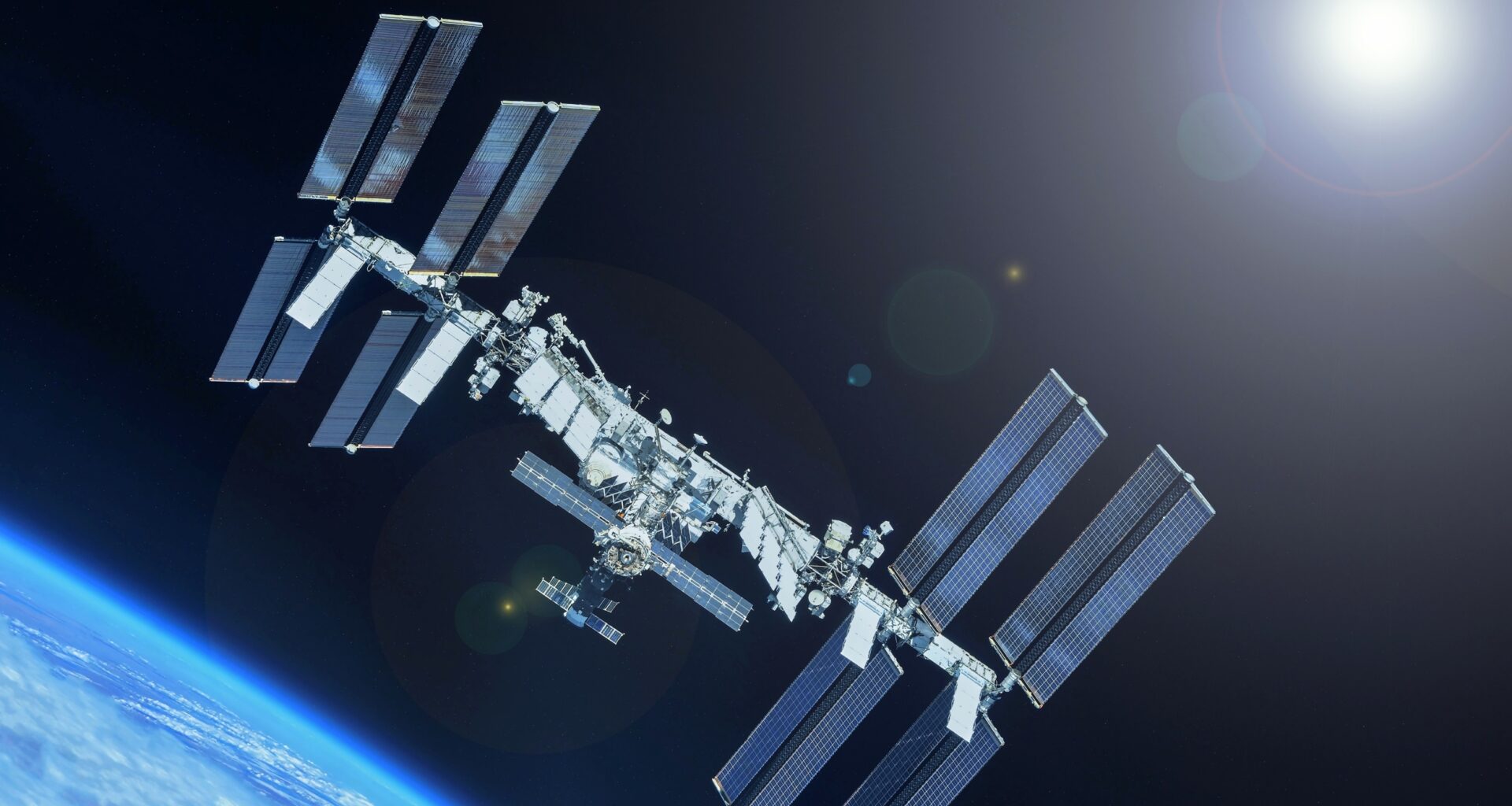
A common fungus has done something extraordinary in space. While growing aboard the International Space Station, it pulled a rare and valuable metal – palladium – out of crushed meteorite rock.
The experiment suggests that living microbes could one day help astronauts harvest critical metals in space, instead of launching every spare part and electronic component from Earth.
Mining a meteorite in space

Inside sealed chambers on the space station, scientists placed crushed meteorite rock into liquid cultures and let them sit for weeks in near weightlessness.
When the samples returned to Earth, Rosa Santomartino of Cornell University and her colleagues analyzed the liquid.
The team found that the fungus had released more palladium from the meteorite into solution than a bacterial species tested alongside it.
Even without added chemicals, the fungus drove the extraction on its own. That finding matters. Fluids behave very differently in microgravity.
Researchers have long questioned whether biological mining systems would still work when gravity no longer helps liquids mix and metals settle. This experiment shows that at least in small-scale tests, they can.
Fungi beat bacteria in orbit
Palladium levels rose fastest when the fungus grew directly on the crushed meteorite.
The species, Penicillium simplicissimum, outperformed the bacterium Sphingomonas desiccabilis in orbit. It also boosted platinum release beyond what chemical leaching alone achieved.
That comparison highlights an important lesson: choosing the right microbe is critical. In biomining – the use of microbes to extract metals from rock – the wrong organism could leave valuable elements behind.
Chemistry changes when gravity disappears
In microgravity, liquids stop behaving the way they do on Earth. Instead of mixing through convection, metal ions drift slowly through the fluid.
Interestingly, in orbit, chemistry alone sometimes freed certain metals faster, while microbial extraction remained steady.
This wasn’t the first hint that space changes the rules. Back in 2019, the BioRock mission showed that microbes could leach electronics-critical metals from basalt in orbit.
But the new meteorite experiment reveals how unpredictable those processes can be. Engineers can’t simply assume that Earth-based lab chemistry will translate directly to space.
Fungi don’t drill – they dissolve
Fungal cells don’t need mechanical tools. Instead, they alter the chemistry around them until metals begin to loosen from rock.
Many fungi release carboxylic acids – organic acids that bind to minerals and free metals – as part of their normal metabolism.
Previous work on bauxite ore showed that Penicillium simplicissimum produces several such acids while extracting aluminum from low-grade material.
In a closed system, once those acids build up, the surrounding chemistry can continue dissolving metals even without direct contact with the cells.
Space changes what microbes make
Chemical analysis of the leftover liquid revealed another surprise. In microgravity, the fungus altered its metabolic output.
It boosted production of carboxylic acids and increased other small molecules that could have potential value for pharmaceuticals or materials science.
That shift suggests that space conditions don’t just affect how metals dissolve – they may also push microbes to produce different chemical compounds altogether. Designers of future space bioreactors will need to plan for such changes.
Two gravities, one comparison
To isolate the effects of gravity, researchers ran identical hardware on Earth while astronaut Michael Scott Hopkins loaded the space station experiment.
Across 44 elements measured, microbes helped pull 18 into solution. The fungal cultures accounted for much of that extraction.
Still, the sample volumes were small, and results varied. Any attempt to scale the system up will require tighter control over microbial growth, fluid mixing, and chemical conditions.
Future research directions
Turning a small orbital test into a practical mining system won’t be simple. Coordination between Cornell University and the University of Edinburgh showed that microbe selection and rock type must be optimized together.
“This is probably the first experiment of its kind on the International Space Station on meteorite,” Santomartino said.
Future missions could one day pair carefully selected microbes with local asteroid rock to reduce resupply mass – a critical constraint for deep-space travel.
Space microbes help Earth mining
The implications don’t stop at space exploration. On Earth, mine waste piles and low-grade ores contain metals that companies often leave behind because chemical extraction is too costly or energy-intensive.
Microbial methods could reduce the need for harsh reagents and high temperatures, since acids and binding molecules form naturally at room temperature. That approach supports a circular economy, keeping materials in use rather than digging ever deeper for new supplies.
Still, microbes are not a silver bullet. Capturing dissolved metals, concentrating them, and purifying them into usable materials remain engineering challenges.
The next step in space mining
Small laboratory chambers can’t replicate the scale of asteroid mining. Future experiments must tackle larger systems, longer timelines, radiation exposure, and contamination from unwanted microbes.
Engineers will also need reliable methods for capturing dissolved metals and recycling growth fluids in closed-loop systems.
For now, microbial mining in space remains a promising concept rather than an operational supply chain.
But this meteorite experiment shows something remarkable: even in the strange environment of orbit, living systems like fungus can pry valuable metals from rock – rewriting how we think about resource extraction beyond Earth.
The study is published in npj Microgravity.
—–
Like what you read? Subscribe to our newsletter for engaging articles, exclusive content, and the latest updates.
Check us out on EarthSnap, a free app brought to you by Eric Ralls and Earth.com.
—–