
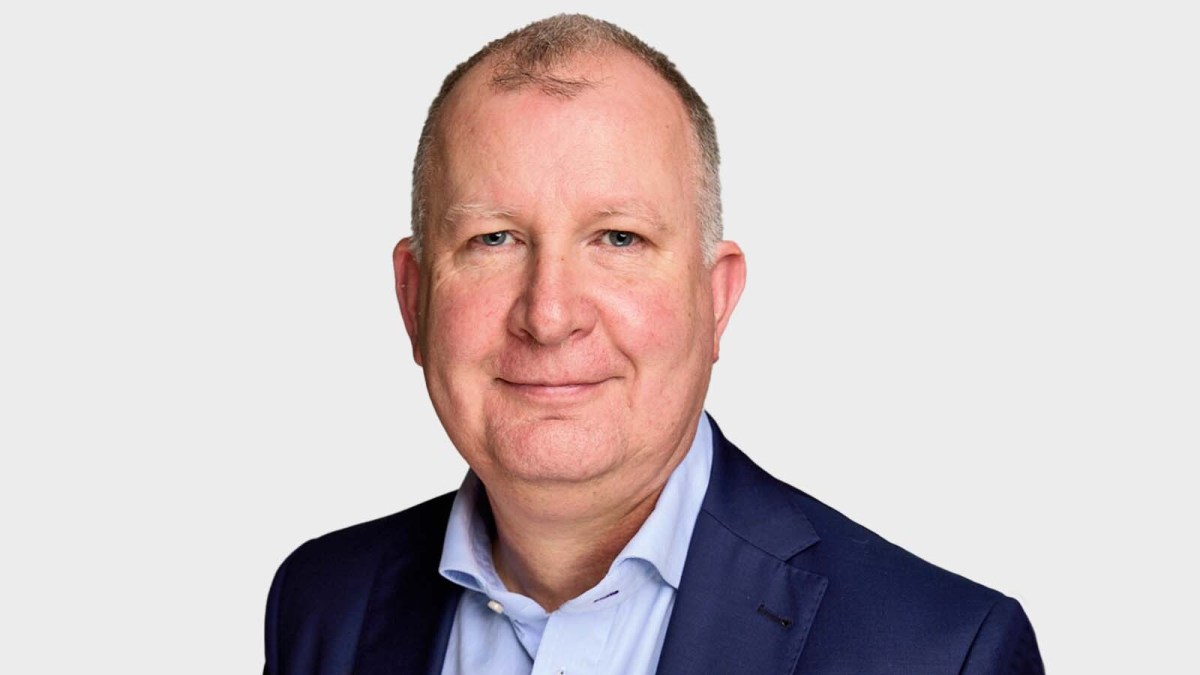
The travails of the mayor of Limerick, John Moran, hit the headlines last week when he complained about a pattern of resistance from some councillors in Fianna Fail and Fine Gael, who have the ruling majority on the local authority.
Moran, who two years ago became the first directly elected mayor in the state, claimed these councillors were doing all they could to make his job unbearable but that he would not walk away.
Moran has had a rather quixotic career. He was a corporate lawyer, investment banker and juice bar operator before being appointed secretary general of the Department of Finance in 2012, the first person to be installed in the office from outside the civil service.
He was a favourite of the minister for finance, Michael Noonan, but there were no tears within either the department or the political system when he abruptly left in 2014.
Moran then set up a lobbying firm, RHH International. Lobbying can take many different forms, ranging from meeting overtly with politicians to more covert use of back-channel get-togethers and phone calls.
Between 2014 and 2017, the giant transport and technology company Uber engaged in significant lobbying of ministers and officials when it was trying to break into the Irish market. Uber had not been able to reach an agreement with the National Transport Authority over the regulator’s objections to a business model that radically reworked the conventions of the traditional Irish taxi sector.
Its lobbying efforts were led by Moran, operating through his consultancy firm. A comparison between leaked files from Uber and official lobbying returns appeared to show differences between what lobbying was declared by Uber and its lobbyists, and what actually took place.
The official lobbying register shows RHH International did not declare contacts with former ministers Michael Noonan and Frances Fitzgerald, and senior civil servant Graham Doyle, concerning Uber business that Moran himself cited in his own contacts with the California-based firm. This also included contact with the then taoiseach, Enda Kenny, at the World Economic Forum in Davos in 2016.
Leaked files from Uber showed that Moran claimed he had, in effect, special access to Noonan, including being able to drop documents into his house in Limerick on a Sunday. Moran said he fully disclosed his Uber role in returns to the lobbying register. He cited provisions in the lobbying law where certain contacts were exempt from being disclosed but stated he would correct them if required. Uber itself asserted that it had never been the company’s intention to lobby officials covertly.
Moran’s work with Uber came to mind with the news last week that the Competition and Consumer Protection Commission wants the government to allow all drivers to use their own cars to provide taxi services, without needing a special licence.
It says there is a shortage of taxis nationwide and published research that found 57 per cent of respondents believe there are not enough taxis in their area. Another four in ten people complained that they had difficulty getting a taxi last December due to either lengthy waiting times or no availability at all.
In response, the National Private Hire and Taxi Association spokesman Jim Waldron told RTE Radio 1’s News at One that he was surprised at the intervention and said that if one presses an app button at any time of the day or night, one will get an instant taxi.
So convinced was he by this righteousness that he repeated the words “instant taxi”. This will come as news to many app users who see taxis appear and disappear on those same apps, particularly at so-called busy times. He did acknowledge that there was a problem in rural Ireland but was insistent that liberalisation of the sector was not the answer.
For the government, transport minister Darragh O’Brien said that the model where anyone with a private car and an app could provide a taxi service did not exist, was not government policy, and that it had no intention of introducing such a system. He insisted that the protection of the consumer and personal safety were central to how the taxi sector is regulated and operated, and this would remain the government’s main priority.
We have been here before with taxi drivers, regulators, consumer watchdogs and governments. In 1998, the Competition Authority called for the liberalisation of the taxi sector and an end to the then cap on taxi numbers. The coalition was split, with the Progressive Democrats and some more economically liberal-minded Fianna Failers urging competition, while the more statist wing of the soldiers of destiny was adamantly opposed.
Taxi drivers had always been a source of votes for Fianna Fail. Taxi plates were worth huge money. There was a stable income for the driver but as anyone of middle age will know, it was impossible to get a taxi in Dublin at the weekend when the pubs and nightclubs closed.
When the High Court ruled in 2000 that limiting new taxi licences was contrary to the public interest, the government responded by deregulating the licensing of the industry amid huge protests from taxi drivers and their families.
Hell and damnation was threatened on the Fianna Fail vote but as it turned out there was no taxi driver constituency. Fianna Fail came almighty close to an overall majority two years later, customers were able to get taxis and drivers were still able to earn a living.
The current system bears the hallmarks of the old protectionist taxi plate system. Threats from the representative associations that over half its drivers would consider leaving the sector if unlicensed operators were allowed make little sense and should be dismissed as scaremongering.
The system is clearly failing in rural Ireland; a place the government says is top of its priorities for regeneration.
It should not be beyond the bounds of possibility to design a system which will meet customer demand and keep full-time taxi drivers in the cities busy, but allow for part-time drivers to offer a service in rural areas through apps like Uber. This is how it works in most parts of the world and it should be the same here.