
This piece is from Grizzled: Love Letters to 50 of North America’s Least Understood Animals by Jason Bittel. Copyright by the author © 2026 and reprinted with permission of National Geographic.
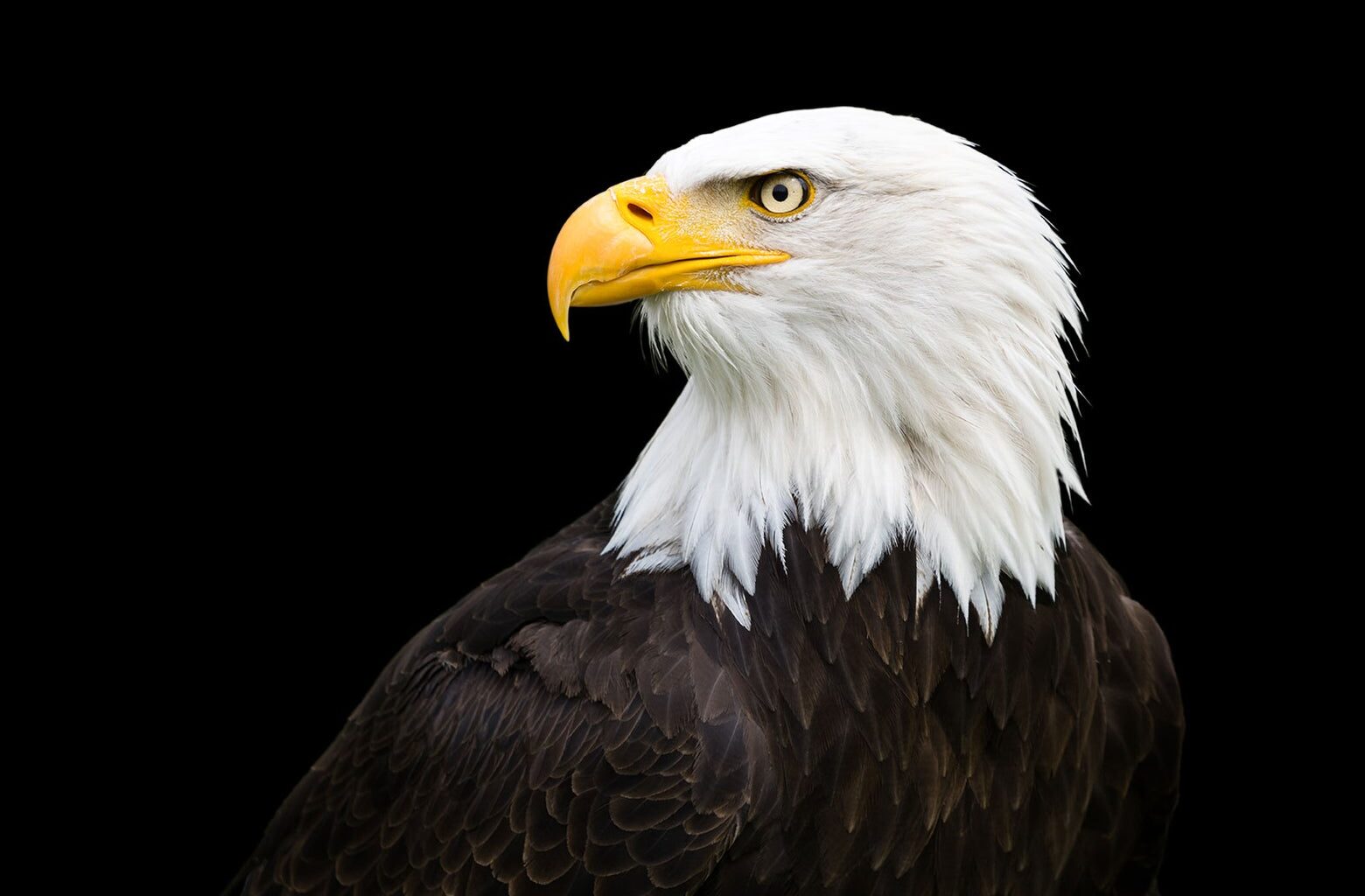
The bald eagle is an utter beast of a bird.
With a razor-sharp banana for a beak and a wingspan surpassing 6 feet, there aren’t many flying things on this continent that can top it. Heck, bald eagles may be even more impressive when sitting on the ground, where they approach heights of 3 feet or more—or about as tall as a human toddler. And if you ever get to watch one of these white-headed, brown-bodied predators pierce a still-gasping salmon with talons the size of your thumb and then shred that fish to bloody ribbons, well, you’ll understand why this descendant of the dinosaurs is a raptor to be reckoned with.
By the way, those talons? When they close, they actually lock in place, thanks to a series of tendon notches that allow them to ratchet their grip tighter and tighter. All in, a bald eagle can cinch down on its prey with a clutch roughly 10 times stronger than the human hand is capable of. Now, despite being impressive physical specimens, there is one bald eagle trait that doesn’t live up to what you might have seen on television—the patented bald eagle scream. In fact, any birder will tell you that the sky-rending screech that accompanies bald eagles in most media depictions actually belongs to a red-tailed hawk. So, what do bald eagles sound like?
“I always think that bald eagles sound like they’re giggling,” says Janet Ng, a wildlife biologist for the Canadian Wildlife Service. “A whistling kind of giggle.”
This isn’t the only thing we get wrong either. For though bald eagles are capable predators in their own right—they sport telescopic vision and can see in ultraviolet—they’re not above letting other animals do their work for them. In fact, Ben Franklin—scientist of the American Enlightenment and one of America’s Founding Fathers—famously argued against adopting the bald eagle as a national symbol for this very reason. The “Bald Eagle … is a Bird of bad moral Character. He does not get his Living honestly … [he] is too lazy to fish for himself,” wrote Franklin. And this is actually true.
“Bald eagles are what we call kleptoparasites,” says Ng. “They’ll often steal food from other birds.” Despite what Franklin might have thought, however, being a klepto is nothing to be ashamed of (as an animal, at least; nation-states are another matter).
In the wild, animals do whatever they have to do to survive. Hyenas steal from lions. Lions steal from hyenas. Bears steal from squirrels. Bears steal from bees. Bees steal from each other. And on and on. You might even say kleptoparasitism makes the world go round.
And hey, did you know that the word “raptor”—which is often used to describe birds of prey—comes from the Latin verb rapio, which means to plunder, rob, ravish, or abduct? So yeah, bald eagles are like pirates, swooping in and taking what they want, when they want it. But let’s not pretend doing so carries any sort of moral weight.

Forrest Wickman
It’s One of the Weirdest Mistakes in Movie History. I Spent Months Investigating How It All Went Wrong.
Read More
When they aren’t thieving, bald eagles also scavenge from roadkill or help themselves to free food found in human garbage or at the town landfill. Again, none of this really means anything. You can know all of this and still love bald eagles and slap them all over T-shirts and bumper stickers and whatever else.
By the way, Ng confirms that bald eagle infatuation is very much an American enterprise. Folks in Canada and Mexico just see bald eagles as another bird, however impressive. But no matter where you’re from, there’s another piece of bald eagle lore people are starting to forget—that just a few decades ago, we nearly lost the birds to extinction.
Before Europeans colonized North America, bald eagles were pretty much everywhere there was a river, lake, or stream large enough to support sizable fish. In fact, one written account from New England in 1668 said bald eagles were so plentiful as to be “infinite.” So much so, the colonists sometimes fed them to their pigs.
The bald eagle’s common name hails from around the same time period, and it doesn’t mean lack of hair. Rather, “bald” comes from the old English word “piebald,” which is still used today for horses, and means coloration of alternating dark and light. As in, the bald eagle’s dark brown body feathers versus its stark white head feathers. Oh, and those white feathers usually don’t fully come in until the birds reach their fifth year of age, so young eagles aren’t bald in either sense of the word.
Estimates vary and usually only include the United States, but during the Colonial period, there would have been at least 50,000 breeding pairs and maybe up to as many as half a million bald eagles fluttering through the continent’s skies. Of course, this is also where things take a turn, because lots of folks just weren’t that fond of the birds.
“Eagles get a bad rap sometimes, and we see this in lots of parts of the world,” says Ng. “Bald eagles scavenge on carrion, and so, if somebody goes out and they see a dead cow or a dead lamb and there’s a bald eagle sitting on top of it, then they immediately think the bird killed it.”
Similarly, in 1917, citing too much competition for their salmon harvest, the state of Alaska even instituted a bounty system that paid people to just go out and kill as many bald eagles as possible. A single eagle fetched $2 from the state government, or at today’s prices, nearly $50. At the same time, bald eagles were rumored to sometimes kidnap human babies and fly away with them in their talons. Throw in a feathered-hat fashion trend that swept the United States following the American Civil War, and frankly there were just too many incentives to go out and kill bald eagles. More than 120,000 eagles were slaughtered over the course of Alaska’s bounty system alone.
All of this would have been detrimental enough to the continental bald eagle population. But then, we started killing bald eagles even more efficiently, and entirely accidentally. When America entered World War II, wartime manufacturing instigated a shift from the United States’ main insecticide at the time, a naturally occurring compound known as pyrethrum, to another: dichlorodiphenyltrichloroethane, or as we’ve come to know it, DDT.
In the years following WWII, DDT overtook pyrethrum as the most popular standalone insecticide, and it worked well at its task—killing insects and other arthropods by disrupting their nervous systems, all the while seemingly not hurting people. Of course, today we know that high-dose exposures to DDT can cause all kinds of illness in humans, including vomiting and seizures. It’s also a possible carcinogen. But back then, it was thought to be harmless to mammals. “There are pictures and videos of kids playing in plumes of DDT that the trucks would be releasing as they drove down the neighborhood roads,” says Ng.
And another problem was silently brewing. “The trouble with DDT is that it stays in the environment, and it gets washed away into water, and then plants, and little animals like insects and fish eat those little bits of residue,” say Ng. Then, other fish eat those animals, and other animals eat those fish, and the pesticide just keeps concentrating as it moves up the food chain until, eventually, some of those poison-laced fish get eaten by a bald eagle (scientists call this process bioaccumulation).
Curiously, DDT did not kill the birds outright, but rather caused their eggshells to collapse under the weight of the incubating adults. Fortunately, says Ng, scientists studying these birds noticed that hatch rates were flatlining, so even though bald eagles didn’t drop out of the sky en masse, scientists were able to identify the problem before it was too late. In 1972, the U.S. banned DDT under most circumstances. Canada followed suit beginning in 1985, as did Mexico in 2000.
Americans Are Uniquely Infatuated With Bald Eagles. Too Bad Most of Us Have No Idea What They’re Actually Like.
It’s taken some time, but bald eagle populations have slowly bounced back from a low of just 417 nesting pairs anywhere in the U.S. in 1963 to around 316,700 bald eagles in the lower 48 states. And scientists estimate there are at least another 100,000 nesting pairs in Canada and Alaska.
The comeback has worked so well, Ng says lots of folks she encounters in Canada now don’t even realize the birds nearly disappeared. There’s a scientific phrase for that, too. It’s known as shifting baseline syndrome, and it refers to how we perceive what we see in the natural world—smaller fish, fewer insects, lack of large predators—to be the way it’s always been. But the bald eagles and their return shows that our baselines can also shift in the other direction.
So if you should be so lucky as to see a bald eagle harassing an osprey for a fish someday, or maybe tucking in to a deer carcass on the side of the road, take a moment to reflect. We nearly lost these massive, terrifying, sort of silly gigglers forever.

Sign up for Slate’s evening newsletter.