
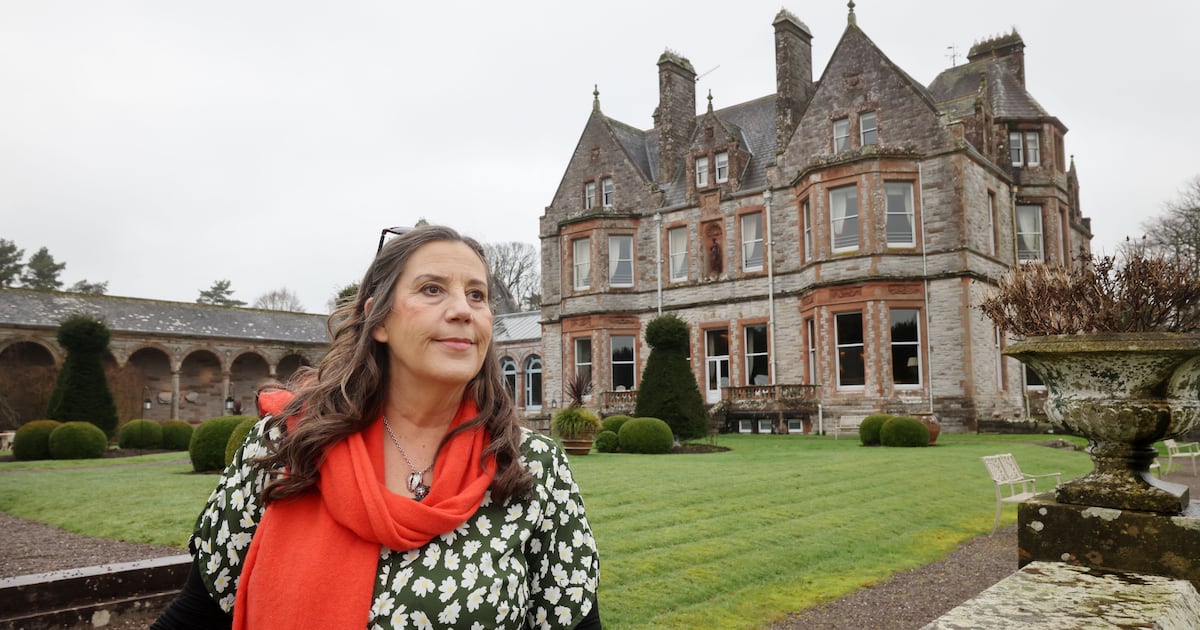
Walking around Castle Leslie estate – which has borne her family name for more than 400 years – as the light ebbs in early February, Sammy Leslie urges me to feel “the magic” while she talks about the drumlin lands of Monaghan, Tyrone and Armagh.
Magic is a word used often by Leslie, who has brought the much-divided estate back together after nearly 40 years of hard work, and placed into a trust for future generations to enjoy.
It is a reunification story, but not as one would normally understand it.
“The Vikings came through here, St Patrick built a church here. It’s an incredibly special place, not just in its own right, but because of where it sits on the border and in ‘old Ulster’, as such,” she says.
“We’re in the heart of the kingdom of Oriel, in that magical ancient kingdom. It’s a little bit twilight; it’s neither here nor there. It’s slightly ethereal, and that’s what I love about it.”
On her return to Monaghan in her early 20s, Leslie was confronted by a castle with pools of water in the basement, a leaking roof and a much-reduced estate following divisions prompted by wills or the lack of cash. The lodge, a separate building on the estate grounds, had also been sold.
Before she returned, she had telephoned home from England to tell her father that she had become the youngest-ever holder of credentials enabling her to train top-level riding instructors. Only then did she find out that the estate’s equestrian centre had been sold too.
“Okay, I’ll buy it back someday,” she remembers thinking. And she has. Today, the equestrian centre is a key part of Castle Leslie’s pitch to international visitors, who come for a week of training, or cross-country riding.
“They can’t get the latter elsewhere. People come from Australia for a week, just for the riding. It’s bucket-list trip for many. Our horses are great. They think. They have the fifth leg, you know. They’re very smart. They get themselves out of trouble.
 Castle Leslie: ‘This is the best example of a historic estate with an estate village, where the estate is still part and parcel of the community.’ Photograph: Alan Betson
With feeling, she talks of the efforts made to rid the castle of dry rot. It is a subject on which she could talk for hours.
“It’s highly efficient; it’s ridiculously intelligent,” she declares of the wood-devouring fungus. “It can track across metal beams to get to fresh timber. It’ll keep eating away, and it won’t come out until it’s hungry, until it starts to stress, and then the ‘flower’ will pop out, and it’ll shoot its spores off. We stripped everything, we sprayed everything.”
The friendships made during her dry-rot years have endured: “Seamus McElroy was my first builder, who helped me put the roof skylight back on the billiard room. When it blew off in [a] storm, everybody wanted thousands of pounds to fix it.
“’Ah, no,’ he said, ‘we can make a timber version, put felt on it, get it up on the roof. Cost about £300.’ Worked with him ever since, and built a great team up. Mc-El-roy,” she says, spelling his name phonetically, and adding, with a fond laugh: “The son of the king.”
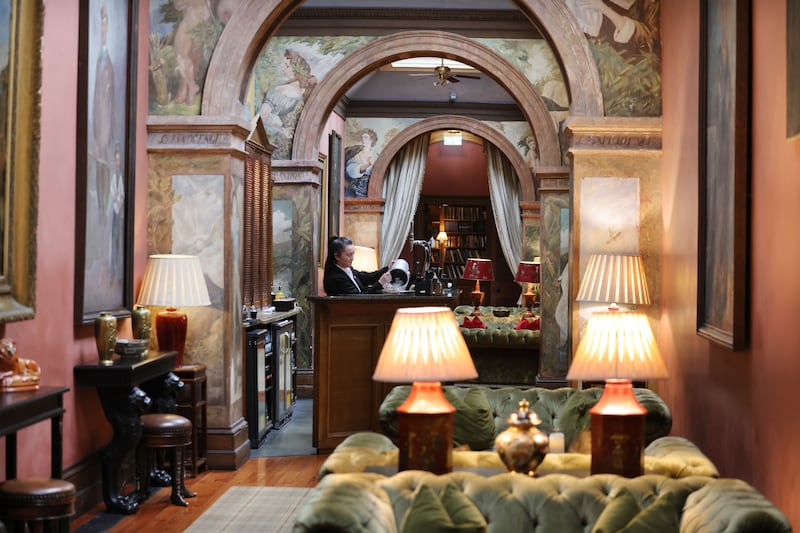
In the following years, Leslie brought six of the castle’s rooms back to life and started doing dinners in the diningroom, where the meals were served by herself and a colleague, Belfast-born Jackie Gormley. In time, more rooms were restored.
Drawing on the lessons offered by King Charles from his model village of Poundbury, in Dorset, southern England, Leslie put aside lands in the early 2000s adjacent to the village of Glaslough, where Castle Leslie is located, and built homes, a third of which were offered to locals a fortnight before anyone else.
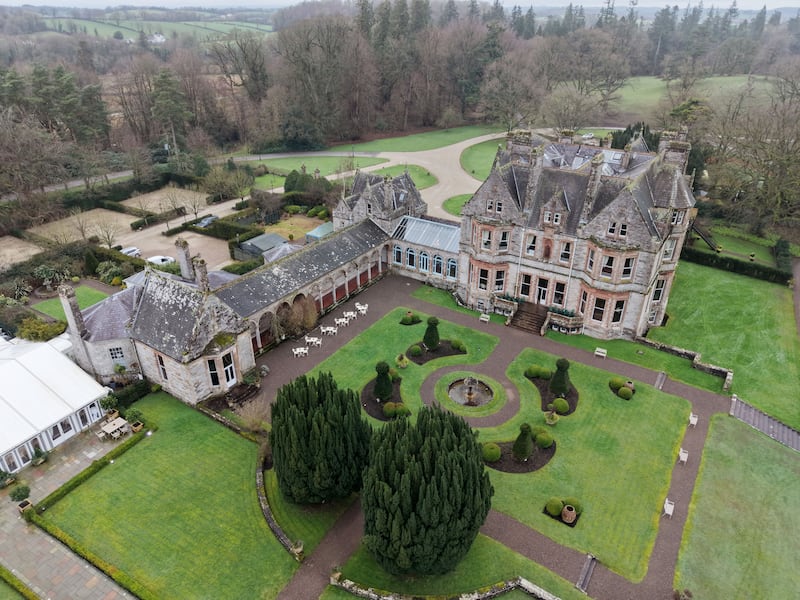
 Castle Leslie: The divided estate is back together after four decades of work spearheaded by Sammy Leslie. Photograph: Alan Betson
  Everything about Castle Leslie contradicts simple narratives of Irish history. Photograph: Alan Betson
 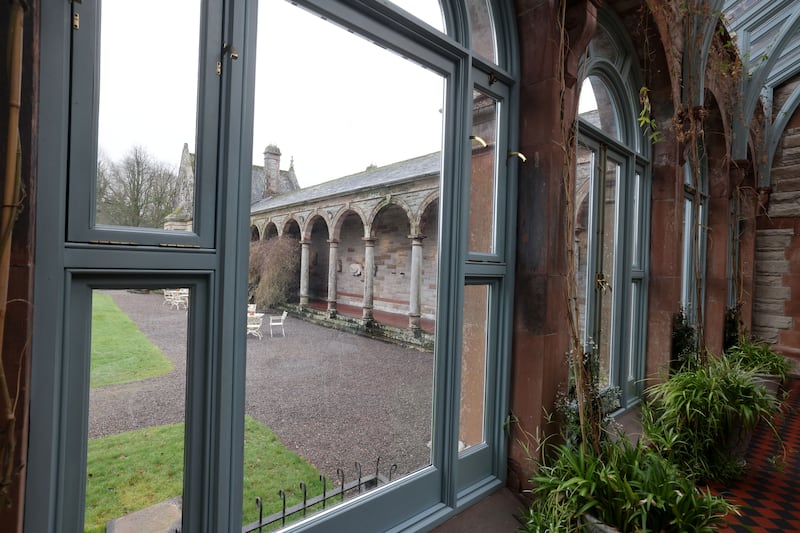 Castle Leslie: ‘It’s a bucket-list trip for many.’ Photograph: Alan Betson
She wanted locals to buy the properties, she says, adding that most of the original estate houses were sold to staff and villagers in the 1960s. “One man then bought a house for his mum and it cost him two months’ wages from driving buses in Birmingham.”
The decades since have brought challenges and successes: the lodge – The Lodge at Castle Leslie, a four-star hotel – now has 50 bedrooms, while the castle itself has been entirely restored, to beyond its earlier glories.
Speaking in the lodge over early-morning coffee, Leslie says: “This is the best example of a historic estate with an estate village, where the estate is still part and parcel of the community.”
Today, the estate has 270 staff, many of whom have worked there for decades, including Gormley, who left east Belfast in 1987 to come to Castle Leslie: “Belfast was never the place for me. I loved [Castle Leslie] from the minute I came down here,” she says.
Hotel general manager Kevin Kenny, came 17 years ago “and forgot to leave”.
“Am I a lifer here? Ah, I don’t know, but there’s always been a reason to stay. Every year, we have grown,” says Kenny, who works closely with the estate’s chief executive officer, Brian Baldwin.
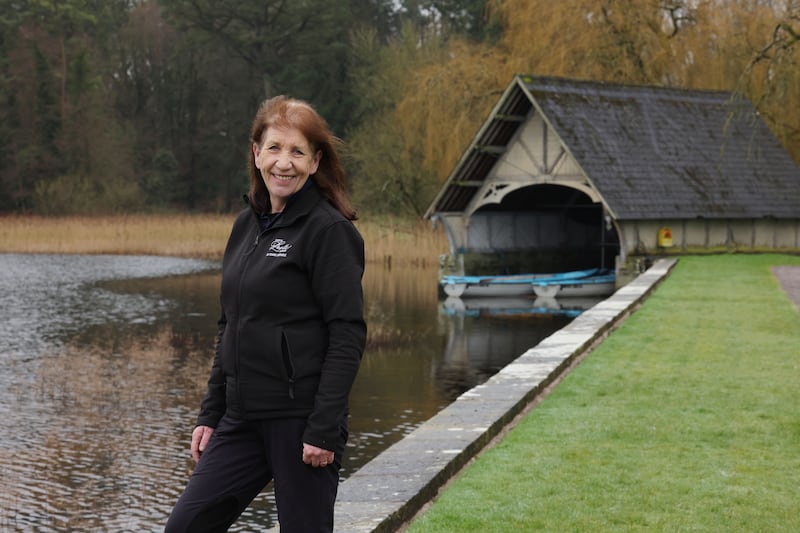 Jackie Gormley, estate and equestrian manager. Photograph: Alan Betson
 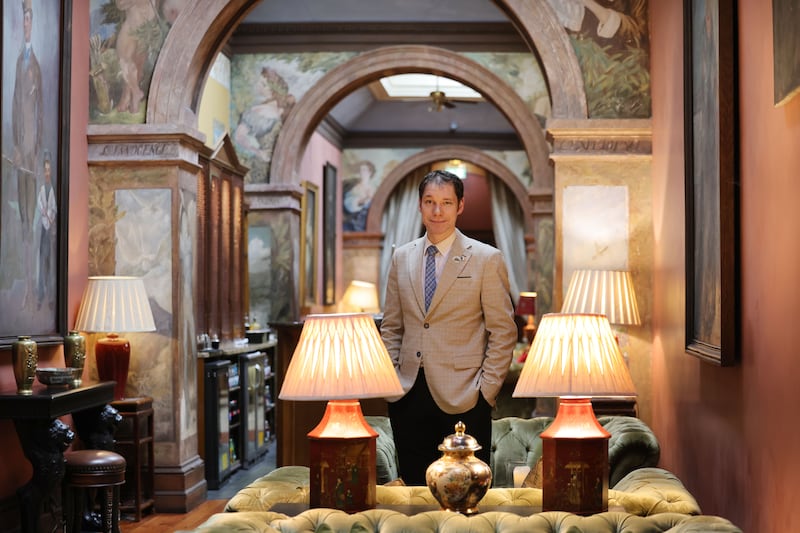 General manager Kevin Kenny: ‘Am I a lifer here?’ Photograph: Alan Betson
 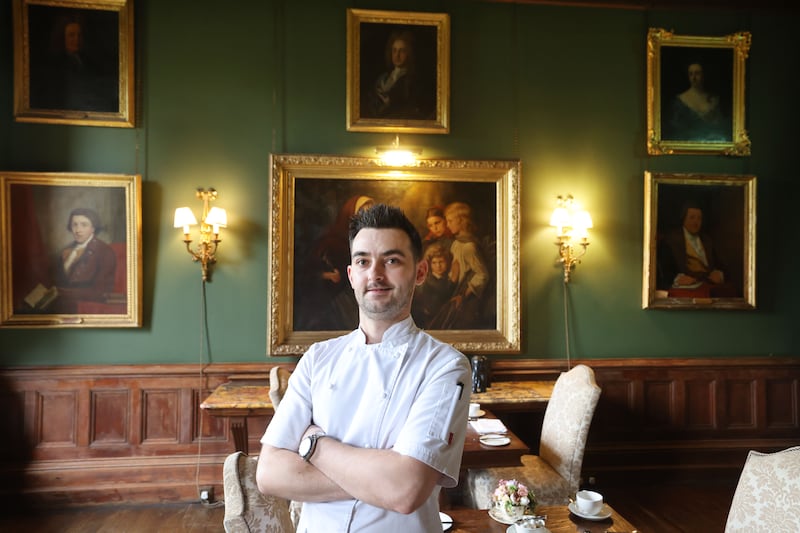 Aaron Duffy, executive chef at Castle Leslie estate. Photograph: Alan Betson
“When I started here, we had 120, 130 people working here, at a push, and a lot of them part-time. We’re at 271 this morning. About 140 of them are full-time, most of them living in the local community, or nearby,” he says.
Executive chef Aaron Duffy, who lives in Beragh, Co Tyrone, is equally enthusiastic about his eight years at Castle Leslie: “Everything’s reinvested back into the business. It’s owned by the trust, so that’s really exciting.”
The culture sets the atmosphere of the place, he says. “Kitchens are notorious for people coming and going. That’s just the nature of it, but I can count on one hand how many people I’ve lost in my eight years here.”
For decades, Leslie’s mission has been sustainability. Illustrating her vision to The Irish Times, she shows “my poo farm” – where seven hectares of carefully created wetlands can deal with the waste of 2,000 people. Guests walk through the ponds daily as they ramble about the estate.
“Afterwards, I ask them what they thought of our sewage works? And they’re like, ‘Really?” Nature’s answer to nature’s problem, that is.”
Leslie’s intention is that Castle Leslie will come to be seen as a beacon for sustainability and community.
It was a very divisive, unfair society. And if it hadn’t been Caledon, it would have been something else
— Sammy Leslie
“Tourism isn’t just about the old model of bed numbers, footfall, staff and turnover. It is about how it all actually works with living, breathing, working communities. That’s where you get things that are really interesting and authentic, to create a space that everybody falls in love with. That’s our benchmark,” she says.
Everything about Castle Leslie contradicts simple narratives of Irish history. The estate was created by John “Fighting Bishop” Leslie, who fought and defeated Cromwell’s soldiers at Raphoe, Co Donegal, before going on to relieve Derry in 1649.
In his prayer before battle, the bishop he beseeched “the God of love” to keep out of Ireland’s religious wars and let soldiers decide the outcome: “O God of battles, Lord most high. Be not our judge, not even theirs.”
Following the Restoration in 1660, King Charles II wanted John Leslie to become archbishop of Ireland, and lord lieutenant. Pleading old age, Leslie declined and was awarded £2,000 and the bishopric of Clogher instead.
With the money, he bought lands in Monaghan and Donegal. Despite his age, he married Catherine, who was 52 years younger than him. They had 10 children.
One ancestor opposed the Act of Union, rejecting bribes of cash and titles. Others supported tenants during the Famine, an act remembered 60 years later when local villagers prevented the anti-Treaty IRA from torching the castle.
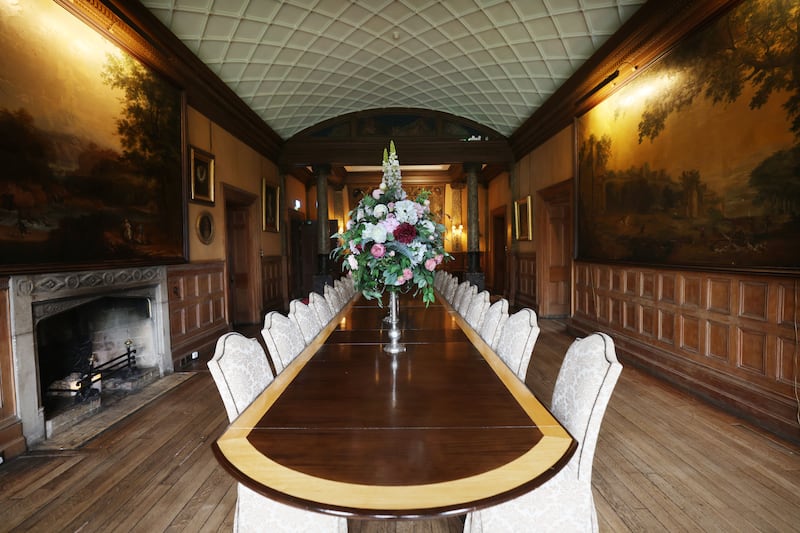 The diningroom in Castle Leslie, Glaslough, Co Monaghan. Photograph: Alan Betson
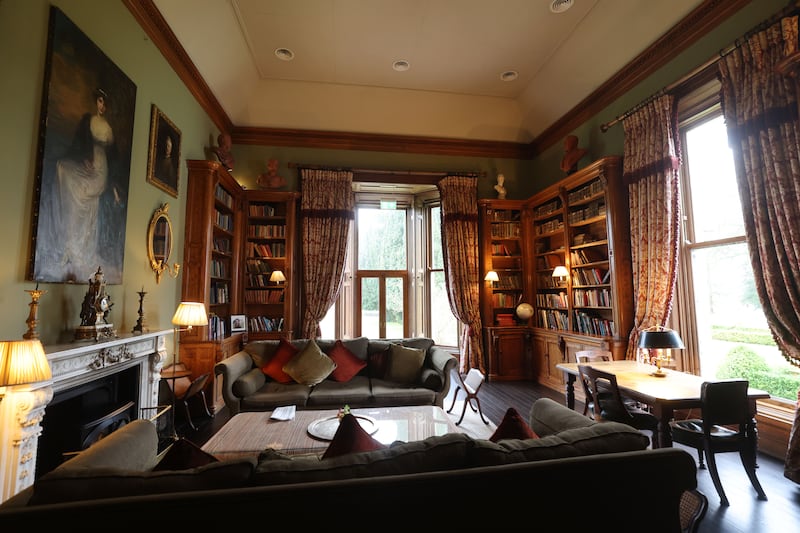
 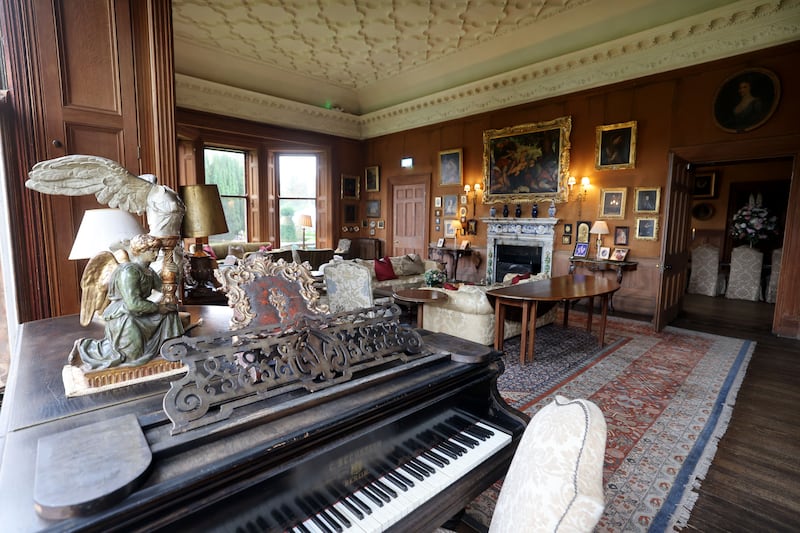 The ‘Churchill piano’ needs a bit of TLC. Photograph: Alan Betson
 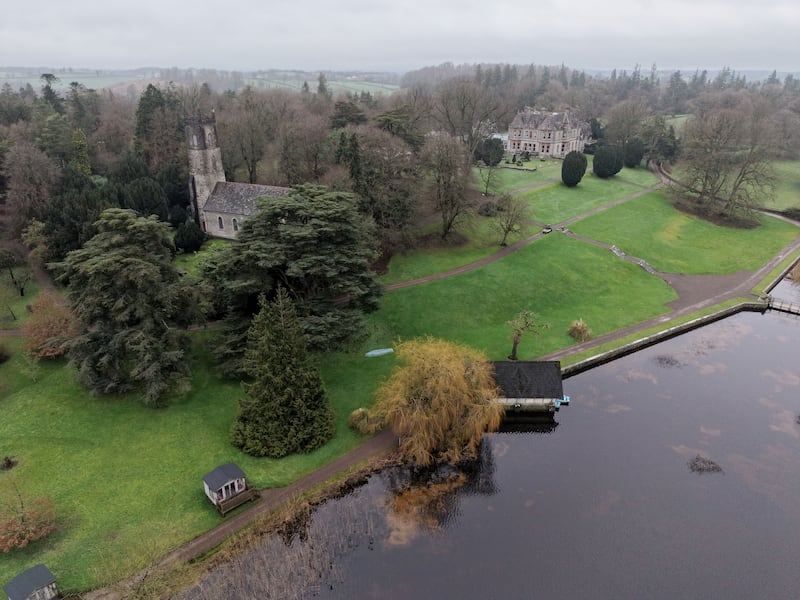 Castle Leslie is in the village of Glaslough, close to the Border. Photograph: Alan Betson
Some of the family split over their attitudes to Home Rule, with Colonel John Leslie disinheriting his son, Shane, and barring Winston Churchill – a cousin on the American line of the family – from visiting the estate over the issue.
Today, a piano once played by Churchill stands in one of the castle’s rooms, overlooking the lake: “Blenheim [the Churchills’ ancestral home] would have had plenty of pianos. So, the poor Irish relatives got the pianos. Only fair. It needs a bit of TLC,” says Leslie.
The story of so much of Irish history of the last century and more can be felt everywhere on the Leslie estate, never more so at a junction of tracks, where Armagh, Tyrone and Monaghan meet.
Every Border townland, village or town for miles about was affected by the Troubles, north or south of the line. Glaslough was no different. The vast majority minded their words, looked after their neighbours and hoped for better days.
For Leslie, it meant an end to schooling in Donoghmore, north of Dungannon, after threats were made to the family during the 1981 hunger strikes meaning that “it wasn’t safe for us to go across the Border every day”.
In the gloom, Tynan can be seen a few miles away on a hill, where, in that same year, 86-year-old Norman Stronge and his son James were killed by the Provisional IRA and the 250-year-old house torched.
The IRA gang, which it is believed included Jim Lynagh, who was later killed by the SAS at Loughgall, Co Armagh, had prepared a number of escape routes from Tynan, including tracks across Castle Leslie, it is believed.
Padlocks on wall gates were found broken shortly afterwards. “We never talked about it, other than [to say] how shocking it was. Nobody discussed it; you never discussed anything outside the house,” says Leslie.
“Parents tried to keep children innocent. That would have been common practice for every house. Most people tried to normalise things, tried to keep life as normal as possible in circumstances that are as bad as possible.”
A few kilometres to the northeast of Castle Leslie lies the Co Tyrone village of Caledon, where the spark of the civil rights movement was lit in 1968 when a Catholic family were evicted from a house where they had been squatting, and a 19-year-old Protestant girl allocated an empty house next door days later.
Caledon scuppered plans to turn the estate into a luxury hotel and golf course: “Everything stopped. The backers said: ‘We’ll just take three months and wait and see what happens.’ As we know, it was 30 years later before it settled,” says Leslie.
“It was a very divisive, unfair society. And if it hadn’t been Caledon, it would have been something else,” Leslie tells The Irish Times, as she drives around the locality along roads and across bridges that were closed for decades because of The Troubles.
The hotel plan was just one of many ideas that had been thought of to keep the estate going in times when many others crumbled, including a nightclub in the 1970s that fell foul of the local bishop.
The nightclub in the lodge – “Annabelle’s On The Bog” – had been the brainchild of Leslie’s father, Desmond, who had been handed responsibility for the estate by his older brother, Jack.
“Then, the bishop closed it down. I think he denounced it from the pulpit, and basically said anybody that went would be damned. After that, it became a hippie colony for a few years.”