
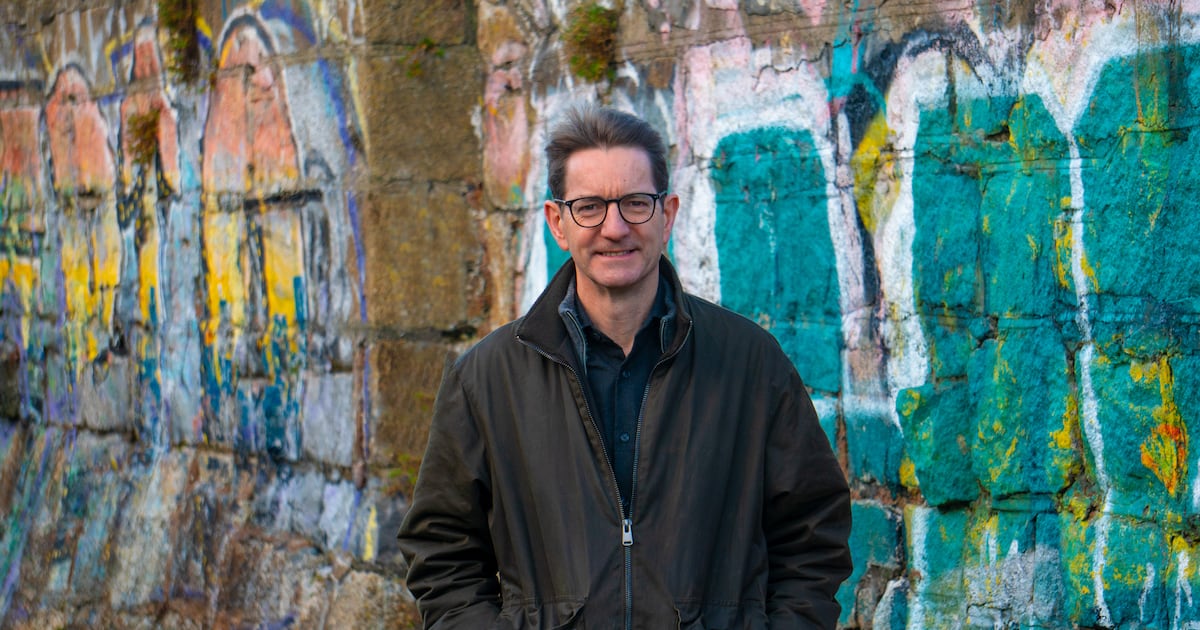
Roscrea-born Denis Madden started his love affair with German while studying international marketing and languages at NIHE (now DCU) in Dublin in the mid-1980s. His summers were spent initially on the floor in German factories before progressing to offices.
In those pre-internet days, jobs were secured by taking a bus into Dublin’s then commercial library on Capel Street, researching directories and writing to German HR departments. Labour was in high demand at the time in Germany and there was no difficulty finding work, in contrast to Ireland.
With an early interest in technology, Madden worked for a time in London, but an opportunity to join trailblazing Irish payments company, Trintech, found himself back in Frankfurt, a big centre for the company’s activities at the time, in 1993. He helped grow the company from a small base to a 600-strong multinational listed on the Frankfurt and Nasdaq stock exchanges.
“It was a great time to be there. The German standard of living was very good. There was good pay and good holidays for people working there. It didn’t last, as subsidies were removed and the economy started to contract later.”
Looking for a change of direction, Madden noticed the upsurge in interest from foreign property investors, many of them Irish, and felt his knowledge of the property scene in Berlin could put him at an advantage, so he moved to the city, which has been his base ever since.
“I moved from intellectual property to physical property. Technology is a fast moving and grinding industry, whereas property is an industry where time is generally kind. And in contrast to tech, the longer you hold assets generally the more they increase in value.”
Having set up his business on a snowy December day in 2005, he was exhibiting at a property show in the RDS the following month.
“Within three days, I had 150 new clients who had an insatiable appetite for German property, and I never went back to Trintech.
“I was fortunate to get involved when Irish property values were at their height and Germany was at a low point, so Irish investors acquired very good property on the basis of either equity release or their own funds. I believe Ryanair added extra flights at one stage for the number of Irish investors who were heading for Berlin.”
Madden’s business sold apartments, including entire blocks, commercial premises, hospitals, land and even former security checkpoints. Investors who were able to stay the course through the economic crash in Ireland generally did very well, with many taking more than just a passive interest in their portfolios.
“Irish people didn’t just invest, they developed. They bought old businesses and refurbished them. They bought sites and built town houses, hotels and tower blocks or they got planning on sites and sold on to let others develop.”
I would certainly encourage Irish people who are thinking of coming here
The German property market is different from Ireland’s, with about 85 per cent of the population of Berlin renting and with rent controls and strong levels of protection for tenants. It is one of the differences Irish investors need to appreciate, he says.
With an upsurge of young people in Ireland moving to Berlin in recent years, some of these tenants are now Irish. Madden says there are about 8,000 Irish people now living in the city.
While accommodation has tightened lately, as it has in many European capitals, Madden says an active Irish WhatsApp scene is a good starting point where people can hear about available sublets. With rents starting at €700-€800 for a studio or one-bed apartment, prices also compare very favourably with Dublin.
“I would certainly encourage Irish people who are thinking of coming here. It’s a city buzzing with young people and fresh ideas, and it’s a place that allows you to be yourself. There are no blockages to doing things culturally or business-wise. There’s some red tape but that’s exaggerated.
“There are jobs, even though the tech scene is contracting, as it is everywhere,” he says. A good working knowledge of the German language is a big advantage, he adds.
Madden is firmly embedded in the Irish social and cultural scene in Berlin and chairs the German Irish business network in the city. One of his big passions is organising an Irish film festival, which brings Irish movies, directors and animators over every year to Babylon cinema in the city centre.
“It’s more than just a film screening. It’s all that goes around it. We have an Irish bar with Guinness and a great live traditional Irish music session. It brings the diaspora here together in a really nice way.”
In a nod to his earlier career, Madden’s business interests outside property also include involvement in a number of European tech hubs, including one in Birr, Co Offaly, but Berlin is very much home.
“One thing I do miss is the sea and the fresh air which you get at home, but life is very good here,” he says.