
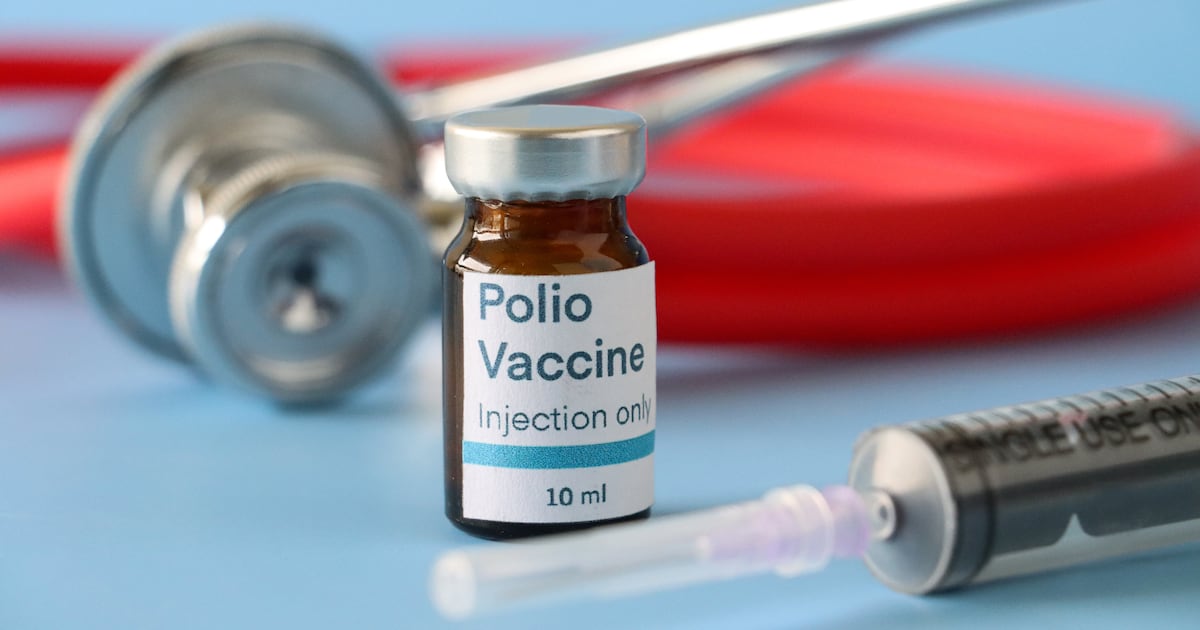
A global resurgence of polio “poses a risk” to Irelands polio-free status, the State’s infectious diseases watchdog has said.
Polio is a highly infectious viral disease that largely affects children under five years of age.
It mainly targets nerve cells in the spinal cord and brain stem that control muscle movement and can result in paralysis or death.
In an update on its website, the Health Protection Surveillance Centre (HPSC) said the highest number of polio cases in the Republic was recorded in 1956 when 499 cases were detected.
Following the introduction of the polio vaccine, the number of cases declined and the last reported case was in 1984.
In 2025, polio cases were confirmed in multiple states, said the HPSC, with key countries with cases or positive environmental samples including Afghanistan, Pakistan, Nigeria, Chad, Yemen, Ethiopia, Angola, Benin, Niger, Sudan, Djibouti and Burkina Faso
“Ireland has been polio-free for decades, but global resurgence poses a risk,” said the watchdog.
“High vaccination coverage and catch-up programmes for at-risk individuals are essential to prevent the virus from spreading.”
Children receive the six-in-one vaccine, which includes protection against polio, at two months, four months, and six months of age, with an additional dose at 13 months for babies born on or after October 1st, 2024.
The World Health Organisation (WHO) has a recommended uptake target of 95 per cent.
The national vaccine uptake for three doses of the six-in-one vaccine in children at 24 months of age increased steadily from 86.4 per cent in 1999 to 95.9 per cent in 2013 and remained above the WHO target for a few years.
However, since 2021, the proportion of children receiving the jab has declined, with an uptake of 90.6 per cent in the first quarter of last year.
Similarly, since the 2011/2012 school year, uptake of the four-in-one booster vaccine in children aged four to five years has also been below the WHO-recommended 95 per cent threshold. In the 2023/2024 school year, uptake was 89.9 per cent.
The HPSC concluded: “Ireland has comprehensive structures and systems in place to support prevention and early detection of polio.”
“Vaccination for polio started in 1957. The last recorded case of wild polio in Ireland was in 1984. Polio was eradicated in Europe in 2003,” it said.
“But the infection is still found in other parts of the world. This means there is a very small risk that polio could be brought back to Ireland through travel.”
According to Polio Survivors Ireland, it is estimated that there are approximately 5,000 survivors of the disease living countrywide at present, most of whom are middle-aged and older.
However, it added that it also has a growing number of members who are younger and who have come to the Republic from countries where the disease is still endemic.