
SpaceX sent two additional batches of Starlink satellites into orbit, achieving a new milestone in rocket reusability in the process.
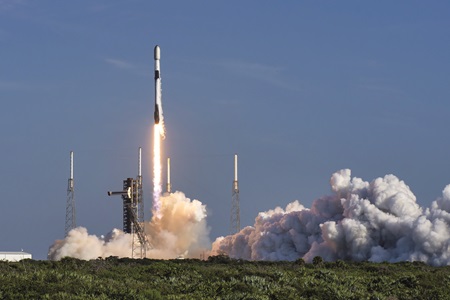 Image for illustrative purposes only
SpaceX has launched 53 additional satellites into orbit for its expanding Starlink broadband constellation, carrying out two separate missions that underscore the company’s growing expertise in space logistics and rocket reusability.
The back-to-back launches, conducted over the weekend and early February 23, added 53 satellites to the Starlink network, bringing the total number of active broadband relay units to more than 9,600 worldwide. The missions also marked the 21st and 22nd Falcon 9 launches of the year, highlighting a busy schedule for the company.
The first liftoff took place on February 14, when a Falcon 9 rocket carrying 24 satellites under the Group 17-13 designation launched from Space Launch Complex 4 East at Vandenberg Space Force Base in California.
A second mission followed in the early hours of February 16, as another Falcon 9 carrying 29 satellites, known as Group 6-103, launched from Space Launch Complex 40 at Cape Canaveral Space Force Station in Florida.
SpaceX confirmed successful satellite deployment for both missions approximately one hour after each launch.
In addition to expanding the constellation, the flights showcased further progress in rocket reuse. The first-stage booster from the California launch landed on the drone ship “Of Course I Still Love You” in the Pacific Ocean, completing its 22nd flight — a new reuse milestone for that booster. Meanwhile, the booster from the Florida mission touched down on the drone ship “A Shortfall of Gravitas” in the Atlantic Ocean, marking its 10th flight.