
Coroner returned verdict of accidental death in one of the incidents, but adjourned ruling in the other
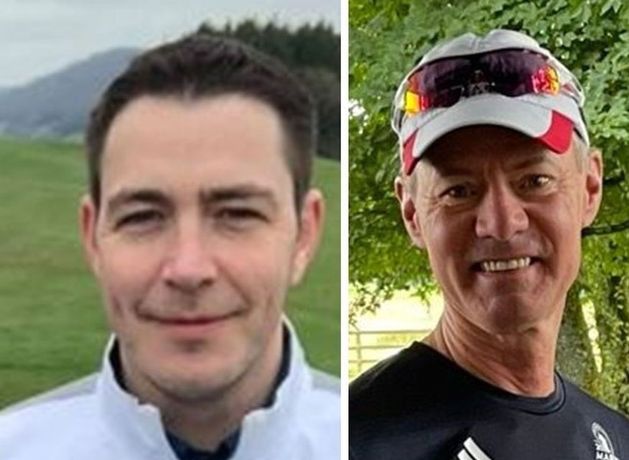
Brendan Wall (45) from Cardrath, Slane, Co Meath, and Ivan Chittenden (64) from Toronto, Canada, both drowned while competing in the Youghal Ironman triathlon event on August 20, 2023.
The race had been postponed for 24 hours in the wake of Storm Betty and, on the day it took place, the swimming course had been shortened because of strong currents and rough sea conditions.
Cork South coroner Frank O’Connell returned a verdict of accidental death in respect of Mr Chittenden. He adjourned the verdict in the case of Mr Wall pending the cross-examination of a key witness.
“It was a dreadful outcome for the families and, indeed, for Ireland,” Mr O’Connell said.
Members of the Wall and Chittenden families were in attendance at the inquest.
“Brendan had been given assurances that correct protocols had been followed by Ironman,” Mr Wall’s partner, Tina McKay, said.
“If he had known that Triathlon Ireland [TI] had not given a permit for the race, he would not have entered [the water].”
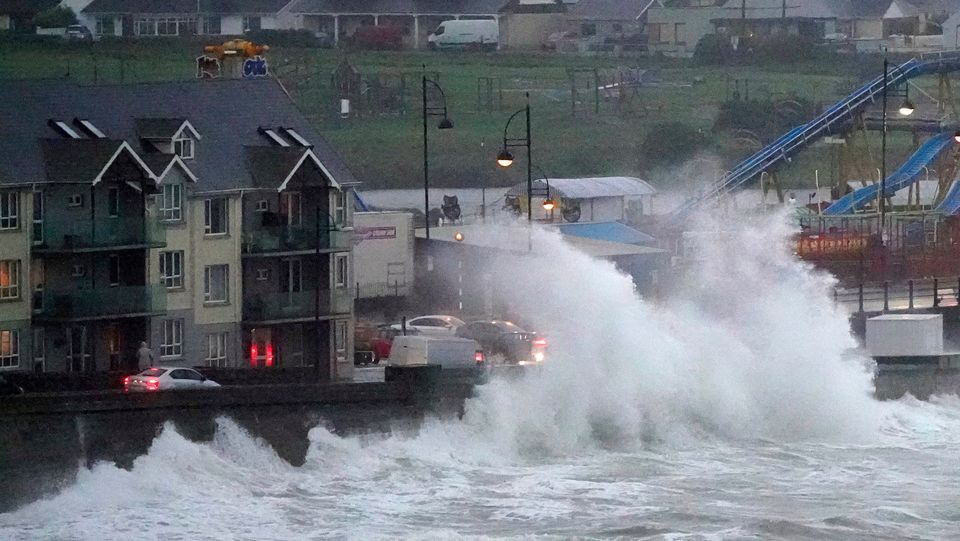
Waves crash against the sea wall in Tramore, Co Waterford, 50km up the coast from Youghal, during Storm Betty. Photo: Niall Carson/PA Wire
Mr Wall’s sister, Maria O’Connor, also competed in the Ironman event in Youghal and said she was left traumatised by her brother’s death.
“There were TI officials at the start that did not stop people entering the water,” she said.
“I am pretty sure that, if they had told us the race was not sanctioned for safety reasons, he would not have gone into the water.”
The inquest was told that direct evidence would not be offered by any officials or employees of Ironman or TI, though statements were provided for the coroner.
Detective Sergeant Ger O’Shaughnessy confirmed that a file on the matter was prepared for the Director of Public Prosecutions (DPP), but the DPP ruled out a prosecution on May 26 last year due to insufficient evidence.
A collage of videos and photos of the event – the result of a garda appeal for information – was played at the inquest.
One Ironman competitor, Conor Hillick, described very challenging scenes on the day.
Mr Hillick, who had worked as a lifeguard in New Jersey in the US, said he personally would have expected a red flag given the conditions.
Storm Betty had hit Ireland earlier that week and the Ironman swim planned for Saturday had been cancelled and rescheduled for Sunday.
A total of 1,396 competitors took part in the event, with 52 failing to finish the swimming element of the competition.
I held his head up with my right hand. I was trying to keep his head up out of the water
“Competitors were swimming into each other,” Mr Hillick said. “People were struggling.
“It was very chaotic in the sea, with a sense of unease.”
Colin Ryan was also competing in the event and came across Mr Chittenden lying face down in the water near Youghal lighthouse.
He told the inquest he initially thought it was a rock or a clump of seaweed, then he spotted something shiny and realised it was a wetsuit.
“It was very rough,” he said. “It was a huge challenge getting out through the waves.”
Mr Ryan was shocked to realise he had come across a lifeless competitor, and desperately tried to help him while raising the alarm.
“I held his head up with my right hand,” he said. “I was trying to keep his head up out of the water.”
A kayaker on safety duty was on the scene within minutes and a woman arrived with a rescue board shortly after that.
Mr Ryan said they put Mr Chittenden on the board and attempted CPR.
“I couldn’t see any reaction,” he said, adding that, at one point, he saw water pouring from Mr Chittenden’s mouth.
Mr Ryan was taken ashore for urgent medical attention and Mr Chittenden was loaded onto a rescue boat. He was pronounced dead, despite medical staff trying to revive him for almost an hour.
I personally would have had no difficulty swimming on that day
Mr Wall was discovered unresponsive in the sea at a different part of the course. He was also pronounced dead following almost an hour of resuscitation attempts.
Mr O’Connell said descriptions of Mr Wall’s last moments in the sea were “strange” and he wanted a key witness – a kayak rescuer – to attend the inquest to clarify matters.
The inquest heard that, given the conditions, TI had not issued a permit for the swimming event. Ironman altered the swimming course twice in response to concerns over the sea conditions.
John Innes, a volunteer who was responsible for the course safety and design, insisted that he believed conditions were fine on the day, with an onshore wind helping reduce waves: “I personally would have had no difficulty swimming on that day,” he said.
Mr Innes, who is a yachtmaster and has no commercial involvement with Ironman, said the course was changed in response to sea conditions.
“I was happy with swim safety,” he said.
David O’Brien, an Irish Water Safety instructor and experienced swimmer, swam out to assess the surf, tide and current after 6am that day. He was queried by an Ironman official about the sea conditions involved.
“I said it was fine,” he said, adding that he said it was a “good idea” to shorten the course, given the current and conditions.
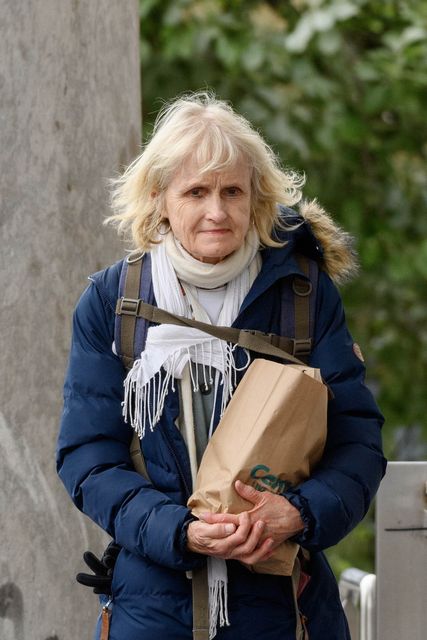
Assistant state pathologist Margaret Bolster. Photo: Daragh Mc Sweeney/Cork Courts
Mr O’Brien later had to assist two competitors in the water, one of whom was using an inhaler. The other was competing in their first Ironman.
Mr Chittenden’s widow, Siobhán Hyland, told the inquest her husband had been competing in triathlons and Ironman competitions for 12 years. He had completed five full Ironman events and eight half-Ironman events.
His equipment, she told the inquest, was top of the range and he was even wearing a special Garmin device that tracked his movement and his vital signs.
Post-mortem examinations were conducted on both men at Cork University Hospital on August 21, 2023.
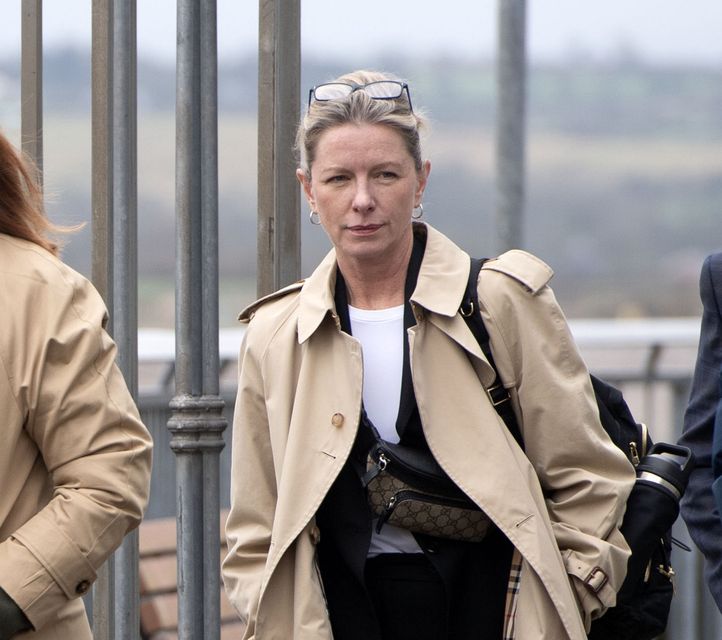
Siobhán Hyland, widow of Mr Chittenden. Photo: Michael MacSweeney
In a preliminary inquest heard two years ago, assistant state pathologist Margaret Bolster found that both men died from acute cardio-respiratory failure due to drowning.
Mr Chittenden was found to have suffered mild blunt-force trauma to the left temporal area of his head, which had caused extensive bruising. Dr Bolster said it was possible that the blow may have temporarily diminished the athlete’s awareness while in the sea.
Tributes to both men were paid by Youghal community leaders and Ironman organisers. A vigil was organised at a town park that overlooks the sea to show solidarity with the bereaved families.
The 2024 Ironman event in Youghal did not go ahead as planned. Organisers said the event was on “hiatus” to allow for “further healing”.
Ironman had become a centrepiece of Youghal’s tourism economy and annually attracted thousands of competitors and triathlon fans from around the world.