
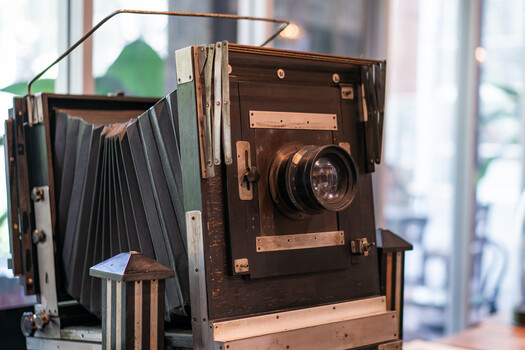
The photographs that survive from the nineteenth century carry a strange weight. Daguerreotypes of solemn faces, wet plate portraits of Civil War soldiers, albumen prints of Victorian families posed in their Sunday best. What we rarely consider when looking at these images is what their creation cost the people who made them. The early history of photography reads less like the story of an art form and more like a catalog of occupational disasters.
Photographers routinely handled substances that would today require hazmat certification, working in poorly ventilated spaces with chemicals whose dangers were either unknown or deliberately ignored. Some processes involved materials so toxic that practitioners developed recognizable syndromes. Others used compounds so volatile that studio fires and explosions became almost routine. This is the shadow history of photography, ten hazards that accompanied the medium from its birth through its industrialization.
1. Mercury Vapor in the Daguerreotype Process
The daguerreotype, announced to the world in 1839, produced images of remarkable clarity and detail. It also required photographers to lean over open containers of heated mercury, breathing in vapors that accumulated in their bodies over months and years of practice. The process worked by exposing a silver-coated copper plate to iodine vapor, capturing an image in a camera, and then developing that latent image by fuming the plate over a dish of mercury heated to between 60 and 75 degrees Celsius. The mercury vapor reacted with the exposed silver to form an amalgam that made the image visible. The problem was that mercury vapor is a potent neurotoxin, and daguerreotypists had no concept of adequate ventilation or exposure limits.
Louis Daguerre, public domain.
The symptoms of chronic mercury poisoning were well documented in other trades. Hat makers who used mercury compounds to process felt developed tremors, irritability, and cognitive decline so characteristic that “mad as a hatter” entered common speech. Daguerreotypists experienced the same constellation of problems. Contemporary accounts describe practitioners developing trembling hands, memory difficulties, mood disturbances, and what one period source called “decreptitude.” Period warnings about mercury’s dangers circulated among practitioners. One treatise cautioned readers to “ventilate your mercury” because “its fume is loaded with rheumatism, sciatica, lumbago, tooth-ache, neuralgia and decreptitude.” An open container of mercury evaporating at room temperature in a closed space can produce atmospheric concentrations more than 100 times current permissible workplace exposure limits. Daguerreotypists frequently worked in spaces far smaller and less ventilated than modern industrial settings would allow. Anecdotal accounts from the period claimed that some practitioners could amalgamate a copper penny by touching it with mercury-contaminated fingers, a demonstration less of bodily accumulation than of the casual handling of liquid mercury that left residue on hands and work surfaces.
2. Collodion’s Explosive Components
The wet plate collodion process that replaced the daguerreotype in the 1850s solved the mercury problem by creating an entirely new set of hazards. Collodion is essentially gun cotton dissolved in ether and alcohol, the same nitrocellulose compound used in early explosives. Photographers poured this syrupy liquid over glass plates, sensitized them in silver nitrate, and then had approximately 10 to 15 minutes to expose and develop the image before the coating dried and became useless. The process demanded that practitioners keep substantial quantities of highly flammable materials on hand at all times, often in confined spaces with inadequate ventilation and open flames for heating developer solutions.
Ether, the primary solvent in collodion, is both highly flammable and heavier than air. It pools at floor level, creating invisible reservoirs of vapor that can ignite from a spark, a flame, or even friction. In the oil lamp and gas-lit studios of the period, ignition sources were never far away. One industrial hygienist who encountered the collodion process in later years noted meeting two experienced chemistry teachers with significant injuries from ether explosions, one who could barely see out of one eye and another with considerable facial scarring. The nitrocellulose in collodion shared properties with materials used in early ammunition and explosives, and the volatile ether created constant fire risk. While the alcohol in the mixture provided some stability, the fundamental chemistry remained dangerous. Studio fires were not uncommon, and the combination of flammable solvents with the various open flames required for heating developer solutions created what would today be considered unacceptable fire risks.
3. Potassium Cyanide as a Fixing Agent
If mercury and explosives were not sufficient hazards, the wet plate process also commonly employed potassium cyanide as a fixing agent. Photographers preferred cyanide to other fixers because it produced cleaner shadow areas without the sulfide residues that could darken highlights over time. The compound dissolved unexposed silver halides efficiently, leaving crisp, stable images. It was also, of course, one of the most rapidly acting poisons known to science. A dose of 200 to 300 milligrams is typically fatal to humans, with death occurring within minutes of ingestion. Cyanide inhibits cytochrome c oxidase, an enzyme in the mitochondria, preventing cells from using oxygen even as the victim continues breathing. The brain, with its high energy demands, fails rapidly.
The documentation of cyanide accidents in early darkrooms makes for grim reading. Photographers kept the compound in solution alongside other chemicals, sometimes in poorly labeled or unlabeled bottles. Reports exist of practitioners accidentally drinking cyanide solutions, with invariably fatal results. Others absorbed the compound through cuts in their skin while working. Some photographers used “cyanogen soap” preparations containing potassium cyanide to remove the persistent silver nitrate stains from their hands. The casual proximity to lethal doses of poison became normalized in photographic practice. One period verse, preserved in historical accounts, darkly joked about a photographer attempting suicide by drinking from the wrong bottle in his darkroom and accidentally consuming the relatively harmless hypo instead. The humor depends on the reader understanding that cyanide was kept within arm’s reach of the silver bath. Even in circumstances where photographers avoided acute poisoning, chronic exposure produced its own symptoms, including dry sinuses, headaches, nosebleeds, dizziness, and temporary blindness.
4. Silver Nitrate Burns and Staining
The silver compounds that made photography possible were not without their own hazards. Silver nitrate, the fundamental sensitizing agent used across nearly all nineteenth century processes, is corrosive to human tissue. When it contacts skin, it reacts with proteins and other organic compounds, and subsequent exposure to light reduces the silver ions to metallic silver particles. The result is a characteristic purplish-black staining that cannot be washed away but must grow out as the skin naturally exfoliates over days or weeks. “Photographer’s fingers” became a recognized occupational marker, the dark discoloration identifying practitioners of the trade as surely as any guild badge.
By Rabbitslayer21 at English Wikipedia – Transferred from en.wikipedia to Commons., Public Domain, https://commons.wikimedia.org/w/index.php?curid=3874958
The staining itself was largely cosmetic, but concentrated silver nitrate solutions could cause actual chemical burns. The compound is corrosive to eyes and can cause severe damage with even brief contact. Prolonged skin exposure at high concentrations produces burns similar to those from other caustic chemicals. If ingested, silver nitrate causes corrosive damage to the gastrointestinal tract. Photographers working with wet plate processes dealt with constant dripping of silver nitrate solution from their plates, accumulating residue that built up in camera bodies and plate holders. The entire workflow normalized exposure to a compound that modern chemical safety protocols treat with considerably more respect.
5. Halogen Vapor Exposure
Before a photographic plate could capture an image, it had to be sensitized to light. In the daguerreotype process and many subsequent techniques, this sensitization involved fuming the plate over containers of iodine and bromine, exposing the photographer to halogen vapors in the process. These elements are highly reactive and corrosive to human tissue, particularly the delicate membranes of the eyes and respiratory system. The same chemical properties that made them useful for creating light-sensitive silver compounds made them dangerous to the people handling them.
Iodine vapor irritates the eyes and throat, causing difficulty in breathing. At higher concentrations, it produces chest tightness, inflammation, and fluid accumulation in the respiratory tract. Bromine is even more aggressive. A dark reddish-brown liquid at room temperature, it vaporizes readily and attacks mucous membranes with particular ferocity. Symptoms of bromine exposure include lacrimation, rhinorrhea, coughing, choking, wheezing, nosebleeds, and headaches. At higher concentrations, it causes severe respiratory tract irritation and pulmonary edema. To put these hazards in modern context, bromine is now classified as “Immediately Dangerous to Life or Health” at concentrations as low as 3 parts per million. The delay between exposure and the appearance of tissue damage can lead to more severe injuries because practitioners may not immediately recognize the harm occurring. Photographers working in small, enclosed darkrooms with inadequate ventilation were likely routinely exposed at or above levels now considered immediately dangerous, the very conditions that made daguerreotype fuming boxes convenient also concentrating toxic vapors in the breathing zone.
6. Magnesium Flash Powder Accidents
The problem of indoor and nighttime photography drove the development of artificial lighting sources, and the solutions that emerged in the late nineteenth century were spectacular in the most literal sense. Magnesium burns with extraordinary intensity, producing a brilliant white light well suited to photographic exposure. The challenge was controlling that combustion. Early approaches involved burning magnesium wire or ribbon, which was difficult to ignite and burned with such intensity that it could melt through containers and set fire to whatever lay beneath. In the 1870s, photographers experimented with mixing magnesium powder with gunpowder to make ignition easier. The results were often unpredictable.
The introduction of Blitzlicht in 1887 represented a significant improvement. This mixture of fine magnesium powder with potassium chlorate ignited more reliably and burned for approximately 1/30th of a second, fast enough to capture subjects without requiring them to hold still for extended periods. It was still, however, an open combustion of metal powder mixed with an oxidizer, something more akin to pyrotechnics than modern flash photography. Studio fires occurred with some regularity. Photographers suffered facial burns. Jacob Riis, the pioneering journalist who photographed poverty in New York, reportedly set rooms on fire twice and himself aflame once while using flash powder for his documentary work. Contemporary accounts note that a number of photographers died while either preparing flash powder or setting it off. The process of grinding the components was itself dangerous, as the mixture became increasingly sensitive to friction and static electricity as particle size decreased.
7. Lead Compounds in Processing
Lead appeared throughout nineteenth century photographic chemistry in various forms. Lead intensifiers could increase the contrast of underexposed negatives. Lead compounds figured in some toning processes that altered the color of finished prints. The metal’s chemical properties made it useful in multiple applications, and its long-term toxicity was not yet fully understood. Unlike the acute hazards of cyanide or the immediate irritation of halogen vapors, lead poisoning develops slowly, making cause and effect relationships difficult to establish.
Chronic lead exposure produces a constellation of symptoms that includes fatigue, cognitive difficulties, tremors, and organ damage. The metal accumulates in bones and soft tissues over years of exposure, with effects that may not become apparent until substantial damage has occurred. Photographers handling lead compounds repeatedly, particularly in powdered form during mixing, would have inhaled and absorbed doses that accumulated over their working lives. The full scope of lead-related illness among early photographers is difficult to establish because the symptoms overlap with so many other conditions and the connection between exposure and disease was not recognized during the period when these processes were in common use.
8. Pyrogallic Acid and Renal Toxicity
Pyrogallic acid, produced by thermal decomposition of gallic acid historically derived from tree galls, served as one of the first photographic developers and remained in use well into the twentieth century. Edward Weston was among the photographers who continued using it despite its unreliable behavior and known hazards. The compound posed risks through multiple exposure pathways, but the most insidious was its ready absorption through the skin. Pyrogallol is a phenol derivative, and like other phenols, it can cause systemic toxicity when absorbed in sufficient quantities. For photographers who routinely handled solutions and prints with bare hands, chronic skin exposure created a pathway to renal damage.
The kidneys bear the burden of filtering pyrogallol metabolites from the bloodstream, and repeated exposure can cause cumulative injury. This “hidden” toxicity made pyrogallic acid particularly dangerous because the damage accumulated gradually, without the immediate warning signs that accompanied burns or acute poisoning. The compound also oxidizes rapidly when exposed to air, turning from clear to dark brown almost instantly. This instability made it tricky to work with and meant that mixed solutions had short working lives. Respiratory irritation from vapors added another exposure pathway, though the renal effects of skin absorption represented the greater long-term threat.
9. Nitrate Film’s Combustibility
While not a darkroom chemical in the traditional sense, nitrate film base deserves mention as one of photography’s most dangerous materials. Cellulose nitrate served as the standard base for roll and sheet film from the late nineteenth century, with the industry gradually transitioning to acetate “safety” film over the first half of the twentieth century. The same properties that made nitrocellulose useful in explosives made nitrate film extraordinarily flammable. Once ignited, it burns with intense heat and is extremely difficult to extinguish because the compound contains its own oxygen supply, allowing combustion to continue even in conditions that would smother ordinary fires.
The aftermath of such a fire. By Unspecified; original copyright likely held by photographer or the Schedule Rating Office of New Jersey – (1937). “Fox Film Storage Fire”. Quarterly of the National Fire Protection Agency 31 (2): 136–142., Public Domain, https://commons.wikimedia.org/w/index.php?curid=38100108
Projection booth fires claimed the lives of many projectionists who worked with nitrate motion picture film in enclosed spaces where heat from projector lamps could trigger ignition. Photographers working with nitrate film stock faced similar risks, particularly when storing large quantities of the material or working near heat sources. The film’s instability increased with age, and improperly stored nitrate negatives have destroyed archives and taken lives well into the modern era. The material’s eventual replacement with safety film eliminated one of photography’s most persistent hazards, though vast quantities of historical nitrate negatives remain in collections worldwide, still capable of spontaneous combustion under the wrong storage conditions.
10. Radioactive Materials in Toning and Optics
The story of hazardous photographic materials would be incomplete without acknowledging that some processes incorporated radioactive compounds. Uranium salts found use in certain nineteenth century toning processes that produced distinctive color effects, meaning photographers were working with radioactive materials well before the nature of radioactivity was understood. In the twentieth century, thorium oxide was incorporated into high-quality optical glass, with development and adoption occurring across multiple manufacturers beginning in the late 1930s. Production of thoriated lenses continued through the 1970s, after which most manufacturers transitioned to lanthanum glass to avoid radioactivity and the characteristic yellowing that thorium caused in optical elements. Some thoriated lenses contained substantial percentages of thorium oxide by weight, with formulations varying by manufacturer and application.
The radiation levels from these materials are generally modest, though actual exposure varies considerably depending on the specific lens design, the thorium content, usage patterns, and how the lens is stored relative to the photographer’s body. Regulatory estimates have suggested relatively low annual doses for typical use, but these figures represent averages across variable conditions rather than precise measurements applicable to any individual case. The greater concern with thoriated eyepieces involves prolonged close-range exposure to beta particles and gamma radiation emitted during thorium decay. While alpha particles from thorium are stopped by the glass itself, the beta and gamma emissions can reach the eye’s surface tissues during extended use. The yellowing that develops in thoriated glass as radioactive decay creates defects in the crystal structure serves as a visible reminder of the ongoing process. Modern collectors note that exposure to bright light or ultraviolet radiation can reverse this yellowing, a cycle that can be repeated indefinitely without damaging the glass.
The Weight of History
Looking back at the chemical hazards of early photography, the most striking feature is not any single substance but the accumulation of risks that practitioners accepted as normal. Mercury, cyanide, explosive solvents, corrosive acids, toxic gases, and incendiary flash powders all occupied the same workspaces, handled by people who often had limited understanding of the dangers they faced. Some photographers lived long and productive careers. Others developed chronic illnesses that may or may not have been attributed to their work. A few died acutely from accidents or poisonings that were clearly connected to their trade.
The images they left behind carry no trace of this cost. A daguerreotype shows a face, not the mercury vapor that developed it. A wet plate portrait reveals nothing about the cyanide that fixed it or the ether fumes that filled the portable darkroom where it was processed. The history of photography as usually told focuses on aesthetics and technique, on the evolution of the image. The history told here is different. It is the story of what photographers breathed, touched, and absorbed while making pictures. It is a reminder that the past was not merely sepia toned but genuinely dangerous in ways that our clean digital workflows cannot convey. The next time you admire a nineteenth century photograph, consider the person on the other side of the camera, working in a fog of mercury and halogen vapors, hands stained with silver nitrate, flash powder at the ready. Photography was not always a safe profession.