
How does a professional photographer transform a flat, raw file into a breathtaking wildlife masterpiece without falling into the trap of over-processing? Let us explore the structured mindset that transforms chaotic editing into a deliberate, artistic workflow.
Mark Dumbleton, a leading wildlife photographer from South Africa, explains his signature raw workflow for wildlife imagery in this video and takes us through a step-by-step system designed to eliminate guesswork. He emphasizes that editing is not just about moving sliders but about following a logical progression that preserves image quality.
The first step Mark highlights is a classic omission beginners make. They jump into sliders and start adjusting exposure, whereas his advice is to start the entire process by removing technical flaws, which is essential. He explains that by handling noise reduction and chromatic aberration first, you create a clean canvas that makes every subsequent adjustment much easier to control. This foundational step ensures that you aren’t accidentally enhancing digital artifacts when you later apply sharpening or contrast.
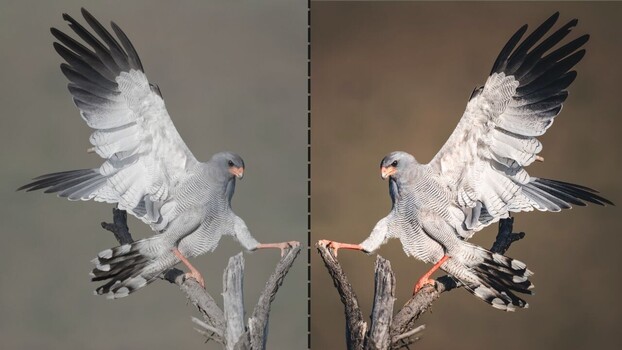
While the video discusses other points, such as fixing exposure and adding creative color grading, the one that I found the most useful is his focus on accentuating visual flow. He demonstrates how to use masking and radial gradients to literally guide the viewer’s eye to the most important part of the frame — the subject’s face. By subtly darkening competing highlights on a bird’s wing and brightening the head, he ensures that the focal point is never in question. This technique moves beyond basic corrections and enters the realm of storytelling through light. He also touches on the importance of subject separation, using contrast and color shifts to make the animal pop against a soft, non-distracting background.
The final result is a clean, professional image that maintains its natural feel while highlighting the bird’s beauty. To see the full transformation of the bird and learn how to apply these techniques to your own portfolio, watch the rest of the video.