
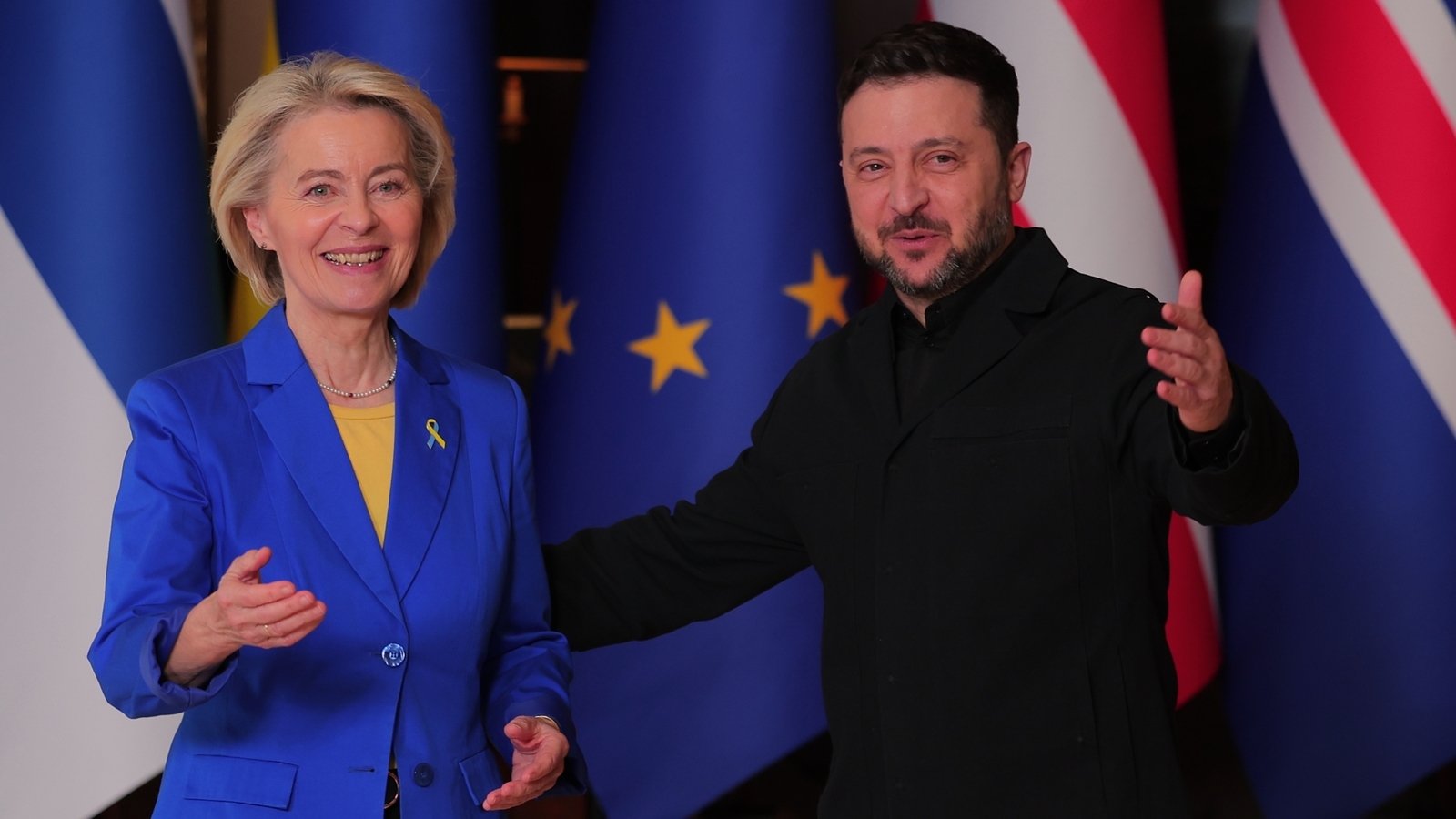
EU chief Ursula von der Leyen has said the bloc would make good on a multi-billion-euro loan for Ukraine despite Hungary, a Kremlin-friendly member of the bloc, vetoing the measure.
Hungary’s Prime Minister Viktor Orban is stalling both the €90bn loan as well as a fresh round of sanctions on Russia until Kyiv re-opens a key oil pipeline.
Ukraine says the Druzhba pipeline, which crosses its territory to deliver Russian oil to Slovakia and Hungary, was damaged on 27 January by Russian strikes.
“Let me be crystal clear … the loan was agreed by 27 heads of state and government in the European Council. They have given their word. This word cannot be broken,” Ms von der Leyen said.
“We will deliver on the loan one way or the other. Let me be very clear. We have different options, and we will use them,” she said at a press conference in Kyiv with Ukrainian leader Volodymyr Zelensky marking the four-year anniversary of Russia’s invasion.
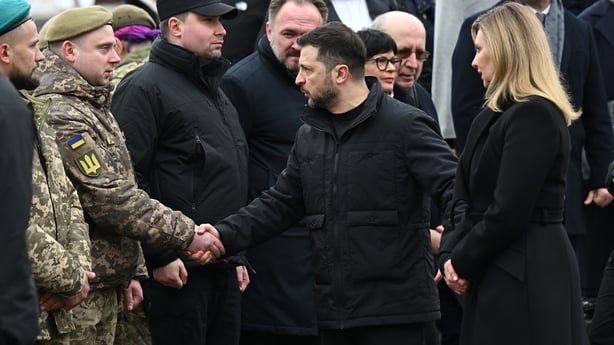
Volodymyr Zelensky and his wife Olena meet troops in Independence Square in Kyiv
Mr Zelensky said that Russia had been responsible for the destruction of the pipeline and that even after it is fixed, Moscow forces were likely to strike it again.
He urged Mr Orban to directly negotiate with Russian leader Vladimir Putin to halt strikes on the facility or agree on an “energy ceasefire” with Russia.
Ms son der Leyen meanwhile called for the repairs on the Druzhba pipeline to be “accelerated” following the Russian attacks.
Ukraine’s relations with neighbouring Hungary have been strained by Mr Orban’s political support for Russia and have deteriorated further in recent weeks as the veteran leader has ramped up attacks on Ukraine ahead of a closely fought parliamentary election in April.
Watch: Zelensky gets standing ovation from EU Parliament
Earlier, Ukrainian President Volodymyr Zelensky called on the European Union to set a date for Ukraine’s accession to the bloc and for the EU’s latest €90 billion loan package for Kyiv to be implemented.
He made the remarks this morning during a video speech to members of the European Parliament on the fourth anniversary of Russia’s full-scale invasion of Ukraine.
Not setting a date for Ukraine gaining membership of the EU, said Mr Zelensky, would allow Russian President Vladimir Putin to find a way “to block Ukraine for decades by dividing Europe”.
Mr Zelensky’s speech listed other key priorities for Ukraine as it enters the fifth year of the war, namely the need for clarification on the kind of post-war security guarantees his country can expect to receive and tougher sanctions for Russian oil exports, as well as sanctioning other senior Russian officials who have taken a roll in directing Moscow’s four-year war.
Ukraine’s president said that the threat his country faced from Russia had “not become smaller”.
“We also need the full range of security guarantees for Ukraine if it becomes the target of a new Russian war,” Mr Zelensky said.
It was a reference to the still vague promise of a post-war US security guarantee for Kyiv, though there was no overt criticism of Washington.
Instead, he emphasised the need to maintain strong transatlantic relations.
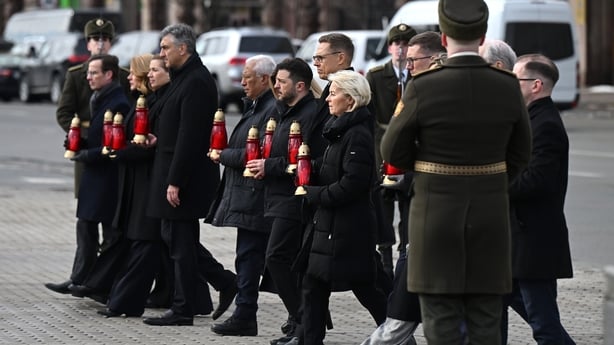
Volodymyr Zelensky with First Lady Olena Zelenska and foreign leaders place candles at the People’s Memorial of National Remembrance
On stricter sanctions against Russia, Mr Zelensky said there must be “no place in the free world for Russian oil”.
He took aim at Mr Putin’s 26-year record as Russian president, characterising him as a president who is “war himself”, having launched wars in Chechnya and Georgia before invading Ukraine.
He also took aim at Russia’s military actions in Syria in the past decade, suggesting that Moscow’s military aid for the former Assad regime had contributed to Europe’s migrant crisis.
“In many ways, this is also what caused the waves of migrants to Europe,” he said.
It sounded like a message directed at far-right MEPs who have voiced opposition to military aid for Ukraine since the start of the invasion.
Mr Zelensky was largely speaking to a room of friends and called on MEPs to support what he termed Ukraine’s “diplomacy for peace”.
But it is the Trump administration that he needs to convince to make sure Kyiv’s diplomatic efforts are not sidelined as the war drags on.