
24 February 2026, 09:00
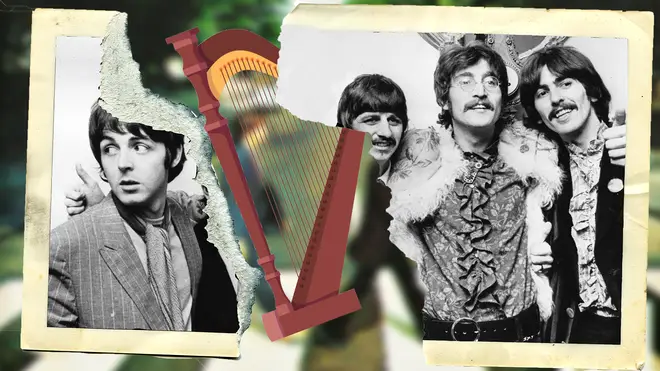
How a harp caused the break up of The Beatles.
Picture:
Getty

Paul McCartney told a British court there were six reasons The Beatles should legally break up. One of them was the use of a harp in ‘The Long and Winding Road’.
It might seem a bit dramatic to break up a band because of a harp. But that’s exactly what happened to The Beatles – at least in part.
In the summer of 1968, Sir Paul McCartney sat at his piano in the farmhouse he’d bought on Scotland’s Kintyre peninsula. Inspired by the vista stretching out before him, he penned a soulful elegy: ‘The Long and Winding Road’.
He recorded a demo, followed by a couple of stripped-back variations with The Beatles, after they returned to the studio to record their Get Back project. Plagued by disagreements, dodgy equipment, Lennon’s heroin use and an alleged (but later denied) fistfight, the sessions were far from harmonious.
George Harrison even quit the band for a few days, announcing after lunch: “See you round the clubs.”
Lennon suggested Eric Clapton as a replacement guitarist – he had already recorded with the band on Harrison’s ‘While My Guitar Gently Weeps’ – but ultimately, Harrison returned to complete the project.
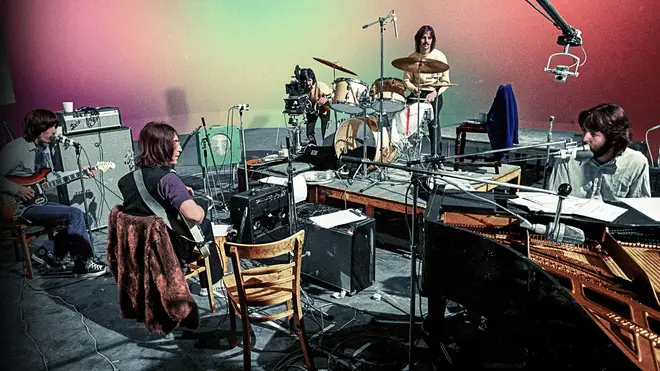
The Beatles recording the ‘Get Back’ project.
Picture:
Alamy
With those disagreements seemingly settled, The Beatles finished recording and sent the album off to be mixed and mastered – but the troubles didn’t end there.
By the time it was ready for release, The Beatles had already recorded Abbey Road and decided to release that first, pushing Get Back’s release date back. Then, six days before Abbey Road hit the shelves, John Lennon dropped a bombshell: he “wanted a divorce” from the group. Get Back was sidelined, once again.
In early 1970, American record producer Phil Spector was brought on to save the project, now renamed Let It Be. He made various changes to the already recorded songs, including an overdubbing session to create his signature ‘Wall of Sound’. Ringo was the only Beatle present.
To ‘The Long and Winding Road’, Spector added eight violins, four violas, four cellos, three trumpets, three trombones, two guitars, a fourteen-strong women’s choir, and a fateful harp.
Read more: 10 best pieces ever written for the harp
After finishing the album, Spector sent an acetate version to all four of The Beatles, with a long letter explaining his changes and a note: “If there is anything you’d like done to the album, let me know and I’ll be glad to help.”
John, Paul, George and Ringo all telegrammed back to give their approval. But between then and the album’s release, McCartney had a change of heart.
He wrote a letter to the band’s manager, Allan Klein, detailing his grievances:
“Dear Sir, In future no one will be allowed to add to or subtract from a recording of one of my songs without my permission.
“I had considered orchestrating ‘The Long and Winding Road’ but I decided against it. I therefore want it altered to these specifications:
Strings, horns, voices and all added noises to be reduced in volume.Vocal and Beatle instrumentation to be brought up in volume. Harp to be removed completely at the end of the song and original piano notes to be substituted. Don’t ever do it again.
Signed, Paul McCartney.”
Klein tried to call McCartney, but he’d changed his number without telling anyone. Eventually he replied to a telegram saying his letter ‘spoke for itself’.
Production had already started on the physical copies for Let It Be, so Klein decided not to interfere. The album was released without McCartney’s requested changes.
In early 1971, McCartney took Klein and his three bandmates to London’s High Court, to officially dissolve the partnership. He cited six reasons as to why they should legally split up – one of which was all the changes made to ‘The Long and Winding Road’.
The legal case became something of a media frenzy, with Time magazine even dubbing it ‘Beatledämmerung’ in reference to the finale of Wagner’s Ring Cycle.
Ultimately, the court ruled in McCartney’s favour, and on 9 January 1975 The Beatles officially split up, thanks to Allan Klein, Phil Spector, and a harp.