
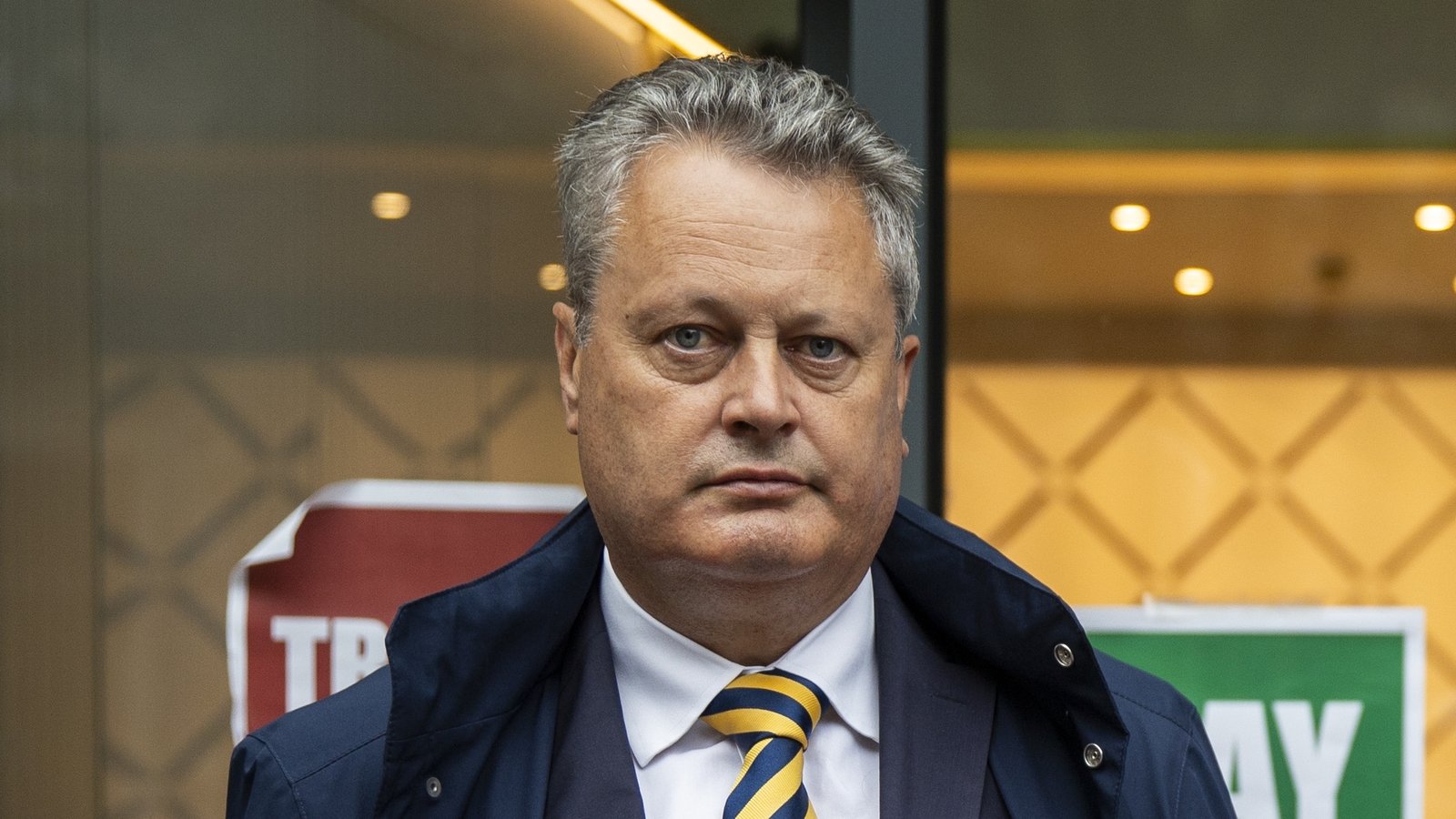
A veteran Northern Ireland journalist who says he has been the target of “systematic” state monitoring begins a legal case against the PSNI and the security services in London today.
Vincent Kearney is the Northern Editor of RTÉ News. Before moving to RTÉ in 2019, Mr Kearney worked as Home Affairs Correspondent for BBC Northern Ireland. His work focused on areas of policing and security.
He said pre-hearing disclosure has established that the PSNI, MI5 and others tracked his phone data in an attempt to uncover his sources.
The monitoring happened over a period of eight years, up to 2014.
“This case has established that I was the target of a systematic and years-long pattern of law enforcement agencies illegally accessing my journalistic sources and mapping my professional activity,” Mr Kearney said.
“I was treated as a suspect rather than a journalist.
“The concessions made reveal repeated and consistent illegality on the part of multiple public authorities over a period of many years.
“This was taking place on an almost annual basis between 2006 and 2014 while I worked as a correspondent for BBC Northern Ireland.”
The case is listed for hearing before the Investigatory Powers Tribunal.
It adjudicates in cases where claimants believe their human rights have been infringed by UK police and intelligence agencies by way of covert investigation.
Some of the hearing will be in public and some in private.
Unlawful interference matter of ‘serious concern’, says BBC
A spokesperson for the BBC said the extent of “unlawful interference” by the police and intelligence services in Mr Kearney’s work was a matter of “serious concern”.
“It strikes at the heart of the protections that are in place for public interest journalism. What happened in this instance was wrong and must never be repeated.
“The independence of what we do is hard won and it’s something that we will fight to protect – reflecting the vital role that public interest journalism plays in a free society.”
Mr Kearney said the monitoring of his communications had had a “chilling effect” on his ability to go about public interest journalism.
He said source relationships had been damaged and in some cases destroyed.
“The unlawful activities of those charged with upholding the law have irrevocably damaged my ability to perform my lawful duties as a journalist.
“Those responsible must be held to account and mechanisms put in place to ensure this kind of activity cannot be repeated,” he said.
Mr Kearney said former colleagues in the BBC have also suffered damage to source relationships.
“These activities were not just an attack on me and my journalism, but also the journalism of the BBC and on public interest journalism itself.
“Journalists must be free to pursue their lawful duties without fear of illegal efforts by the state to drive a coach and horses through source confidentiality, which is an essential journalistic tenet,” he said.
Amnesty International said the case was expected to reveal further detail about the extent of surveillance by police and MI5 of journalists in Northern Ireland.
“It has already been established in a preliminary hearing that MI5 broke the law by accessing Vincent Kearney’s telephone records in 2006 and 2009,” said Amnesty’s Northern Ireland Director Patrick Corrigan.
“Now the Tribunal must uncover the full truth of the wider pattern of covert and unlawful surveillance of reporters by the police and the security service.
“A journalist’s right to protect their sources is the bedrock of a free and fearless press and central to the public’s right to know. Without it investigative journalism cannot function,” he said.
Call for broader investigation into surveillance of journalists
The National Union of Journalists (NUJ) has called for a broader, independent investigation into the surveillance of journalists in Northern Ireland.
NUJ general secretary Laura Davison said the revelations involving state surveillance of journalists in the UK are “deeply disturbing”.
“Vincent Kearney’s case underlines the union’s concern over the conduct of police and security authorities, and the apparent disregard for journalists’ right to protect their sources,” she said.
“The NUJ once again demands a broader, independent investigation to uncover the full extent of surveillance against journalists in Northern Ireland – not only by PSNI but also other police forces and security services.”
A report last year revealed 21 instances where the PSNI had unlawfully used covert powers to try and establish journalistic sources by accessing reporters’ phone data.
It was commissioned by the PSNI following concerns arising from the case of documentary makers Barry McCaffrey and Trevor Birney.
They were arrested as part of a police investigation into the source of information contained in their film about the 1994 Loughinisland massacre when six Catholic men were shot dead by loyalists in the Co Down village as they watched Ireland play in the world cup.
The arrests were ruled to be unlawful and the men were compensated.
The Investigatory Powers Tribunal later ruled in their favour and found that the police had acted unlawfully in attempting to uncover their source.