
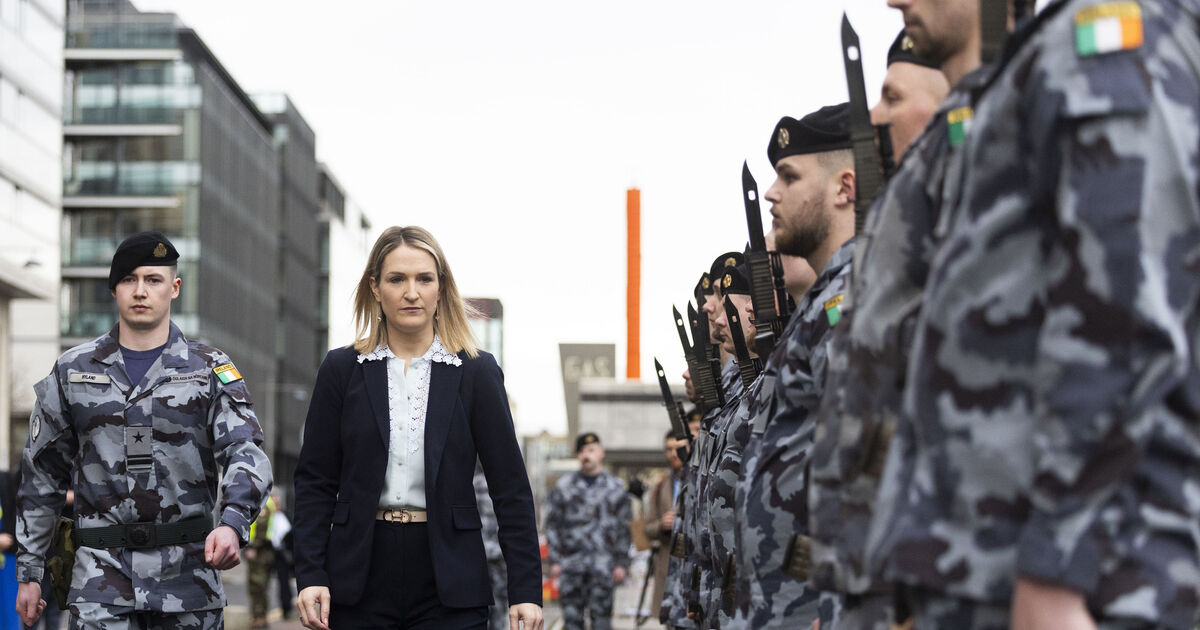
Ireland’s first ever maritime security strategy is receiving a general welcome from various defence and security experts.
They complement the ambition of the strategy, measures to drive co-ordination among Ireland’s numerous maritime agencies, and formal declarations of the need to enhance military co-operation with neighbours.
The country’s National Maritime Security Strategy 2026-2030 comes to us before Ireland has published a national security strategy. The former should logically flow from the latter.
The Department of Defence, which churns out documents at a fair click, deserves some credit, not least due to the work of the strategy’s main driver, Margaret Stanley.
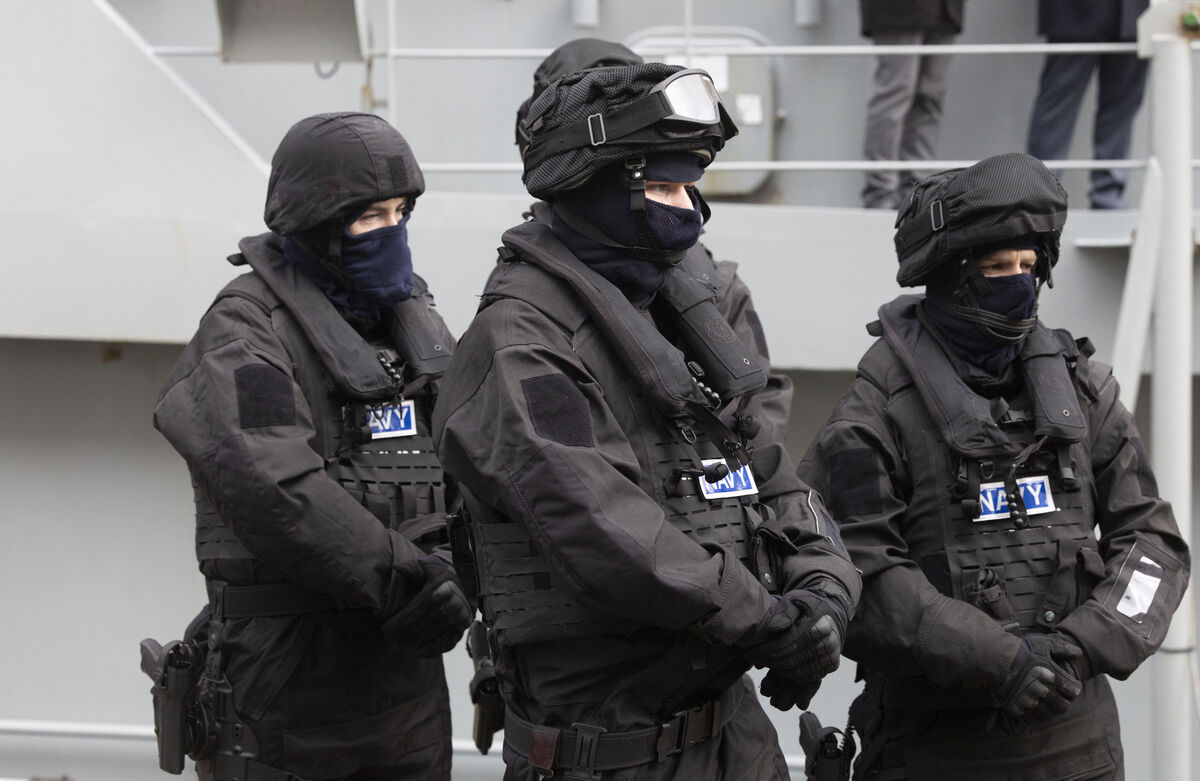 Irish Navy personnel at the launch. Picture: Sam Boal/Collins Photos
Damage to undersea infrastructure (such as data cables);
Disruption to oil supply (which comes by sea into Irish ports);
Disruption to electricity or gas supply (comprising of two electricity interconnectors from Britain and two gas pipelines from Britain, the latter supplying 80% of Ireland’s gas needs);
Malicious cyber activity on critical infrastructure;
Maritime incident involving mass casualties.
Brendan Flynn, a lecturer in political science at the University of Galway and a specialist on maritime security, said: “It’s an excellent document and a really historic moment — the Irish State is giving real attention to the maritime domain in a way that historically it hasn’t.”
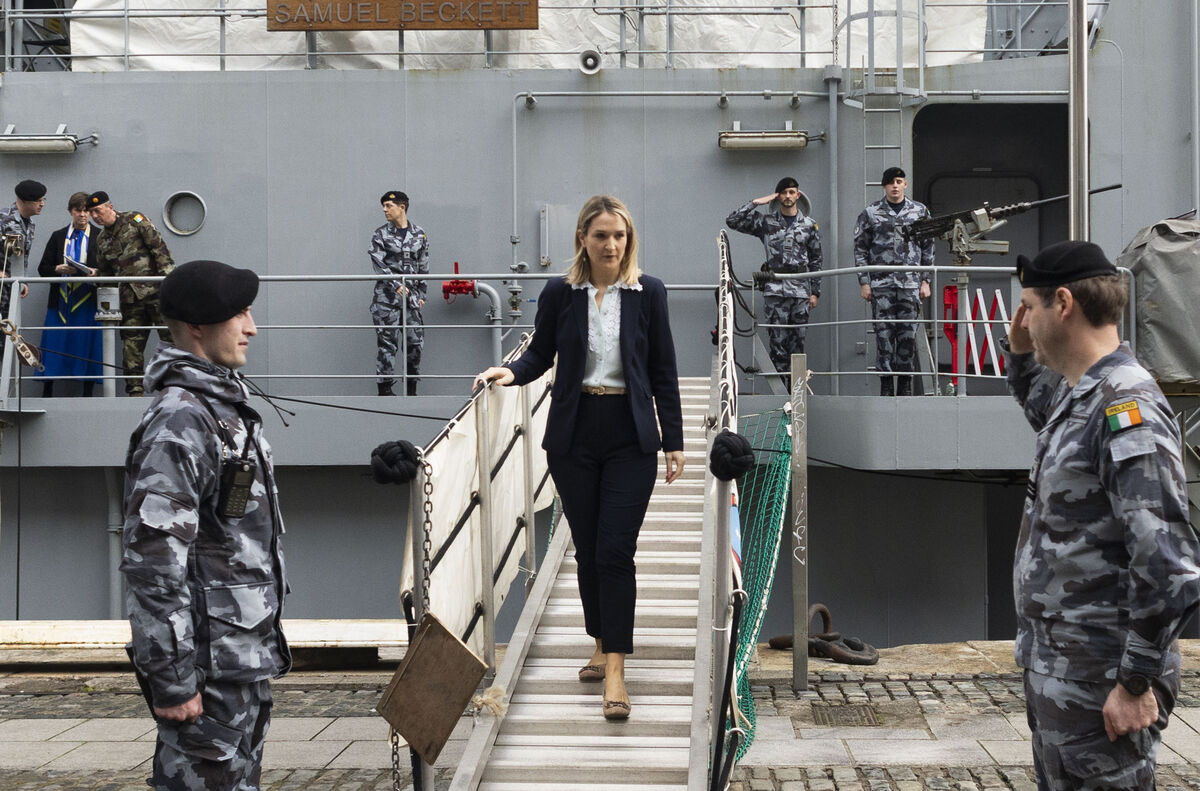 Defence minister Helen McEntee at the launch of the maritime defence strategy at the LÉ Samuel Beckett. Picture: Sam Boal/Collins
Like his academic colleague, he mentioned the national maritime security centre. He stated he believed this was “critical” to achieving a whole-of-government approach at operational level.
Mr Flynn said the key qualification to his positive comments is to what extent the strategy “will be implemented or delivered”.
 Lt Gen Rossa Mulcahy said a plan would be with the minister soon. Picture: Sam Boal/Collins Photos