
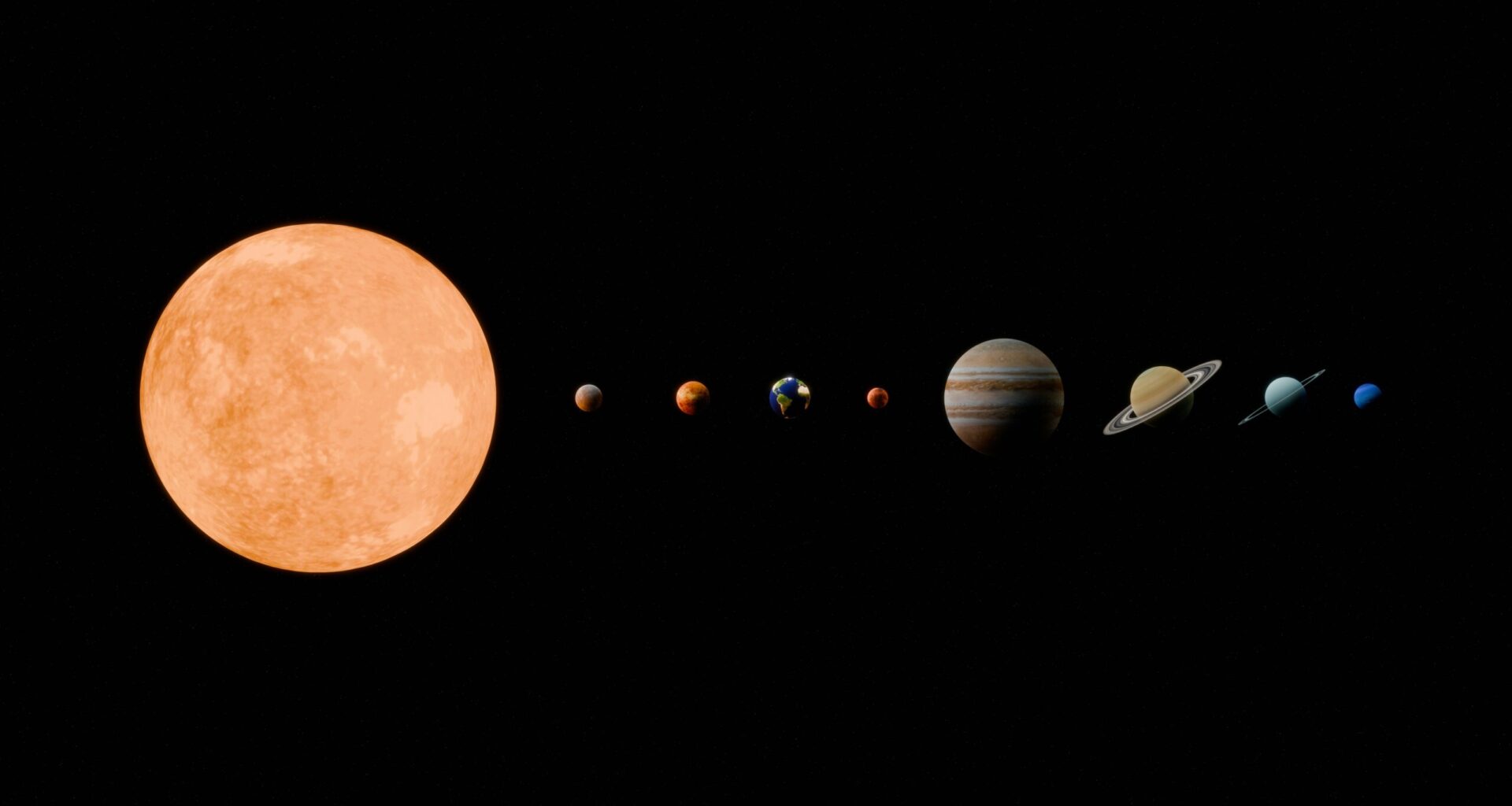
A rare celestial spectacle is set to unfold in the evening skies on Saturday, 28 February 2026, as six planets appear together in a striking “planet parade,” giving skywatchers around the world a chance to see multiple celestial bodies lined up at once. The phenomenon, featuring Mercury, Venus, Jupiter, Saturn, Uranus and Neptune, is expected to be one of the most notable planetary displays of the year, drawing attention from astronomers and stargazing enthusiasts eager to witness the brief but eye-catching event.
The planets will appear to line up along the ecliptic — the path the Sun, Moon and planets trace across the sky — creating the illusion of a coordinated cosmic display shortly after sunset. The rare alignment occurs because of the planets’ orbital geometry. While in reality they won’t form a straight line in space, from Earth they will appear clustered on the same side of the Sun, creating what astronomers call a planetary parade.
Timing and visibility vary by location, but the best window for seeing the parade begins roughly 30–60 minutes after sunset in most regions. Around that time, low-horizon planets such as Mercury and Venus will be visible just above the western horizon, while Jupiter will be higher in the night sky.
Several factors affect how many of the six planets can actually be seen with the naked eye. Venus and Jupiter will be the most conspicuous, shining brightly enough to be spotted easily without optical aid. Saturn and Mercury should also be visible to unaided eyes under good conditions, though Mercury’s low position near the horizon makes it a challenge, depending on local light pollution and atmospheric haze.
The two ice giants — Uranus and Neptune — are much dimmer and typically require binoculars or a small telescope to detect. Uranus will sit higher in the sky in the constellation Taurus, while Neptune, close to Saturn near the horizon, will be a difficult target in twilight without optics.
Observers in parts of the Northern Hemisphere, including North America and Europe, will have slightly different optimal viewing dates and times. For example, the alignment appears tightest for cities like New York or Athens on Feb. 28, while locations such as London or Berlin may see similar configurations a day or two later.
Experts caution that clear, unobstructed views and minimal light pollution are key to successfully spotting the planets, especially those near the horizon. Even with perfect conditions, the brief window — particularly for Mercury and Venus — means skywatchers will need to time their viewing carefully.
To catch the planetary parade, look toward the western horizon about 30–60 minutes after sunset on February 28, 2026, when the planets will be visible in a gentle arc along the ecliptic. Bring binoculars or a small telescope to spot the dimmer planets like Uranus and Neptune, while Mercury, Venus, Jupiter, and Saturn should be visible to the naked eye under clear skies.
While spectacular, the parade is purely a visual alignment from our vantage point and has no measurable gravitational effects on Earth. Still, it offers a modern-day connection to the skywatching traditions of past generations, when multiple planets in the evening sky were cherished as remarkable celestial events.