
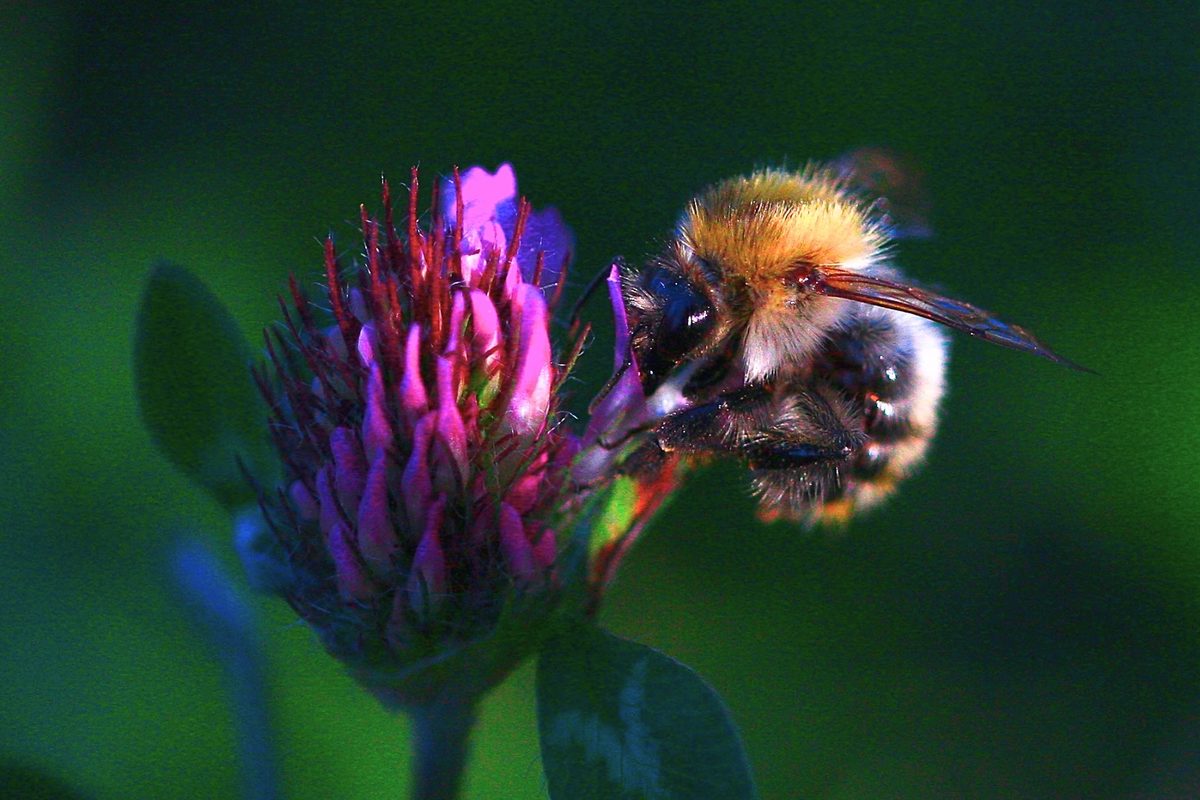
Tree bumblebees stir from their hibernation remarkably early, in February and March. Here, we’re talking about queen bumblebees, of course, because the female workers and males all perished in the autumn.
The queens desperately need to stock up on nectar before starting a new colony.
Unlike other British bumblebees, which all nest near the ground, frequently in old mammal burrows, tree bumblebees go house-hunting much higher up. Their preferred locations are holes in trees and empty nestboxes. Some nest under eaves.
They are easy to identify, due to their pure white tail that provides a bold contrast with their black abdomen and furry ginger thorax – no other bumblebees look like this.
Nowadays, they’re one of the commonest bumblebees in England and Wales, which is incredible considering the species only colonised Britain in 2001. And the march continues, with the population in southern Scotland increasing rapidly.
Tree bumblebee feeds from a flower. Credit: Tony Baggett/Getty Images
Top image: Tree bumblebee on a clover flower. Credit: Ghislain Teillet/Getty Images
More wildlife stories from around the world