
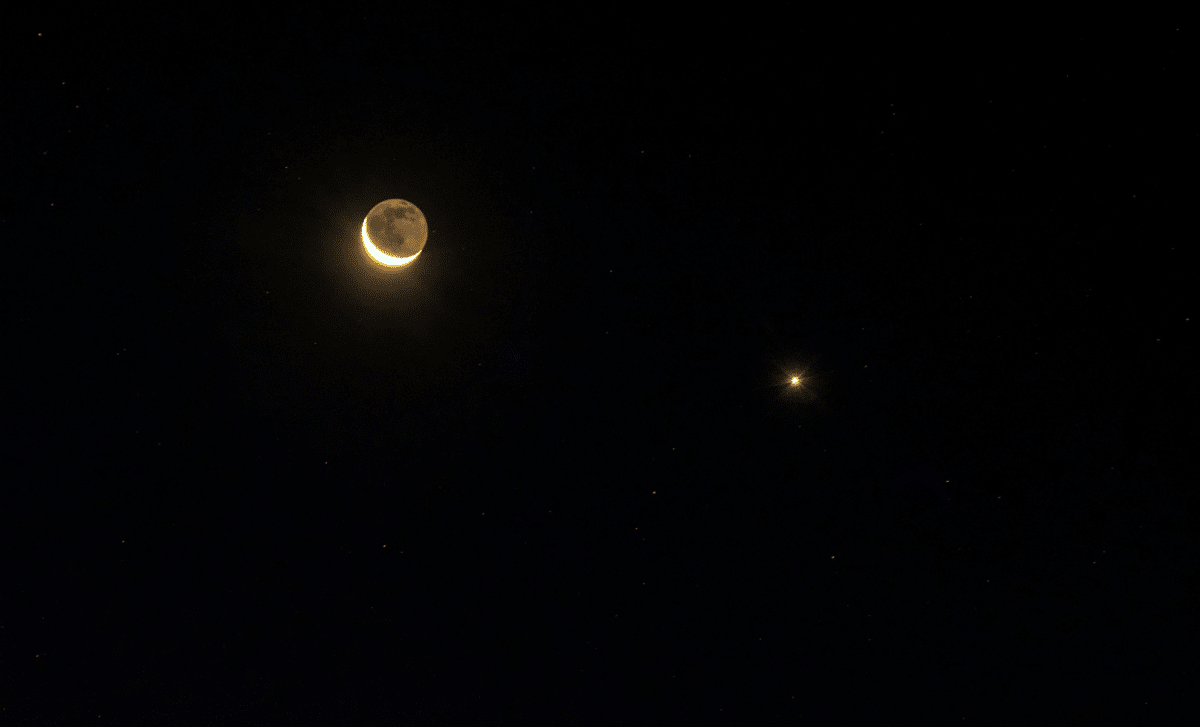
Tonight, a unique celestial event will occur as a waxing gibbous moon and the bright planet Jupiter align in the sky. This event offers a great opportunity for stargazers to observe two of the most noticeable objects in the night sky. Jupiter, the largest planet in our solar system, will be positioned near the moon, creating an interesting sight. Whether you have binoculars or a telescope, this alignment provides a great chance to enjoy the view.
Viewing Jupiter’s Glorious Display
Jupiter, located in the constellation of Gemini, will be positioned just above the horizon, ensuring that it is easily visible for anyone with an unobstructed view of the sky. Its bright, steady glow will distinguish it from the other stars, making it impossible to miss. In fact, the planet’s brightness will be unmistakable, casting a silvery hue that will contrast nicely with the moon’s soft glow, as noted by Space.com.
For amateur astronomers, Jupiter offers an exciting opportunity to explore beyond just its bright appearance. With binoculars or a small telescope, viewers can observe some of its most fascinating features, including its four largest moons, Io, Europa, Ganymede, and Callisto. Depending on your equipment, you may also be able to see Jupiter’s atmospheric details, like its cloud bands or the infamous Great Red Spot.
A Brief Guide To Stargazing With Binoculars
While you can certainly enjoy the event with just your eyes, binoculars can provide a closer look at Jupiter’s beauty. Even inexpensive binoculars can reveal the planet as a small disk and allow you to spot some of its moons. For a more immersive experience, you could opt for higher-quality binoculars like the Celestron UpClose G2 10×50, which are excellent for hand-held viewing.
Using binoculars, you’ll also be able to track Jupiter’s movement across the sky as it slowly drifts away from the moon during the evening. This gradual shift will be a wonderful spectacle in itself, adding an extra layer of wonder to the evening’s stargazing session.
Telescope Observations: A Deeper Look at Jupiter
For those with telescopes, Jupiter will offer a wealth of detail. Through a telescope, you can get an up-close look at its atmosphere, including its cloud bands, which often appear as distinct stripes running horizontally across the planet. Some amateur astronomers report seeing vibrant color changes and occasional disturbances in these cloud bands, such as knots or swirling patterns, making Jupiter even more intriguing.
The most famous feature of Jupiter is, of course, the Great Red Spot. This enormous storm has been a subject of fascination for centuries, and recent observations indicate that it’s shrinking and taking on a more circular shape. These changes have led to questions about the nature of Jupiter’s atmosphere and whether the storm is experiencing more dynamic shifts than previously thought.