
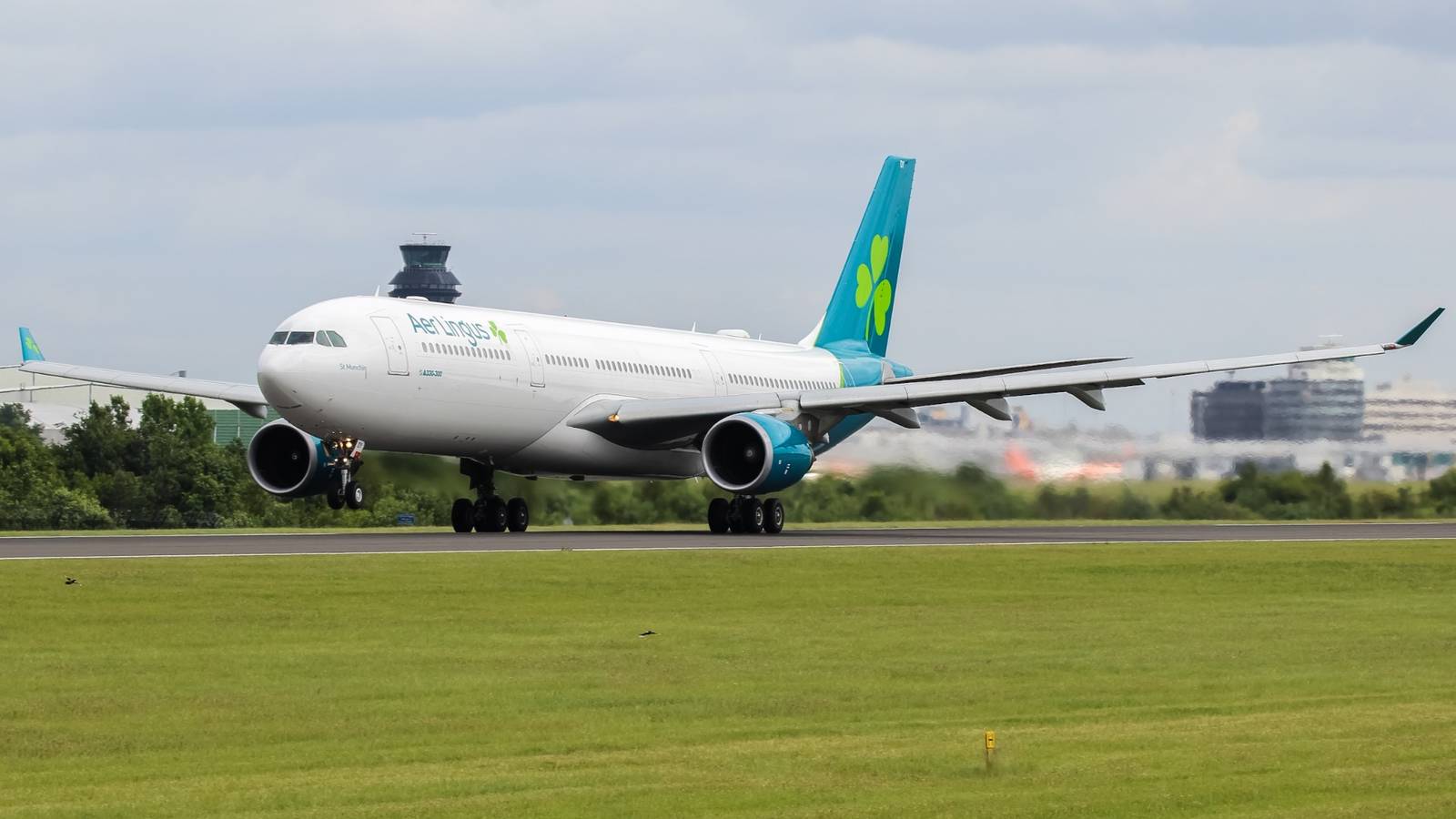
The US plays a critical role in  Aer Lingus’ network. Between December 2024 and November 2025, the carrier transported 2.8 million passengers to/from the country. Compared to the prior 12 months, traffic rose by 7%, nearly seven times faster than the overall Europe-US market. New routes from Dublin to Indianapolis and Nashville contributed.
These figures are from examining US Department of Transportation data. Of course, context is needed. Despite the decent year-over-year growth, Aer Lingus is still only a small player in the transatlantic market. It was the ninth-largest operator, and only one in every 28 US-Europe passengers flew it.
Aer Lingus’ US Routes With The Lowest Load Factors
Credit: Shutterstock
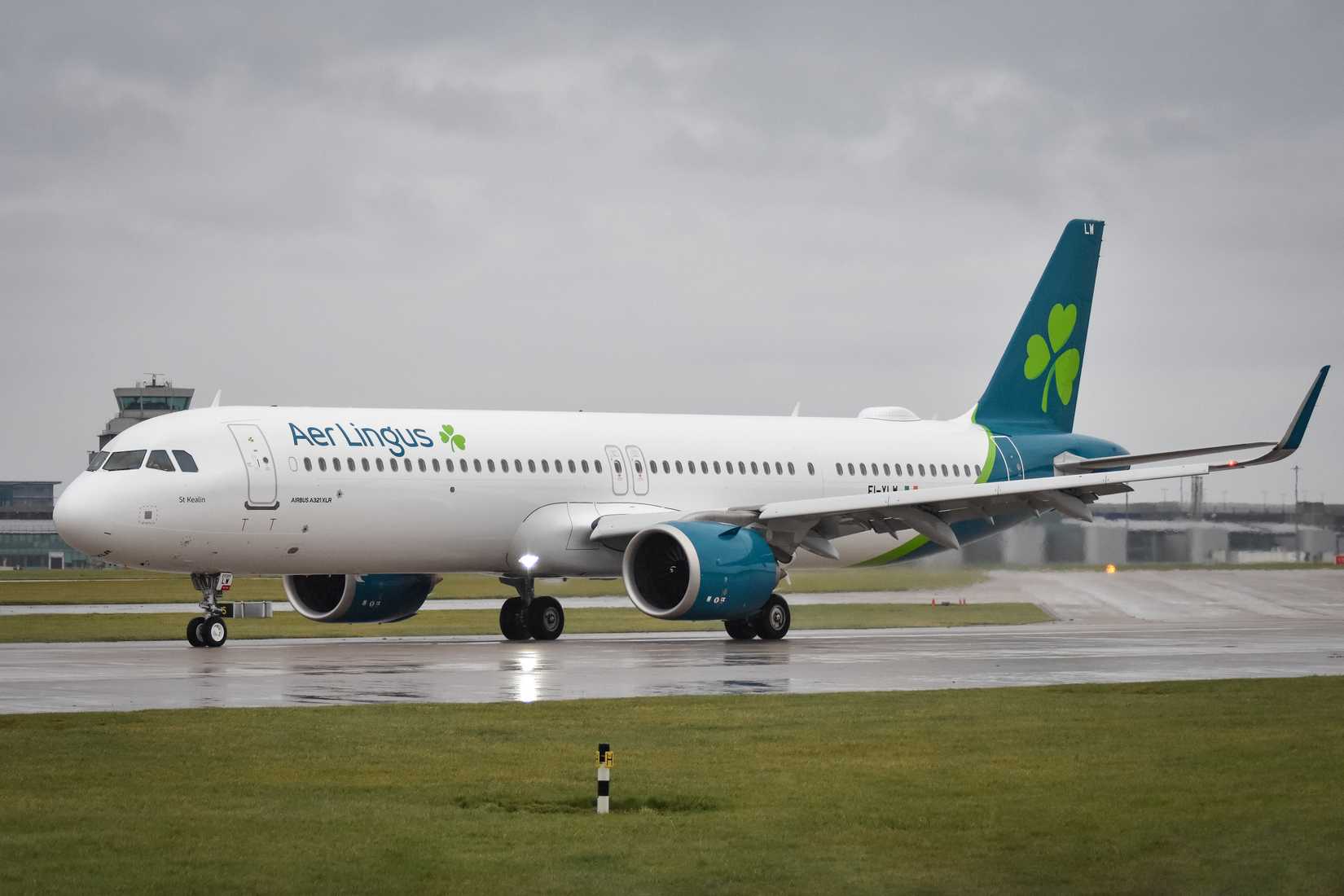
In the 12 months to last November, the Irish flag carrier had 22 US routes: 18 from  Dublin, two from Shannon, and two from Manchester. As you will know by now, the two links from the Northwest England city will end soon, along with the airline’s Manchester-Barbados operation. That’s why it’ll begin Dublin-Barbados flights on the Airbus A321XLR.
When all 22 US routes are considered, the DOT shows that its average seat load factor was 76.7%. That was lower than the average of all airlines operating between the US and Europe (83.0%). Its result was among the lowest. The Irish flag carrier’s load fell by 1.3 points year-over-year, due to the additional traffic growing slower than the added capacity. It might also have reflected the geopolitical situation.
Curiously, despite the forthcoming closure of Aer Lingus’ Manchester base, it had the highest result (80.0%), followed by Shannon (78.6%), and Dublin (76.2%). But as always, the seat factor is just one performance measure, and should not be considered in isolation. It is about how it was achieved.
Seat Load Factor: December 2024-November 2025*
Route
Round-Trip Passengers***
63.9%
Dublin to Denver
59,047
65.8%
Dublin to Minneapolis
52,539
68.4%
Dublin to Miami
28,642
70.9%
Dublin to Hartford
66,663
71.6%
Dublin to Las Vegas
33,901
74.0%
Dublin to Philadelphia
78,416
74.1%
Dublin to San Francisco
155,115
74.3%
Dublin to Los Angeles
148,491
74.6%
Dublin to Washington Dulles
177,968
74.9%
Dublin to Indianapolis**
33,095
* According to the US DOT
** This route started in May 2025
*** According to the US DOT
Dublin To Denver Had The Lowest Result
Credit: GCMap
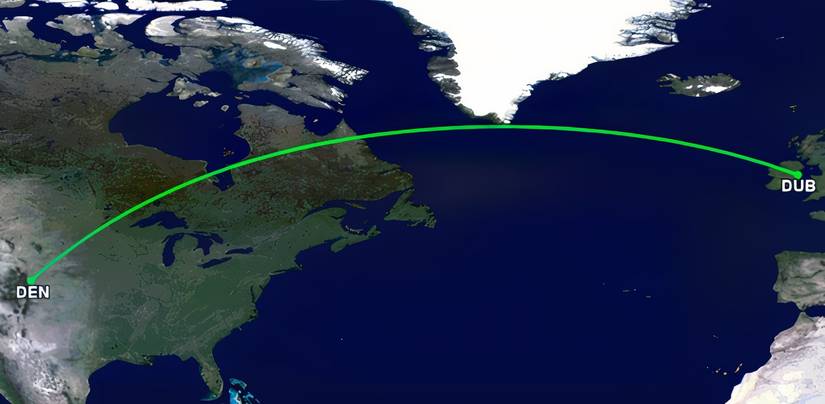
Aer Lingus has served Denver since May 2024, and flights operate seasonally. They existed through October 2024 and returned in March 2025. Most routes take time to develop, especially if they’re brand-new and long-haul. Incentives and other risk-sharing agreements must also be considered.
Until Aer Lingus’ launch, Ireland did not previously have any nonstop flights to Colorado. But still, the government figures show dismal performance. Just 36.7% of seats were filed last April, with a high of 73.9% recorded in June.
A critical reason was that the frequency jumped from a maximum of four weekly departures in 2024 to six weekly in 2025, while the higher-capacity A330-300 was used more often than in the first season. Seats for sale rose by a considerable 93.7%, yet traffic only jumped by 65.9%. While that was strong passenger growth in itself, it was nowhere near enough. As such, the load fell. To help arrest the situation, it’ll have five weekly flights in 2026, which is a sensible decision.
Related
EgyptAir’s Huge US Expansion: Confirms 2 Historic New Nonstop Routes
The carrier now plans a record five routes to the US and six to North America.
Where Aer Lingus’ Denver Passengers Went

Credit: Aer Lingus
According to booking data, an estimated 47% of the airline’s Denver passengers connected to another flight in the Irish capital. The top ten segments were Paris CDG, London Heathrow, Amsterdam, Manchester, Rome Fiumicino, Edinburgh, Donegal (!), Isle of Man (!), Barcelona, and Malaga.
Aer Lingus does not codeshare with United Airlines, which does not help its traffic generation and load. Nonetheless, approximately one in nine of the long route’s passengers originated or ended in Dublin and connected to another flight in Denver. While all the traffic volumes were tiny, Dublin-Denver-Long Beach seemingly had the most passengers.