
In a telling scene from Neasa Ní Chianáin’s new fly-on-the-wall documentary, Forever is Now, which follows Eamon Ryan’s last 18 months as a politician, the former Green Party leader is seen losing his temper only once.
The moment occurs during the National Economic Dialogue in the summer of 2024, just three weeks before Ryan stepped down as leader.
Ryan has just listened to Simon Harris’s second speech at the event and is seething at the lack of focus on climate in both speeches.
By that stage of the Fine Gael-Fianna Fáil-Green coalition government’s term, the Greens were no longer popular, yet Ryan was not relenting.
Until the end, he kept hammering the message of climate change at every turn, including at the weekly meeting of the three coalition leaders.
As the film demonstrates, the tide had ebbed by 2024 amid rising energy prices and a crescendo of blowback, mostly from rural and transport interests.
Ryan was being pilloried on social media and polling for The Irish Times showed climate was, at the time, a priority issue for just 3 per cent of people.
His party had its best-ever election in 2020, winning 12 Dáil seats. It drove a hard bargain for entering government.
The party insisted on a 50 per cent cut in emissions, binding climate legislation, a radical move away from single-car culture towards public and sustainable transport, and policies prioritising nature and biodiversity over development and pollution.
In the 2024 general election, the Greens suffered a hiding, losing 11 of their 12 seats.
Ryan has often quoted Samuel Beckett’s line: “Fail, fail again, fail better.”
While a heavy blow, it was not the wipeout of 2011 when the Green Party lost all six of its deputies.
The party retained an Oireachtas presence, a cohort of councillors and State funding. It hopes for a quicker recovery. But, for now, it is in the wilderness.
So has the new Government abandoned the policies at the heart of the previous administration?
From that vantage point, new leader Roderic O’Gorman and party colleagues claim – as they meet in Kilkenny this weekend for their annual conference – considerable slippage.
They all refer to recent comments by Minister for Climate, Energy and the Environment Darragh O’Brien that the 2030 targets – 51 per cent reductions in emissions – will not be met as an example of a Government either not trying, or simply giving up.
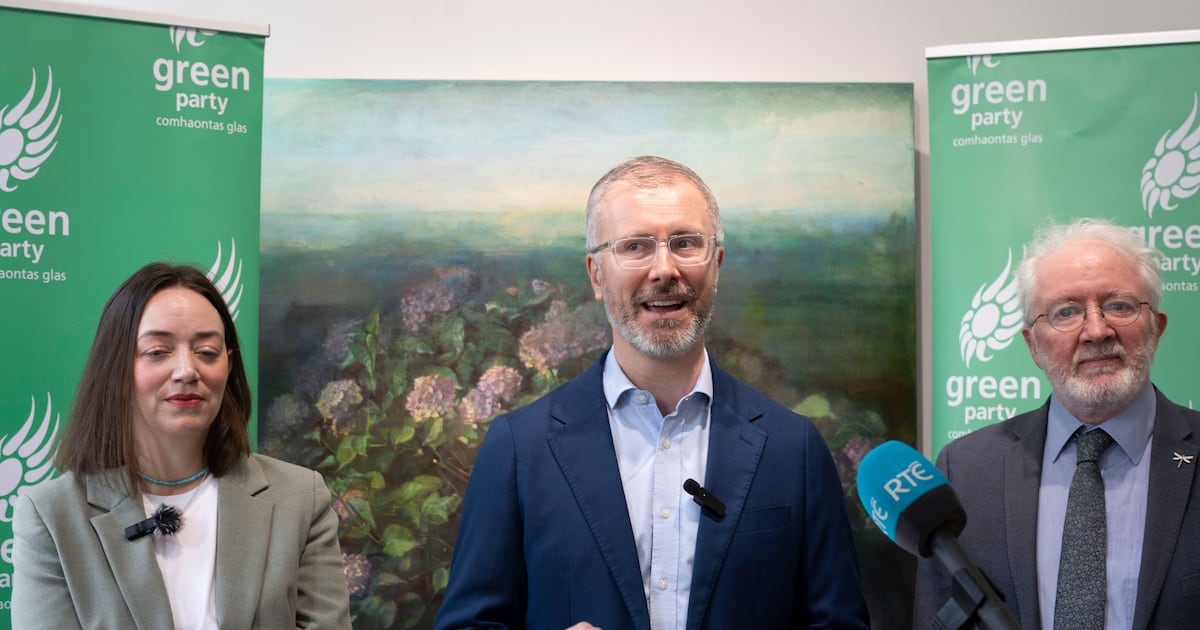
 Green Party leader Roderic O’Gorman TD.
Photograph: Stephen Collins/Collins Photos
Another recent example, O’Gorman argues, is the Government’s approach to the Climate Action Act.
“Look at its efforts to bypass obligations by carving out exemptions,” he says.
“The draft law about the state-owned LNG [liquefied natural gas] facility includes a provision that says the Climate Action Act doesn’t apply.
“And now the draft Bill for the lifting of Dublin Airport’s passenger cap has included a similar exemption,” says O’Gorman.
“They are basically trying to neuter the Act which is probably the most important legislation we brought forward in our time in government.”
Former minister and TD Ossian Smyth says it’s not a Trumpian reverse or disruption, pointing to how the programme for government for the current Fianna Fáil-Fine Gael retains many of the Green initiatives but says there is inertia when it comes to taking tough decisions on climate.
“When we were in government with them, we were the active ingredient. We wrote so much policy that had a green agenda,” he says.
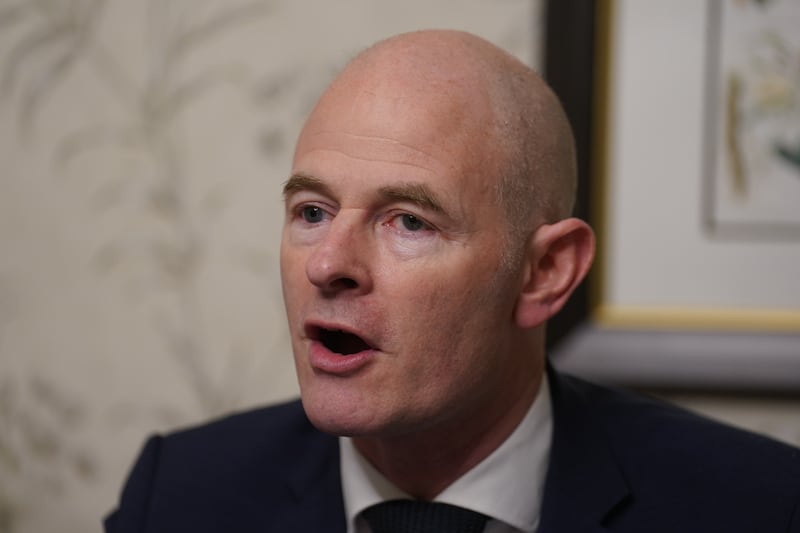 Former minister Ossian Smyth. Photograph: Brian Lawless/PA Wire
He lists policies on public transport, safe routes to school, renewable energy, retrofitting, the protection of nature and decarbonisation.
Once the Greens were gone, he argues, momentum dissipated.
“There’s no direction, and there’s no enthusiasm, and they’re kind of twisting in the wind. What they do is whatever is the most convenient thing that day for today’s news item,” he says.
For O’Gorman, the Greens’ time in office did make a difference.
“This Government is not going to be able to unpick everything. Not the reductions in public transport costs. Not the drive towards solar energy. They’re actually looking to build on what we did in terms of offshore renewable wind energy,” he says.
He is concerned, he adds, to see some of the more challenging elements being “ignored”.
Looking in, from outside party politics, Diarmuid Torney, director of the DCU Institute for Climate and Society, detects a shift in tone.
“It’s undeniable that climate has fallen way down the Government agenda,” he says.
The programme for government contained high-level commitments, but “when you drill down … it was really hard to see how the targets were going to be met”.
The absence of the Greens from the Government is telling, he argues, not only in policy delays but in narrative.
“Just at the higher level, the absence of a narrative around climate change – I’m just not hearing it very much from the Government as a whole,” he says.
During the last administration, he notes, the climate minister sat at the leaders’ meeting.
“It really placed climate at the centre of decision-making in a way that it’s just not there,” he says.
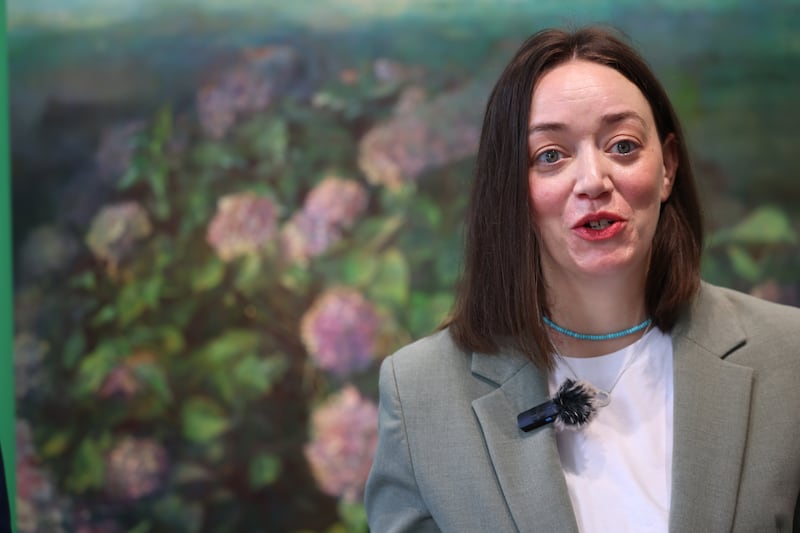 Green Party Dublin city councillor Janet Horner. Photograph: Dara Mac Dónaill
Minister for Climate Darragh O’Brien challenges that assertion, insisting climate is essential to everything this Government has done.
He argus there were many examples such as enlargement of the retrofitting programme; the target for electric vehicles being exceeded in 2025; and major advances in the greening of energy through renewables such as solar, wind, biomethane, anaerobic digestion and district heating.
“I respect the Greens. I worked very closely with Eamon, and he did a lot of significant work that I want to accelerate,” says O’Brien.
“But we’re having a more honest discussion with people. I don’t see us achieving the 2030 targets, but we’re making significant progress. In the early 2030s, particularly with the electrification of our offshore wind resources that will be a significant step forward.”
Green Dublin city councillor Janet Horner believes the party can rebuild.
“It’s clear the Government is taking its foot off the pedal, with issues the Green Party championed being sidelined,” she says.
The 2024 general election result, she says, was read by others as a signal that voters had lost interest. Yet she points to a strong local base.
Smyth and O’Gorman believe the Greens can return to government or influence it as soon as 2029, the year of the next scheduled general election. Horner is slightly more circumspect but believes the party can make strong gains that year.
O’Gorman insists the party can rebound.
“We’re only one term away from recovery … we have got a really clear idea of how we want to make a better world, and we’re sort of super enthusiastic to do those things,” he says.
The big question for the Greens is whether their influence in one government term compensates for the following five or 10 years in the wilderness, when its priorities are marginalised.
Diarmuid Torney, director of the DCU Institute for Climate and Society, observes the party has “a kind of a kamikaze element to its approach: willing to prioritise climate and go in and do as much as they can – and then bear the consequence”.
To answer the question of whether this is the correct approach, Torney quotes the aphorism of former Progressive Democrats leader Mary Harney: “Your worst day in government is better than your best day in opposition.”