
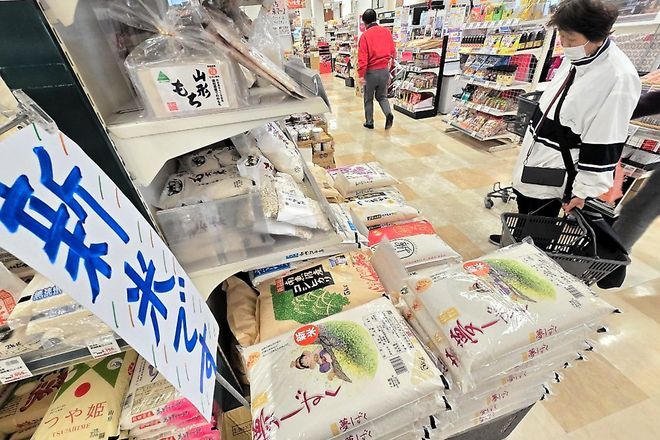
Japanese households are spending the largest share of their budgets on food in 44 years, underscoring the persistent squeeze from inflation, according to government data.
The government’s 2025 Family Income and Expenditure Survey, released on Feb. 6, showed the Engel’s coefficient for households of two or more rose to 28.6 percent, up from 28.3 percent in 2024 and the highest since 1981, when it hit 28.8 percent.
The Engel’s coefficient is the share of a household’s total consumption spending that goes toward food. It is a simple ratio that rises when food—a basic necessity–takes up more of the budget.
The increase has been especially stark for low-income families.
The average Engel’s coefficient reached 33.1 percent, about one-third of total spending, among the lowest 20 percent income bracket.
Economists have long used the measure as a proxy for living standards: The larger the share spent on food, the tighter the household budget tends to be.
In Japan, the indicator declined until the early 2000s as incomes rose. But after bottoming out at 22.9 percent in 2005, it began to climb.
For years, the increase was often attributed to shifts in consumption patterns, including the growing popularity of eating out and prepared meals.
Since 2022, however, the rise has accelerated alongside price increases. The coefficient has jumped by 2 percentage points in just three years, reflecting intensifying “food inflation,” including higher prices for staples such as rice.
Total monthly consumption expenditure in 2025 averaged 314,001 yen ($2,014) per household, a real increase of 0.9 percent after adjusting for price changes.
While that was the first rise in three years, it lagged the nominal increase of 4.6 percent, indicating that much of the additional spending was absorbed by higher prices.
Food expenditure, including items classified as social expenses, rose 5.5 percent in nominal terms but fell 1.2 percent in real terms.
Real spending on rice and bread, both of which saw sharp price increases, dropped 6.1 percent and 4.9 percent, respectively. Belt-tightening was also evident in confectionery, where households cut back amid higher prices.
By contrast, spending on automobiles rebounded after dipping in 2024 amid certification fraud scandals.
Other drivers of higher spending included transportation, such as rail and air travel, admission fees for movies and theater buoyed by hit titles, and visits to cultural facilities, including the Osaka Kansai Expo.