

The story I’m about to tell has its origin in a modernist cuboid office block that straddles the M8 at Charing Cross. When I started my investigation, I didn’t think it’d take me surfing online in the Bahamas and Barbados or put me on a train to Wester Hailes. I didn’t think I’d come across 11-year-old company ‘directors’, talking raccoons, and a self-made candy millionaire. I didn’t think I’d be casually threatened shortly before playing an augmented reality go-kart game. And I didn’t know I’d uncover a £1 million tax bill owed to Glasgow City Council.
When a reader got in touch, asking about those strange banners you might have seen draped across entire sections of Tay House on Bath Street, The Bell published a short report about the charity responsible for them: Humanitarian Operations (Hope). In it, we noted that their website was incomplete, that their social media hadn’t posted anything for almost four years, and that for a charity which claims to do “disaster relief”, there really was very little evidence of that ever occurring.
The charity also says it produces “augmented reality education” and a TV show. And it says it’s a charity “created and directed by children”. Its website features Ziggy, a friendly cartoon raccoon who appears on pages about endangered rhinos and the fragility of marine ecosystems, and pages which say that Hope has been committed to “helping the victims of disaster since 2004”. Many of the rainbow-coloured pages don’t work and have pop-ups that are just blank. There are also links to donate money and brief mentions of products like “Earthy Peak”, “Eclipse Surf Wear”, and “Golden Wear”, the proceeds of which support environmental, disaster relief, and homeless causes respectively.
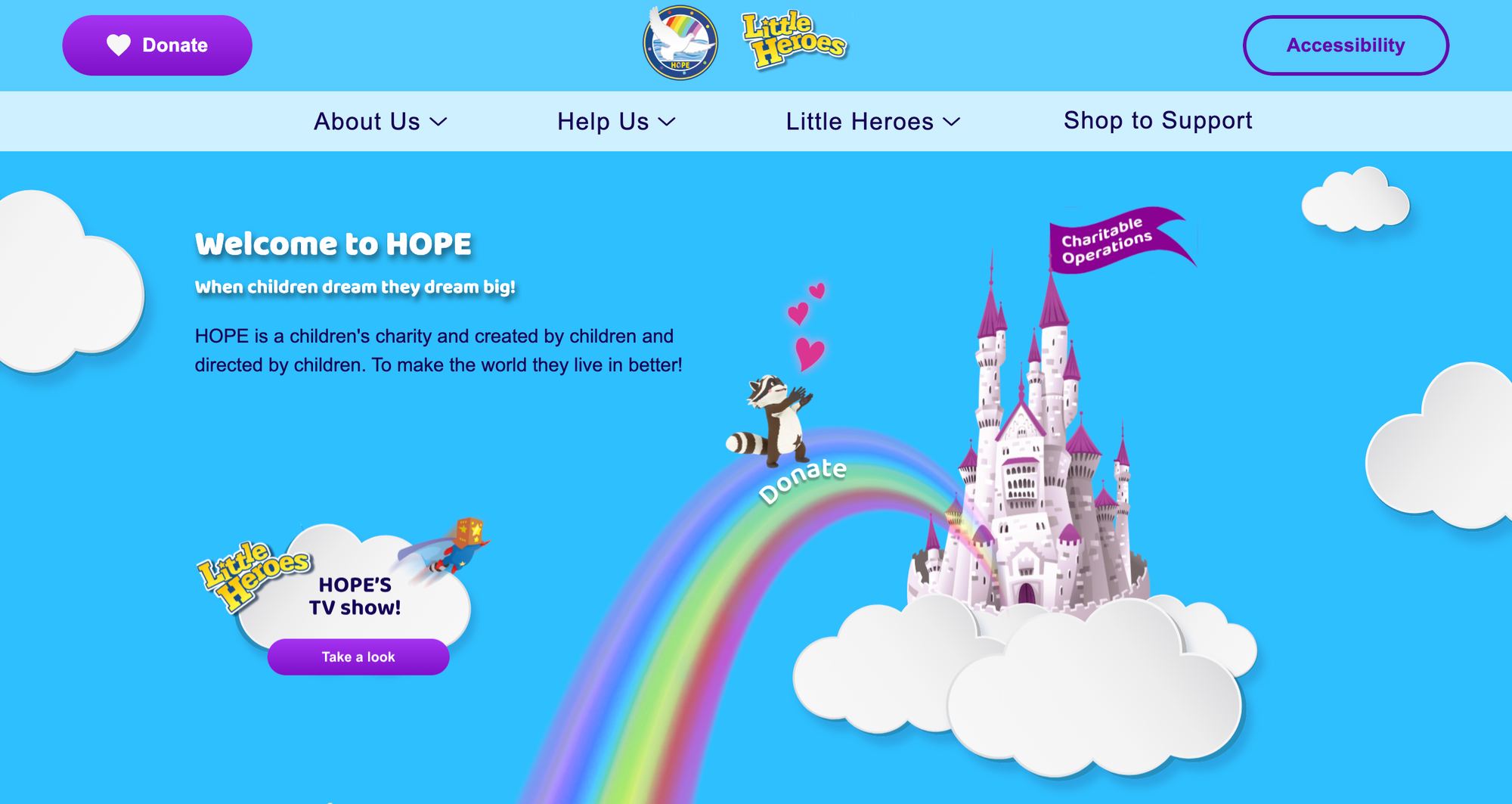 Screenshot: Humanitarian Operations’ website
The man behind Hope has a background as colourful as its website. Darren Adler is 57, from London, has spent over twenty years living in the Bahamas, and is now based in Edinburgh. He’s got sun-wrinkled skin, long grey hair, and when he talks to me in Hope’s eerie Wester Hailes headquarters, he speaks with a softness that belies phrases such as “anyone who stands in [the children’s] way, we’ll mow them down”.
Adler describes himself as a humanitarian. He tells me that, at the age of 11, he began his own confectionery business by skiving off school and taking the train to the Cadbury factory in Bournville. There, he demanded to be seen by “Mr Cadbury”, and refused to leave until he’d secured a deal. Adler claims that he launched the Wispa range of chocolate bars with Sir Dominic Cadbury in 1981. The Bell has been unable to reach Cadbury to verify this. Adler also said, at one point in the 1980s, “a quarter of the sweet shops in London were buying all their sweets from me”.
Adler then went on to found a PR and media company called Worldwebchannels.com in 1989. Sitting opposite me, gazing right at me with brown eyes, wearing tight jeans and a grey quarter-zip jumper, he says he became a “multi-millionaire” despite his humble origins. But in the early 2000s, he left it all behind for the sun, palm trees, and turquoise seas of the Bahamas. “I didn’t need the money”, he explains.
It was during this new Caribbean chapter that Adler became a humanitarian. There, he set up a charity called the Hope Foundation. Its mission was to deliver aid right into disaster zones. I managed to find an Associated Press article from 2011 in the aftermath of Hurricane Irene. In it, Adler is credited with “distributing food” on behalf of Hope. A Bahamian news article from 2015 interviews Adler and says he worked in “Sudan, Somalia, Kenya, Ethiopia, the Asian tsunami, New Orleans after Katrina and the Haiti earthquake”. But other than these two articles, there’s very little available online from third parties that attests to Adler’s humanitarian credentials.
From the Bahamas to Bath Street
That’s all very well and good, but what is Hope doing at Tay House? And why is it suddenly into “augmented reality education” if it’s a disaster relief charity? I rang around some people to see if I could find out. A contact got in touch to say that the 6th floor of Tay House was not the only place in Glasgow that Hope had premises. Subsequent conversations with the council confirmed that, across the city, 41 offices and three car parking spaces are, or have been at some point in the last two years, occupied by Hope. That’s a lot of real estate for a charity whose accounts show it received a total income of just £54,455 in the year ending March 2023. Interestingly, in the year ending March 2024, just before Hope had moved into some of these offices, its income shot up tenfold, to £518,089. Its accounts show that most of this jump in income came from £334,632 of “free rent” and £42,244 of “reverse rent”. That could explain why such a small charity is able to afford all these properties — it’s not paying rent. But it doesn’t answer the question of why it’s in these premises or why it needs them. What does Ziggy, the loveable raccoon, need from an entire floor in a rather sorry-looking office block in central Glasgow? Or in the other 40 office spaces?
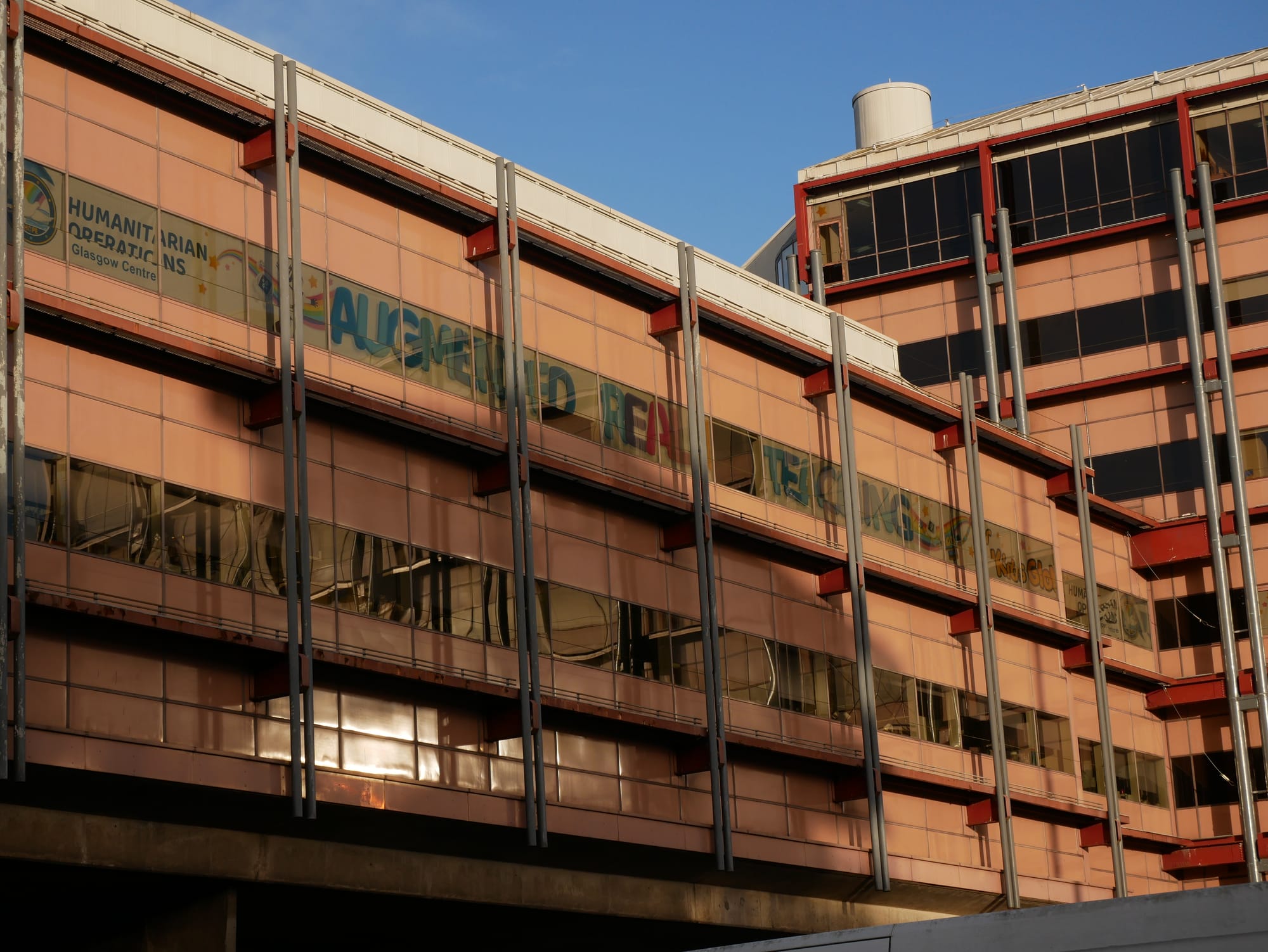 The giant banner, and the one on the other side of the building, were taken down shortly after our first article. Photo: Calum Grewar/The Bell
The answer may be a bit more complicated than the charity’s proclaimed mission. While trying to find some sort of incentive for a charity to occupy multiple premises in the same place at once, I came across something called a ‘rates mitigation scheme’. These are legal ways landlords or companies can avoid paying business rates.
Hi, I’m Calum, and this story is free to read. We’re The Bell, Glasgow’s new newspaper, and this is the sort of wild ride story you can expect from us, as well as local news, analysis, features, and briefings.
We share lots of our quality journalism for free, and all you have to do to continue reading about Hope is sign up for free below, no card details needed.
This post is for subscribers only
Subscribe now
Already have an account? Sign in