
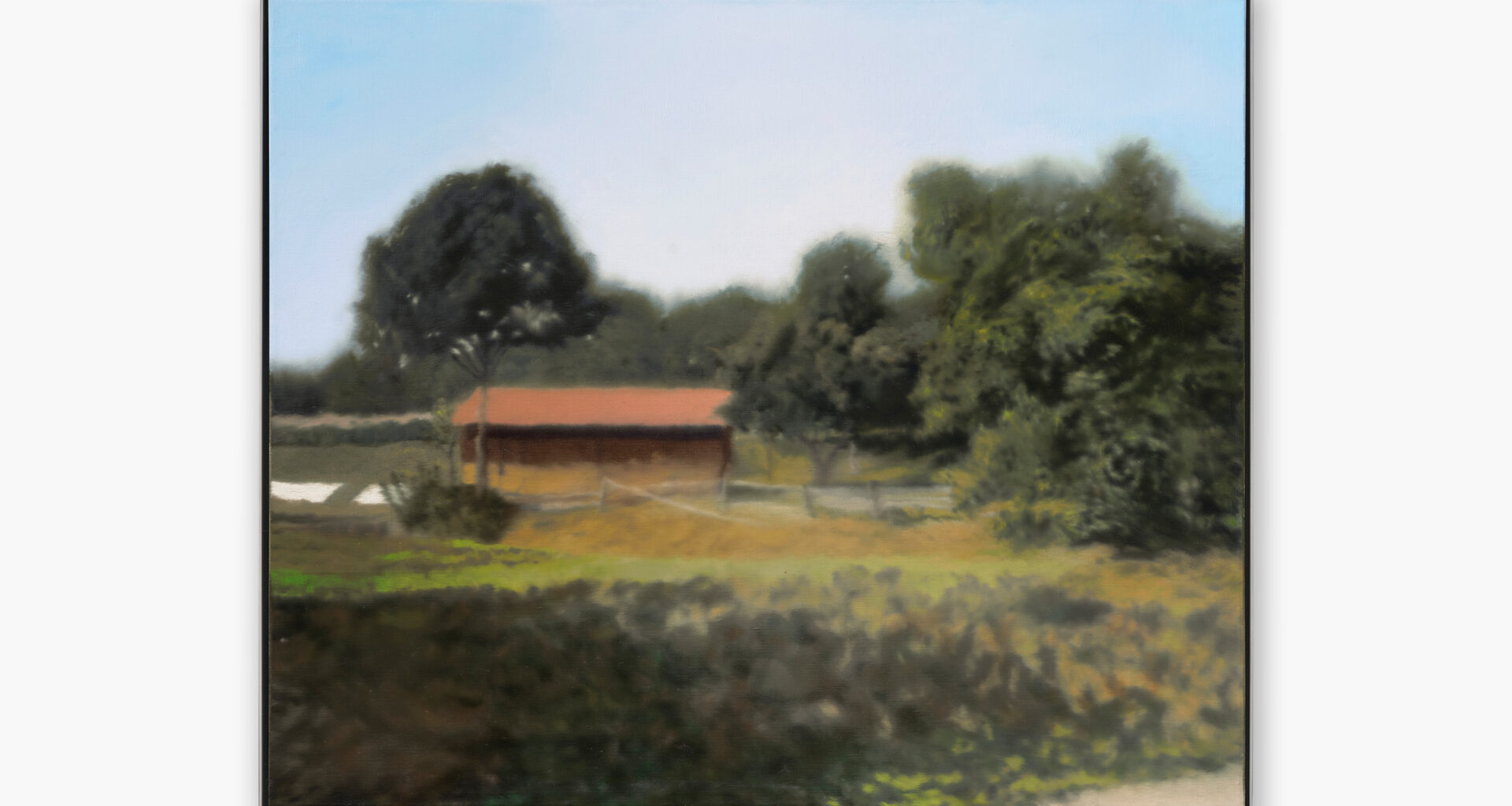
Richter had made a name for himself in the 1960s by painting from photographs. However, in the late 1970s and especially in the early 1980s, he became deeply involved with abstract painting and achieved surprising results. This new practice of painting soon came to dominate Richter’s oeuvre. So the pictures based on photographs that Richter painted in the 1980s, as a counterpoint to abstraction, now attracted all the more attention.
In 1981, these were mist-shrouded mountain landscapes; in 1982, the intimate candles; in 1983, still lifes with skulls; and shortly thereafter, landscapes with haystacks and barns, for which Richter chose as templates photographs from an excursion to the Bayerischer Wald.
In an interview, he described his working method: ‘I paint landscapes or still lifes between the abstract works. They make up about one-tenth of my production. On the one hand, they are useful because I like to work from nature — although I naturally use a photograph — because I believe that every detail from nature has a logic that I would also like to see in abstraction. On the other hand, painting from nature or painting still lifes is a distraction and creates a balance. I could also say that the landscapes are a kind of longing, longing for an undamaged, simple life. A bit nostalgic.’