
An Iranian citizen living in Ireland has said he fears for the safety of his family and friends in Tehran after a phone call with a close relative was abruptly cut off on Saturday morning, following a joint attack on Iran by the US and Israel.
Rouzbeh Rashidi, a film-maker who relocated from the Iranian capital to Dublin with his family in 2004, said all of his aunts, uncles and cousins, along with many close friends, were in Iran with no access to internet or phone services.
“The last time I spoke to a family member in Tehran was at 7am Irish time on Saturday,” he said.
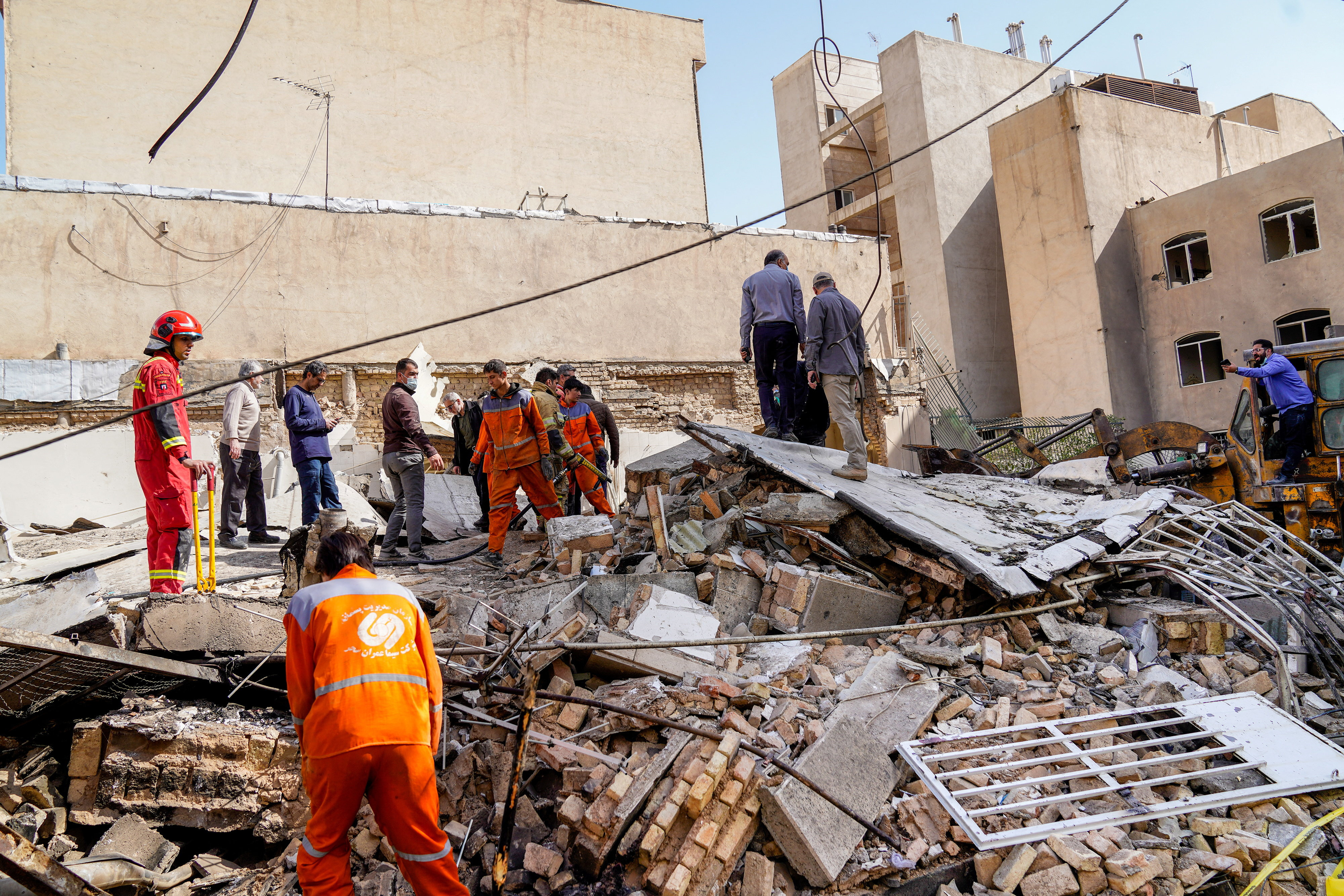
The aftermath of an Israeli and US strike on a building in Tehran, Iran
AMIR KHOLOUSI/ISNA/WANA/REUTERS
“We were talking and suddenly the phone was cut off. This is what the Iranian government always does in a situation like this — they completely shut down the internet and the telecommunication in order to prevent the news from going out to contain the damage and the image.
“For them, this would project weakness and vulnerability, and they don’t want to do that; they don’t want to show the world the real damage that is being done again, which is horrific. Everyone should know about it in order to do something. I tried to call him [the family member] back, but there was no answer. I tried to contact other family members on WhatsApp, Facebook and Instagram and again, nothing. I don’t even know what’s happening with them.”
The 45-year-old said his family and friends had been advised by the Iranian authorities to “stay indoors”, but no meaningful protections were available to civilians, unlike in Israel, which has the Iron Dome missile defence system and extensive bomb shelter infrastructure.
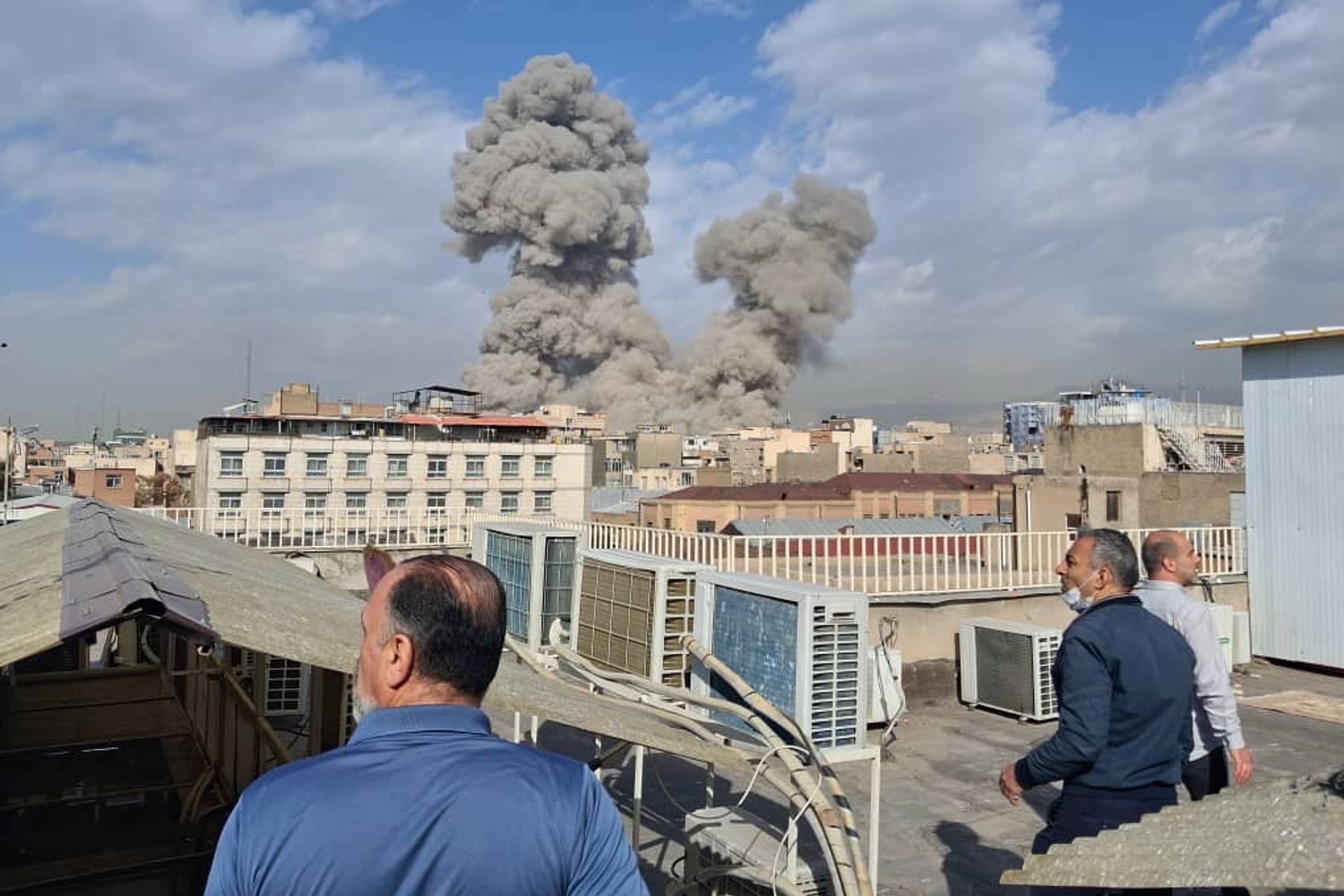
Residents in Tehran on rooftops watched bombs dropped by the US and Israel
AP
“Iran is also attacking Israel at the moment but Israel has the Iron Dome in place which is intercepting about 99 per cent of missiles. They have built a massive amount of bomb shelters and they’re really equipped for this,” he said.
“We haven’t invested in anything. We don’t have bomb shelters, an Iron Dome or upgraded military equipment. Every attempt to improve those things has been blocked by decades of sanctions. So no matter what the Iranian government tells citizens to do, it’s completely ineffective. It’s useless because we don’t have the means to protect ourselves. They’re basically just telling people to ‘take care of yourself’.”
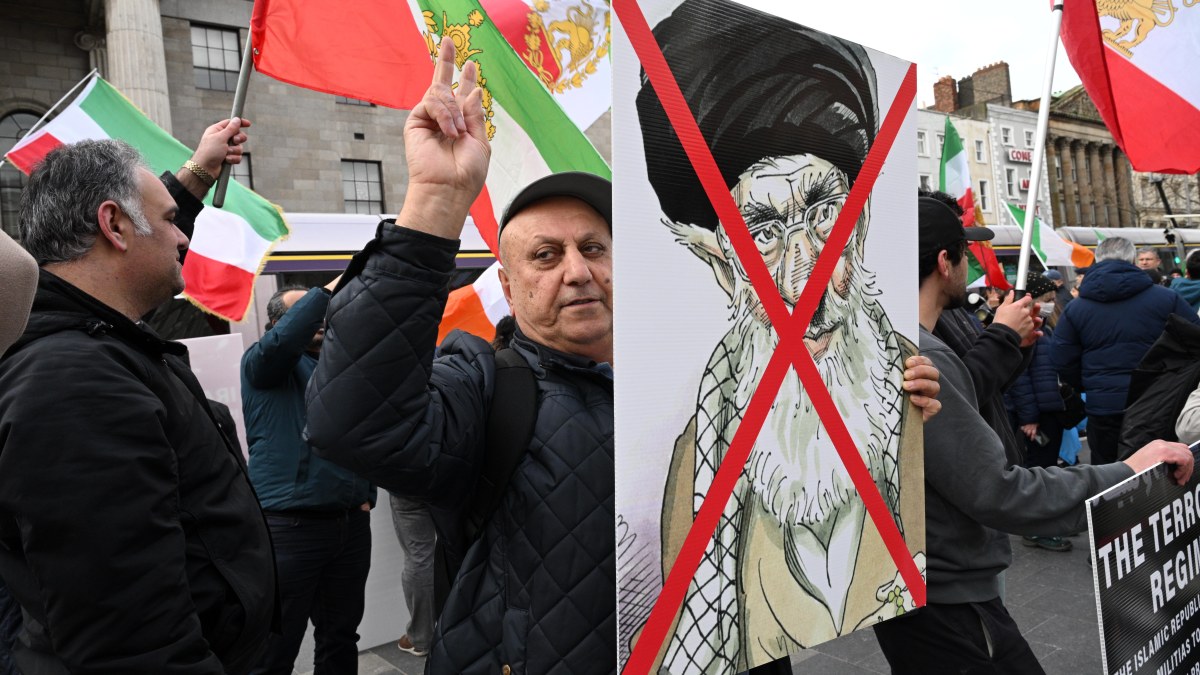
Meanwhile, there were chants of “Make Iran Great Again” in Dublin city centre on Saturday afternoon as Iranian demonstrators expressed hope that the strikes against their country would topple Ayatollah Ali Khamenei’s regime.
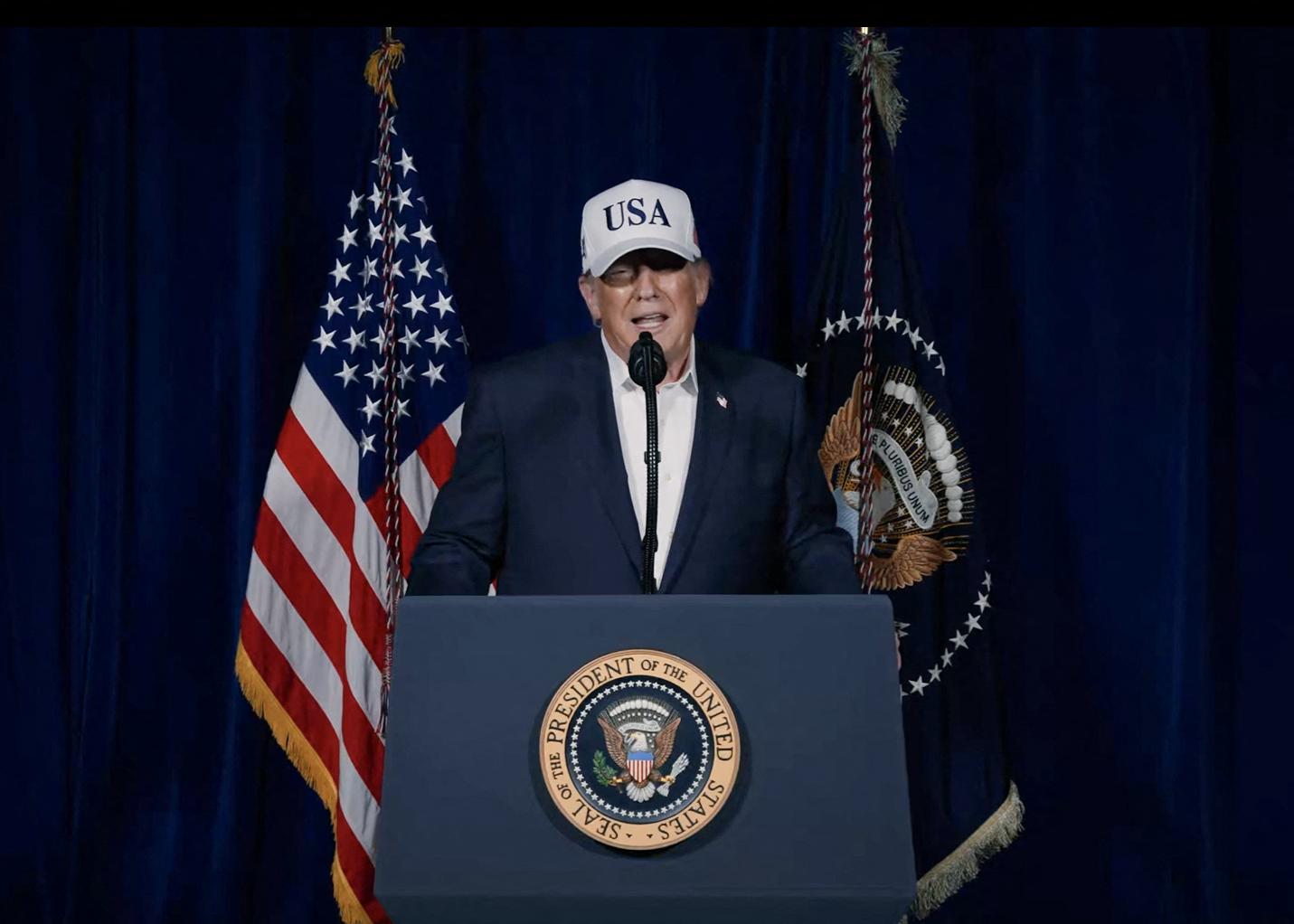
Iranian demonstrators in Dublin said they hoped the assault by President Trump would result in freedom for Iran
TRUTH SOCIAL/@REALDONALDTRUMP/AFP/GETTY IMAGES
Some carried placards on O’Connell Street, claiming that their country had long been “bleeding” under his rule. Though many of them were concerned for the safety of family and loved ones in Iran, they expressed hope that the intervention by President Trump and Binyamin Netanyahu, the prime minister of Israel, could pave the way for “freedom” and “liberation”.
Parand Shokrani, 31, who has lived in Ireland for two years, said she experienced oppression growing up in Iran. “We want the regime gone,” she said. “If [the strikes] is the only way, we don’t have any other way.”
Faranak Haghani, 17, who came to Ireland when she was 11, said it was an emotional day for Iranian people but insisted that the strikes should be viewed as “a rescue mission”.
“We are here because the Islamic Republic of Iran has killed thousands of Iranians. Almost every family in Iran knows someone who has been killed. America attacked Iran and we are here to say that we support that. We just want to be free,” she said.
Zac Asgharian, 66, who was imprisoned by the regime as a young man, said he had been unable to contact his sister and brother in Iran. He did not know whether they were alive or dead, he added. Despite fearing his family could be harmed, he maintained that the strikes were absolutely the right course of action for his country.
Rashidi, who founded the Experimental Film Society in Tehran, said his family and friends had feared an attack of this scale since last June’s 12-day conflict with Israel. Unlike the demonstrators in Dublin, he was against the intervention by the US and Israel.