
Some iPhone users in the U.K. noticed that after they installed iOS 26.4 Beta 2, in the Settings app they were asked via a pop-up notification to verify that they are 18 years of age or older. The request for age verification appears to be the result of the U.K.’s Online Safety Act. “Under the act, all platforms must implement measures to reduce the risk of their services being used for illegal activity.” Such activities include:
For example, to protect children, platforms must take measures to enforce age limits. Now here is the part that is pertinent to this article; in the U.K., such measures include the use of age-checking systems that can verify that users viewing content harmful to children are 18 years of age or older. To comply with age verification laws in various countries, and even in some U.S. states, the tech giant is making some changes.
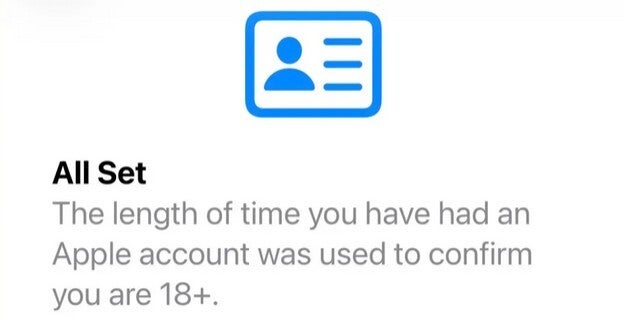
Apple verifies that an iPhone user is 18 or older. | Image by 9to5Mac
Apple’s pop-up request asking some U.K. iPhone users to verify they are over 18 was a mistake
Apple has been busy updating its age verification APIs and uses signals to automatically determine whether an iPhone user is an adult. One way it does this is by looking at the payment method used for an Apple Account and how long that account has been open. To those in the U.K. who were asked to state that they were adults, it appeared to them that Apple was launching some new age-verification process. But that was not the case.
“Some users on the beta software in the UK temporarily saw a message suggesting age verification is required to download apps. That message was displayed in error, and has been fixed. Developers may continue to use the Declared Age Range API to provide age appropriate experiences for users.”
-Apple statement
Apple has now confirmed that the age-verification pop-up that some iPhone users saw in the U.K. was the result of a mistake. Apple might have accidentally included the prompt in iOS 26.4 Beta 2 in anticipation of a rollout in iOS 26.4. The company has since removed it. However, just because the pop-up has been removed, it doesn’t mean that Apple isn’t working beyond the scenes to meet all of the obligations it has to protect children and act within the scope of the law in various countries.